Pages

Showing posts with label tobacco farming. Show all posts

Wednesday, August 2, 2017

River Towns: Ripley, Ohio

One of my goals is to travel the entire length of the Ohio River. The river, its history and folklore have caught my attention since I retired, and I am always happy when we travel the roads the border it. I have been to its birthplace in Pittsburgh, and I've been along all of its West Virginia border and its Ohio/Kentucky border as far as Portsmouth, Ohio. But I had yet to see the rest of the river, and since we needed to drive to Cincinnati to catch our flight to Florida, I figured why not take the slow way and add a little more to our "seen it" map? Ohio is our neighboring state, and yet I've not seen a great deal of it, so this was an opportunity to explore.

One of the places I wanted most to see was Ripley, Ohio. Our closest-to-home town is Ripley, WV so it seemed only fitting to visit its Ohio namesake. I knew that this Ohio Ripley was once a big tobacco town too. Back in the 1980's we grew tobacco and the history of the plant in this region interests me still.

We found Ripley to be a beautiful but struggling river town. There were many signs of its past bustling economy, but today most of the town is shuttered, like many places that time and interstates have passed by.

The town is fiercely proud of it heritage as an important station on the underground railroad, and the story of "Eliza" in Uncle Tom's Cabin is based on the true story of a slave who escaped to freedom at Ripley.

Founded in 1812 by Colonel James Poage on a grant in the Virginia Military District (land reserved in southern to be used as payment to US soldiers for their service), the original name was Staunton, Colonel Poage's Virginia home. The name was changed in a few years to Ripley to honor a general of the War of 1812.

The Belle if Cincinnati passed by as we ate at a riverside cafe.
The coming of the steamboat (the very first steamboat, the New Orleans, passed this site in 1811, just a year before the town was established) brought a method of transporting goods and agricultural products easily and surely aided in the town's growth.

I remember my sons having "Pride in Tobacco ball caps
when we grew tobacco.
After the Civil War, tobacco became a major crop in the area and Ripley became home to tobacco auctions--a tradition which sadly seems to have died out. I remember when we took our tobacco to auction in Huntington, WV, what an exciting event it was! But tobacco's prominence as a crop is dying out in this region, and although I am completely opposed to smoking for its health hazards, I still feel a twinge of sadness at the loss of an old tradition.

One of Ripley's past residents who is likely familiar to many people was Rosa Washington Riles, who was born in Red Oak (just north of Ripley) and is buried there. She was one of the "Aunt Jemima" personages recruited by Quaker Oats and toured the country playing that role. The Red Oak Presbyterian Church, in whose cemetery she is buried, was an important place on the Underground Railroad.

"Out of Staters Welcome" sign made us feel, well...welcome!
We stopped in town for a quick lunch. The main business area is beautiful, its history evident in the style of the buildings.

There were many empty buildings, however, and the evidence clearly pointed to a town struggling to maintain.

A few sights around town: 

Ripley bricks


We did not have time to visit the tobacco museum, or Rosa's grave, or to see the homes of the town's famous abolitionists, so we are already planning another visit. There are other towns in the area we need to go back to see as well. Road trip coming up!


Copyright Susanna Holstein. All rights reserved. No Republication or Redistribution Allowed without attribution to Susanna Holstein.

Saturday, September 28, 2013

Remembering Tobacco

I recently mentioned that we used to grow tobacco here, and that reminded me of a post from several years ago that many of you might not have seen. Here it is, re-posted:

Imagine for a moment that you are on a West Virginia ridge on a perfect July morning. The sun has just risen, sending pink rays through morning mist. The ridge top basks in first warmth, while the hollows below are gray-dark and cool. Before you is a field of tall, lush plants, over six feet tall with leaves two feet long and almost a foot wide. The plants rustle in the soft morning breeze, and iridescent dewdrops glisten pinkly with reflected sunlight. Seashell-pink blossoms spike above the plants, a foam on the sea of undulating green. This is tobacco in its prime, proud and full of the promise of a good harvest.

Tobacco played an important role in the early development of our country. For the English settlers, it meant economic survival, providing a dependable cash crop. European demand assured a steady market, and the advent of slavery provided cheap labor for the handwork the plant required. Coming over the mountains from Virginia and Maryland, settlers found tobacco adapted easily to the rich virgin soil of cleared forestland and provided good cash income. Although some settlers in western Virginia owned slaves, the nature of the land suited small-farm enterprises, and most of those who farmed tobacco used family labor to grow and harvest their crops. When West Virginia became a state in its own right, tobacco farms were flourishing in many areas, providing a steady cash income to residents. As time passed and government subsidies supported the price of tobacco, growers found they could depend on a reasonable income for their efforts. Changing times forced many from their farms into other work, but tobacco was often continued as a good side income, and small plots continue to provide extra income to West Virginia’s rural growers today.

In 1981, my husband and I were considering a variety of cash crops that could be raised on our Jackson County farm. We sought the advice of our Ed Smolder, our county’s WVU Extension Agent, and his reply was quick: tobacco. Even though I was not initially in favor of the idea—tobacco smoke made me cough, reddened my eyes and gave me a sore throat—we eventually decided to give the crop a try. With the high return for a small plot of land and a local sales outlet at the tobacco market in Huntington, there was no argument that it was by far the best bet for a farm income. If we raised a reasonably good crop we could make enough money to pay our annual farm payment. For the next eight years we grew between one and three acres of burley tobacco, and I came to love those tall green plants and their heady aroma.

For the tobacco grower, the season starts early. One year’s crop has barely been sold at auction before the planning begins for the next crop. In February equipment and supplies are checked and the choice of variety to plant is made. There are many varieties from which to choose, differing in disease resistance, yield, drought resistance and growth characteristics. My favorite tobaccos were varieties called Number 17, a drought-resistant variety, and R7-11, a vigorous, high-yielding plant.

The real work for tobacco growers begins in March. While our neighbors were still huddled around their woodstoves, we were preparing our plant bed. One hundred feet long and twelve feet wide, the beds were plowed, piled four feet high with brush and scrap wood and burned off to kill the weeds and warm the soil. The burning could take all night; pots of coffee were brewed in the coals, hot dogs and marshmallows roasted, and one by one family members would drift off to bed, leaving a lone sentinel to watch the flames and contemplate life as the stars wheeled overhead.

Morning brought the sleepers back to the plant bed to rake out the ashes and till the soil to fine silt so that the tiny seeds could be scattered. A quarter of an ounce of seed could produce over 20, 000 plants. Fine as dust, they had to be spread evenly over the soil and firmed into the ground carefully for best results. Then the cover was pulled out of storage and spread over the bed, its edges weighted down with rocks to keep it from blowing away. The cover, as long and wide as the plant bed and made of woven fiberglass, protected the bed from frost and raised the soil temperature to encourage seed germination. After a good watering, the work crew finally headed off to bed for some well-earned rest, while the little seeds found their niches in the dark, warm soil.

In a few weeks, tiny pinpricks of green appeared and before long the bed was solidly green with impatient young plants pushing against the cover and each other for space and light. By May they were ready for the field, having attained a height of six to twelve inches. The cover was removed from the bed for a few days to let the plants “harden” as they became accustomed to direct sun and weather. The fields were already prepared—plowed, disked, fertilized, and cultivated to make the soil fine and receptive to the plants. On planting day, we were up at dawn, watering the plants heavily to make pulling them less traumatic on the roots; we squatted by the edge of the bed and pulled handfuls of plants to fill tubs for planting. The tubs were into the back of the truck with barrels of water, and truck, tractor, planter, and crew all headed to the field.

There was a sense of harmony and purpose at planting time. The work was steady and rhythmic, a union of man and machine, plant and soil. The click-swoosh of the planter as each plant was dropped, watered and covered, the rush of water into the tube as the machine pushed the plant into the ground, the slow pace of the tractor as it crawled along the long rows, the sun’s heat on necks and backs—until finally, the last click-swoosh signaled the drop of the final plant into the ground. The sunset and cooling air combined with the satisfaction of a good day’s work was enough, all that we needed from life at that moment. We would stand and look back over the field then head to the house as dusk settled around us. The comfort of walls, cushions, lamplight and soft chairs was luxury after the long day, and bedtime was early and appreciated. I felt a sense of continuity on planting days, a connection with generations of planters who had gone before me. I was where I needed to be, doing what I needed to do, and that was enough.

The growth of a tobacco plant is phenomenal. The six-to-twelve inch plants of May become imperial, six-foot giants by the end of July, with central stalks as big and sturdy as young tree trunks. As the blossoms open the field becomes a gardener’s fantasy, but the blooms are not allowed to remain for long. The flowers rob the plant of nutrients needed for the huge lower leaves, and it is these “lugs” that are the real crop the tobacco farmer is after. The plant must be “topped” by removing the upper flower stalk, and “suckered” to remove any growth in the leaf axils. Topping is done by hand, and the sticky tobacco juice creates black, tacky fingers in the heat of a July day. I did not like this part of tobacco growing, but I always saved a huge bouquet of the tobacco flowers. These would find their way into a vase on our dining table, a tribute to the green-and-pink glory of the field in full bloom.

Suckering had to be done throughout the month of August, as the plants ripened and the lower leaves continued to grow. By September, the cooling air and changing color of the leaves signaled the advent of harvest-time. The plants were no longer deep green—they were now golden yellow, a field of autumn sunshine. Full and heavy, they were ready for cutting and hanging in the drying barn to cure.

Harvest meant long days in the sun, bending to the rhythmic chop! of the machete or corn knife, and straightening to the swish! of falling plants. The plants were piled high on the wagon in golden mounds, then hauled to the barn and hung in tiers from sticks, one plant at a time. The process continued row after row, until the field was empty and the barn was full.
The sight of that full barn filled us with a sense of accomplishment. The barn seemed to glow with stored sunshine, and the strong tobacco aroma on damp mornings was a reminder of the hours of work that went into making the crop. As the fall days shortened and the woods began to burn with reds, oranges and yellows, the tobacco changed color too, from yellow to tan and finally to rich brown, the color of a fully cured leaf. By November the plants were ready for stripping and baling, the last step before the trip to the tobacco auction in Huntington.

Stripping is a weather-sensitive activity: the humidity must be just right to allow the dry leaves to be pulled from the stalks with minimal damage. Dark, cold, drizzly days when sane folks are stoking up the stove and finding a good book to read will find the tobacco grower in the barn, pulling and sorting the leaves according to color or “grade.” The leaves must be packed carefully, keeping them as intact as possible, all the while pressing them into compact bales weighing 90 to 130 pounds apiece. If the tobacco is stripped too wet, it will mold and lose much of its value. If baled too dry, it will shatter and potential earnings will turn to tobacco dust on the floor of the barn.

I loved stripping days. We’d take our camp stove to the barn and keep a pot of coffee boiling and a kettle of stew cooking as we worked. The odor of coffee and stew were overwhelmed by the strong tobacco smell. The coffee warmed our insides but not the outside as hours passed in the barn. Tier after tier emptied as we talked, sang, joked, and worked. Finally the last plant was taken down, the last leaf stripped, and the barn was empty again, the neat stacks of brown bales a fragrant memory of fire and rain, sweat and aching backs, morning dew and summer heat. Those bales were spring, summer and fall, packaged neatly and ready for sale.

The trip to the tobacco auction was always a cheerful one, for at the journey’s end was the reward for our year’s work. The auction house and tobacco warehouse in Huntington was a vast tobacco-filled cavern where growers, graders and buyers wander among the piles of brown bales, examining, comparing and evaluating. The tobacco was weighed in and ticketed with weight and our name, waiting for the graders to assign quality level.

The tobacco auction itself is a marvel of speed and efficiency. Two thousand pounds of tobacco sells in less than 20 seconds. The auctioneer’s rapid-fire delivery can be heard through the sound system in all corners. We watched carefully to see what tobacco similar in quality to our crop would bring. The price supports were guaranteed, but some years the price went above that minimum, so there was always the possibility of earning some unexpected money.

Even to practiced ears it was difficult to hear the final price per pound, and it was not until we looked at the tags on our bales that we would find out what we had earned that year. With calculators in hand, we would figure the total sale; the check itself seemed anticlimactic when we picked it up a few hours later. The trip home was leisurely as we reminisced over the past year and made plans for the next crop. We would usually find a quiet place for coffee and lunch, a small celebration of the completion of the year’s work.

The 1988 sale was different, however. Our conversation at lunch differed from those of past years. Instead of talking about what we would do in the coming year, we were questioning whether we would plant a crop at all. The increasing demands of my college classes, my husband’s job, and the decreasing availability of free labor as our sons grew up made tobacco growing an endeavor that strained our capabilities. Conscience pricked, too—should we continue to grow something proven to be so unhealthy? That autumn, I was unable to help with stripping because of breathing problems caused by the tobacco dust in the barn. My husband wanted to quit his smoking habit of twenty years; being around the plants and in the barn made quitting impossible for him. Reluctantly, we decided not to plant another crop.

So the 1988 crop was our last. The barn, although empty of tobacco for over twenty years, still smells of good burley when the weather is damp, and we go there sometimes just to be reminded of the good times and hard work of the past.

I miss growing tobacco. I miss it a lot. I miss burning the bed. I miss peeking under the bed cover for the first signs of green. I miss the planting and the fields of towering plants in their prime. I miss the satisfaction of the barn full of tobacco, and the excitement of the tobacco auction. It is a part of my life that is over, but the memories of those days will remain as golden in my mind as the harvest-ready plants, standing proud in the autumn sun.


Copyright Susanna Holstein. All rights reserved. No Republication or Redistribution Allowed without attribution to Susanna Holstein.

Sunday, August 3, 2008

Back Road Trip Part I

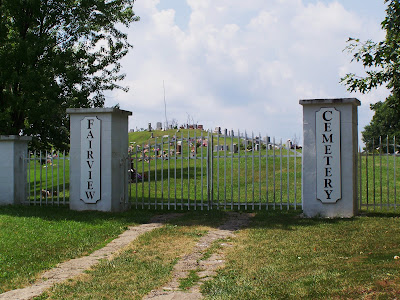
We left the auction Saturday and instead of turning right to go back home the way we came, we turned left at the Fairview Cemetery (well-named for the beautiful views from its summit) to see where the road might lead.It lead us out to Turkey Fork, just at the Wirt County line. I knew this country--in the early 1980's I'd been a substitute rural mail carrier and this was part of Rte 3 Sandyville. It was fun to try to remember the names of the people who lived in the houses along the route. I remembered that another road turned off to the left that was a pretty drive, and that was the way we went.


This road is called Sarvis Fork. That name might be derived from the Sarvisberry tree, or (more likely) from a family name in the area. In the photo above, you can see a small burley tobacco field in full flower. Now that brought back memories! The tobacco flower is lovely, rather like a petunia. If you've ever grown Nicotiana in your flowerbed, you'd recognize that its a dwarf version of the tobacco plant.


Further up Sarvis Fork, we came to the real reason I wanted to go that way--the covered bridge. This bridge was built in 1890 in the Angerona area of Jackson County, but was moved in 1924 to its present site. That was no small feat, as Angerona was a good distance away (probably 20 miles?). There is an interesting history of the bridge here.


When I subbed for the Rte 3 mail carrier I often stopped on the bridge to eat my lunch. It was cool and shady inside the structure, and I could hear the water trickling in Sand Creek below me. I often wondered about the people who had crossed the bridge over the years--the wagons, horses,
and people on foot. Yesterday I thought, how amazing that something built so long ago endured everyday traffic, and still is sturdy and beautiful. Built to last. Do you suppose those long-ago builders thought their work would extend into the 21st century?
Finally we came to the end of Sarvis Fork, and out onto Rte 21. More photos tomorrow of the rest of our trip home from the auction--a trip that should have taken less than an hour but ended up being 3 hours long.

Tuesday, September 11, 2007

Memories of Gold


Imagine for a moment that you are on a West Virginia ridge on a perfect July morning. The sun has just risen, sending pink rays through morning mist. The ridge top basks in first warmth, while the hollows below are gray-dark and cool. Before you is a field of tall, lush plants, over six feet tall with leaves two feet long and almost a foot wide. The plants rustle in the soft morning breeze, and iridescent dewdrops glisten pinkly with reflected sunlight. Seashell-pink blossoms spike above the plants, a foam on the sea of undulating green. This is tobacco in its prime, proud and full of the promise of a good harvest.

Tobacco played an important role in the early development of our country. For the English settlers, it meant economic survival, providing a dependable cash crop. European demand assured a steady market, and the advent of slavery provided cheap labor for the handwork the plant required. Coming over the mountains from Virginia and Maryland, settlers found tobacco adapted easily to the rich virgin soil of cleared forestland and provided good cash income. Although some settlers in western Virginia owned slaves, the nature of the land suited small-farm enterprises, and most of those who farmed tobacco used family labor to grow and harvest their crops. When West Virginia became a state in its own right, tobacco farms were flourishing in many areas, providing a steady cash income to residents. As time passed and government subsidies supported the price of tobacco, growers found they could depend on a reasonable income for their efforts. Changing times forced many from their farms into other work, but tobacco was often continued as a good side income, and small plots continue to provide extra income to West Virginia’s rural growers today.

In 1981, my husband and I were considering a variety of cash crops that could be raised on our Jackson County farm. We sought the advice of our Ed Smolder, our county’s WVU Extension Agent, and his reply was quick: tobacco. Even though I was not initially in favor of the idea—tobacco smoke made me cough, reddened my eyes and gave me a sore throat—we eventually decided to give the crop a try. With the high return for a small plot of land and a local sales outlet at the tobacco market in Huntington, there was no argument that it was by far the best bet for a farm income. If we raised a reasonably good crop we could make enough money to pay our annual farm payment. For the next eight years we grew between one and three acres of burley tobacco, and I came to love those tall green plants and their heady aroma.
For the tobacco grower, the season starts early. One year’s crop has barely been sold at auction before the planning begins for the next crop. In February equipment and supplies are checked and the choice of variety to plant is made. There are many varieties from which to choose, differing in disease resistance, yield, drought resistance and growth characteristics. My favorite tobaccos were varieties called Number 17, a drought-resistant variety, and R7-11, a vigorous, high-yielding plant.

The real work for tobacco growers begins in March. While our neighbors were still huddled around their woodstoves, we were preparing our plant bed. One hundred feet long and twelve feet wide, the beds were plowed, piled four feet high with brush and scrap wood and burned off to kill the weeds and warm the soil. The burning could take all night; pots of coffee were brewed in the coals, hot dogs and marshmallows roasted, and one by one family members would drift off to bed, leaving a lone sentinel to watch the flames and contemplate life as the stars wheeled overhead.

Morning brought the sleepers back to the plant bed to rake out the ashes and till the soil to fine silt so that the tiny seeds could be scattered. A quarter of an ounce of seed could produce over 20, 000 plants. Fine as dust, they had to be spread evenly over the soil and firmed into the ground carefully for best results. Then the cover was pulled out of storage and spread over the bed, its edges weighted down with rocks to keep it from blowing away. The cover, as long and wide as the plant bed and made of woven fiberglass, protected the bed from frost and raised the soil temperature to encourage seed germination. After a good watering, the work crew finally headed off to bed for some well-earned rest, while the little seeds found their niches in the dark, warm soil.

In a few weeks, tiny pinpricks of green appeared and before long the bed was solidly green with impatient young plants pushing against the cover and each other for space and light. By May they were ready for the field, having attained a height of six to twelve inches. The cover was removed from the bed for a few days to let the plants “harden” as they became accustomed to direct sun and weather. The fields were already prepared—plowed, disked, fertilized, and cultivated to make the soil fine and receptive to the plants. On planting day, we were up at dawn, watering the plants heavily to make pulling them less traumatic on the roots; we squatted by the edge of the bed and pulled handfuls of plants to fill tubs for planting. The tubs were into the back of the truck with barrels of water, and truck, tractor, planter, and crew all headed to the field.

There was a sense of harmony and purpose at planting time. The work was steady and rhythmic, a union of man and machine, plant and soil. The click-swoosh of the planter as each plant was dropped, watered and covered, the rush of water into the tube as the machine pushed the plant into the ground, the slow pace of the tractor as it crawled along the long rows, the sun’s heat on necks and backs—until finally, the last click-swoosh signaled the drop of the final plant into the ground. The sunset and cooling air combined with the satisfaction of a good day’s work was enough, all that we needed from life at that moment. We would stand and look back over the field then head to the house as dusk settled around us. The comfort of walls, cushions, lamplight and soft chairs was luxury after the long day, and bedtime was early and appreciated. I felt a sense of continuity on planting days, a connection with generations of planters who had gone before me. I was where I needed to be, doing what I needed to do, and that was enough.

The growth of a tobacco plant is phenomenal. The six-to-twelve inch plants of May become imperial, six-foot giants by the end of July, with central stalks as big and sturdy as young tree trunks. As the blossoms open the field becomes a gardener’s fantasy, but the blooms are not allowed to remain for long. The flowers rob the plant of nutrients needed for the huge lower leaves, and it is these “lugs” that are the real crop the tobacco farmer is after. The plant must be “topped” by removing the upper flower stalk, and “suckered” to remove any growth in the leaf axils. Topping is done by hand, and the sticky tobacco juice creates black, tacky fingers in the heat of a July day. I did not like this part of tobacco growing, but I always saved a huge bouquet of the tobacco flowers. These would find their way into a vase on our dining table, a tribute to the green-and-pink glory of the field in full bloom.

Suckering had to be done throughout the month of August, as the plants ripened and the lower leaves continued to grow. By September, the cooling air and changing color of the leaves signaled the advent of harvest-time. The plants were no longer deep green—they were now golden yellow, a field of autumn sunshine. Full and heavy, they were ready for cutting and hanging in the drying barn to cure.

Harvest meant long days in the sun, bending to the rhythmic chop! of the machete or corn knife, and straightening to the swish! of falling plants. The plants were piled high on the wagon in golden mounds, then hauled to the barn and hung in tiers from sticks, one plant at a time. The process continued row after row, until the field was empty and the barn was full.
The sight of that full barn filled us with a sense of accomplishment. The barn seemed to glow with stored sunshine, and the strong tobacco aroma on damp mornings was a reminder of the hours of work that went into making the crop. As the fall days shortened and the woods began to burn with reds, oranges and yellows, the tobacco changed color too, from yellow to tan and finally to rich brown, the color of a fully cured leaf. By November the plants were ready for stripping and baling, the last step before the trip to the tobacco auction in Huntington.

Stripping is a weather-sensitive activity: the humidity must be just right to allow the dry leaves to be pulled from the stalks with minimal damage. Dark, cold, drizzly days when sane folks are stoking up the stove and finding a good book to read will find the tobacco grower in the barn, pulling and sorting the leaves according to color or “grade.” The leaves must be packed carefully, keeping them as intact as possible, all the while pressing them into compact bales weighing 90 to 130 pounds apiece. If the tobacco is stripped too wet, it will mold and lose much of its value. If baled too dry, it will shatter and potential earnings will turn to tobacco dust on the floor of the barn.

I loved stripping days. We’d take our camp stove to the barn and keep a pot of coffee boiling and a kettle of stew cooking as we worked. The odor of coffee and stew were overwhelmed by the strong tobacco smell. The coffee warmed our insides but not the outside as hours passed in the barn. Tier after tier emptied as we talked, sang, joked, and worked. Finally the last plant was taken down, the last leaf stripped, and the barn was empty again, the neat stacks of brown bales a fragrant memory of fire and rain, sweat and aching backs, morning dew and summer heat. Those bales were spring, summer and fall, packaged neatly and ready for sale.

The trip to the tobacco auction was always a cheerful one, for at the journey’s end was the reward for our year’s work. The auction house and tobacco warehouse in Huntington was a vast tobacco-filled cavern where growers, graders and buyers wander among the piles of brown bales, examining, comparing and evaluating. The tobacco was weighed in and ticketed with weight and our name, waiting for the graders to assign quality level.

The tobacco auction itself is a marvel of speed and efficiency. Two thousand pounds of tobacco sells in less than 20 seconds. The auctioneer’s rapid-fire delivery can be heard through the sound system in all corners. We watched carefully to see what tobacco similar in quality to our crop would bring. The price supports were guaranteed, but some years the price went above that minimum, so there was always the possibility of earning some unexpected money.
Even to practiced ears it was difficult to hear the final price per pound, and it was not until we looked at the tags on our bales that we would find out what we had earned that year. With calculators in hand, we would figure the total sale; the check itself seemed anticlimactic when we picked it up a few hours later. The trip home was leisurely as we reminisced over the past year and made plans for the next crop. We would usually find a quiet place for coffee and lunch, a small celebration of the completion of the year’s work.

The 1988 sale was different, however. Our conversation at lunch differed from those of past years. Instead of talking about what we would do in the coming year, we were questioning whether we would plant a crop at all. The increasing demands of my college classes, my husband’s job, and the decreasing availability of free labor as our sons grew up made tobacco growing an endeavor that strained our capabilities. Conscience pricked, too—should we continue to grow something proven to be so unhealthy? That autumn, I was unable to help with stripping because of breathing problems caused by the tobacco dust in the barn. My husband wanted to quit his smoking habit of twenty years; being around the plants and in the barn made quitting impossible for him. Reluctantly, we decided not to plant another crop.

So the 1988 crop was our last. The barn, although empty of tobacco for over twenty years, still smells of good burley when the weather is damp, and we go there sometimes just to be reminded of the good times and hard work of the past.

I miss growing tobacco. I miss it a lot. I miss burning the bed. I miss peeking under the bed cover for the first signs of green. I miss the planting and the fields of towering plants in their prime. I miss the satisfaction of the barn full of tobacco, and the excitement of the tobacco auction. It is a part of my life that is over, but the memories of those days will remain as golden in my mind as the harvest-ready plants, standing proud in the autumn sun.
Related Posts Plugin for WordPress, Blogger...