Pages

Saturday, January 30, 2010

Snowy Day Projects

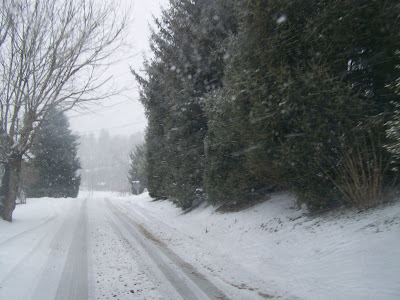
It snowed--not a lot, but enough and cold enough temperatures to go with it to keep us indoors all day. I knew exactly what I wanted to do. It's a project that's been waiting for months. Well, maybe a few years.

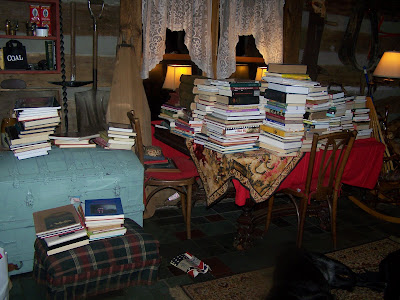
The big bookshelf in the living room needed attention. It needed all the books taken off and dusted, the shelves washed and polished and then all the books re-set in some kind of reasonable order. This isn't a quick project. It takes hours because who can resist browsing when there are so many books to look at?

We got them off the shelves pretty quickly. Larry was sure he'd never seen the big shelf empty, but that's not true. I'm pretty sure I've cleaned it a few times in our 25 years of marriage! Sometimes I just do one shelf at a time, though, and maybe he wasn't here when I did the big clean like I did today.

Dusty, dusty

Then I got sidetracked. A friend and I are writing a storytelling grant together and it's due Monday. We have a lot of pieces to put together to make the grant application together and we did a lot of it over the phone and by email. Of course, phone calls to people who are involved always means a longer conversations because we have to catch up. I tweaked documents, figured a budget and a schedule and put together plans. We got a lot done and I think we can finish tomorrow.


Miss Charley thought she was helping with the grant by staring at me.

That inspired me. I recalled that another grant opportunity was available for a professional development grant for artists. I downloaded the forms and got to work on that grant, one I had not really planned on applying for but since I had time today--and didn't want to get back to work on the big shelf project--I decided to give it a try. Two hours later the application was complete and now it's ready to be mailed. Will we get either one? Who knows? I expect there will be plenty of competition this year with money as tight as it is now.


By 9:00pm the grant was finished and the books were staring at me. I had to get back to it; who would want to look at that mess in the morning?

I cajoled Larry off the couch and we dug into the pile.


The thing is, it's not just putting them back--it's establishing some kind of order. I'm a librarian but I'm not fanatic about my own books being in Dewey order (actually, I prefer Library of Congress cataloging, but that's a different story). I try to organize them loosely into categories: books about storytelling process, folklore, mythology, storytelling for children. Collections of stories from different cultures, ghost stories, British stories and folklore, music and ballads, poetry and writing. Gardening. History. West Virginia (although the bulk of that collection is in my office, I don't have room for all of it in there). Larry's masonry and carpentry books. (Cookbooks are in the kitchen). Et cetera, et cetera.

I ended up with two piles that will not go back on the shelves. One pile is for Goodwill, the other is books that I need to give away to someone. Some of the second pile already have homes--I know who wants those. Others, I'll have to think about. Only 2 books hit the trash, books so far gone and falling apart that they weren't worth saving, and one of them I'd already replaced anyway.

We finished at 11:00pm. The shelves look fine, organized and tidy. I think I know where everything is, although time will tell. One thing is sure: there is no dust anywhere on those shelves or books and that is an accomplishment indeed.

Apogee and Perigee and Snow


Last night, I learned, was the perigee moon--the time when the moon's orbit places it closest to earth and so it is bigger to our view. Here's what The Astrology Cafe says about it:

"A perigee Moon simply means that the orbit of the Moon around the Earth is in the shape of an ellipse (kinda like a slightly smashed circle), with one end (its perigee) being shorter in distance than the other end (its apogee).

So, the perigee Moon is at its closest point from the Earth, and it will appear bigger and brighter to us observers here on Earth."

Unfortunately we were cloud-covered and waiting for snow to arrive. It was cold too, about 11 degrees. So we missed this not-so-common astrological sighting. I hope some of you were able to see it.

Today the snow arrived and we have about two inches and counting. We were supposed to get a "dusting." If this is dust, I'd hate to see the weatherman's house. So we'll have an inside day, cleaning and sorting the big bookshelf, a job that sorely needs doing.


Winter of course is only halfway over or maybe not even that. Spring is March 21, which is 7 weeks away. So we might as well enjoy the rest of this season of rest. When Spring comes we will be busy planting, cleaning gardens, getting tools in shape and all the other work of preparing for summer. In summer we will be running hard to keep up with the grass and weeds; we'll be canning and putting food away. When Fall comes we'll be hurrying to get in firewood, putting the gardens to bed and putting up whatever food still needs to be stored. But winter? All we need to do is stay warm, dream by the fire, and shovel snow occasionally. So enjoy the rest! We'll need to be ready to go come spring.


Here's a poem to share with you on this cold snowy day:


Dust of Snow
Robert Frost

The way a crow
Shook down on me
The dust of snow
From a hemlock tree
Has given my heart
A change of mood
And saved some part
Of a day I had rued.


And another, for those who need a bit of hope at this time of year:


The Darkling Thrush
by Thomas Hardy

I leant upon a coppice gate
When Frost was spectre-gray,
And Winter's dregs made desolate
The weakening eye of day.
The tangled bine-stems scored the sky
Like strings of broken lyres,
And all mankind that haunted nigh
Had sought their household fires.

The land's sharp features seemed to be
The Century's corpse outleant,
His crypt the cloudy canopy,
The wind his death-lament.
The ancient pulse of germ and birth
Was shrunken hard and dry,
And every spirit upon earth
Seemed fervourless as I.

At once a voice arose among
The bleak twigs overhead
In a full-hearted evensong
Of joy illimited;
An aged thrush, frail, gaunt, and small,
In blast-beruffled plume,
Had chosen thus to fling his soul
Upon the growing gloom.

So little cause for carolings
Of such ecstatic sound
Was written on terrestrial things
Afar or nigh around,
That I could think there trembled through
His happy good-night air
Some blessed Hope, whereof he knew
And I was unaware.


Spellchecker thinks Thomas Hardy can't spell :-)

Friday, January 29, 2010

Moon Lore


The Road was lit with Moon and star
by Emily Dickinson
The Road was lit with Moon and star --
The Trees were bright and still --
Descried I -- by the distant Light
A Traveller on a Hill --
To magic Perpendiculars
Ascending, though Terrene --
Unknown his shimmering ultimate --
But he indorsed the sheen --

The moon was bright against the sky last night as I topped the ridge. I stopped in the the road to take pictures only to discover I had the wrong camera. I snapped a few anyway--and then my phone rang so I was scrambling to find the phone, close the car door, and turn off the camera. It was one of my sons, who asked what I was doing.

"I'm in the middle of the road, taking pictures of the moon."

"Of course you are," he laughed. "You're always doing that." True. And I will try again tonight because the moon will even more full tonight than last night. Although tonight we have clouds. And possibly snow. So I am glad I tried last night, even if the photos were less than successful. I thought this one looked like a painting, so decided to use it today.

Since I have been taking more photos, I've been paying more attention to the moon and her perambulations. I started collecting a bit of moon lore too, and I today seems like a good day to share some of it with you.

Did you ever consider how many words we use about the moon in everyday conversation?

We say someone is "mooning about" or that something is "as likely as the man in the moon." We take honeymoons when we get married, moonlight when we work a second job, consider someone born under the sign of Cancer a "moon child." We eat moon pies with Dr, Pepper if we're in the South and drink moonshine in the hills. And there is the "full moon" of someone's bare bottom pressed against the window of a car (I've been treated to that myself--a bunch of college kids on their way to a ski trip gave us a full view several years back. Not something I'm likely to forget!).

Then there is the story of the Moonrakers, told in a brief version in the English folktale The Three Sillies:

"Then the gentleman went on his travels again; and he came to a village, and outside the village there was a pond, and round the pond was a crowd of people. And they had got rakes, and brooms, and pikels (pitchforks), reaching into the pond; and the gentleman asked what was the matter. "Why," they says, "matter enough! Moon's tumbled into the pond, and we can't get her out anyhow!" So the gentleman burst out a-laughing, and told them to look up into the sky, and that it was only the shadow in the water. But they wouldn't listen to him, and abused him shamefully, and he got away as quick as he could."

In Warwickshire, England, countrymen used to ensure good luck by bowing nine times to the first new moon of the year. (Oops, we missed it!)There are many other superstitions about the moon. From the Farmer's Almanac comes this wisdom:


Seeing the new moon over your left shoulder is unlucky, but seeing it straight ahead is considered to be very lucky. Pointing at the moon is supposed to be unlucky, as is seeing a new moon through closed windows. But a crescent moon that is waxing is good luck for lovers and travelers.It is lucky to see the first sliver of a new moon "clear of the brush," or unencumbered by foliage.

It is also lucky to move into a new house during the new moon; prosperity will increase as the moon grows full. But if you see the first sliver of a new moon through a window, you'll break a dish.


It is unlucky to have a full Moon on Sunday, although how that can be avoided I'm not sure.

The moon is often blamed or praised for the weather:

From Robert Service's poem, Moon Song:

Two lovers watched the new moon hold
The old moon in her bright embrace.
Said she: "There's mother, pale and old,
And drawing near her resting place."
Said he: "Be mine, and with me wed,"
Moon-high she stared . . . she shook her head.


Perhaps her reasoning is the same as that of the sailors in the ballad of Sir Patrick Spens:

"I saw the new moon late yestreen
With the old moon in her arm;
And if we go to sea, master,
I fear we'll come to harm."

From the book Weather-lore by Richards Inwards (1898):

Clear moon, frost soon.

A dim or pale moon indicates rain; a red moon indicates wind.

When the moon is darkest near the horizon, expect rain.

Far burr, near rain. (Burr means ring; so the farther the ring from the moon, the sooner it will rain)

The moon with a circle brings water in her beak.

Frost occurring in the dark of the moon kills buds and blossoms; frost in the light of the moon will not.

If the crescent moon appears with her points turned up it will be dry; it turned down, wet.

There are many stories connected with the moon, but while browsing online I came upon this one:

Vampire Melons (From Experience Festival website)

The belief in vampire watermelons is similar to the belief that any inanimate object left outside during the night of a full moon will become a vampire. According to tradition, virtually any kind of melon or pumpkin kept more than ten days or after Christmas will become a vampire, rolling around on the ground and growling to pester the living.

We often talk about the man in the moon in our culture, but other cultures see other creatures, like the Hare in the Moon in India. This is a brief version of the story:

A monkey a fox and a hare were out walking. They encountered a beggar in very bad shape.

"Please," said the beggar, "I have not eaten in days. Have you any food to share?"

It happened to be a holy day, when the rich fasted and gave food to the poor. The three friends decided they would find something for the beggar to eat. The monkey went high in the trees and found some mangoes; the fox rummaged in a hedge and came out with a bird's nest with a few eggs in it. "Thank you, my friends!" said the beggar.

The hare was not a hunter and he could find nothing to give to the beggar.

'I have only myself to give," said the hare. He lit a fire and jumped tight into the hot flames.

However, the hare was protected because of his goodness and he did not burn. The beggar revealed that he was actually Indra, God of the Storm.

'Because of your generosity and willingness to sacrifice yourself,' said Indra, "you shall live forever in the moon, where all will see you and remember your bravery."

More "rabbit in the moon" stories from other cultures are listed in Wikipedia.

From Theoi Greek Mythology:
SELENE was the Titan goddess of the moon. She was depicted as a woman either riding side saddle on a horse or in a chariot drawn by a pair of winged steeds. Her lunar sphere or crescent was represented as either a crown set upon her head or as the fold of a raised, shining cloak. Sometimes she was said to drive a team of oxen and her lunar crescent was likened to the horns of a bull.

Selene inspired Homer to write these lines to her (excerpted from translation by Evelyn White, public domain):

(ll. 17-20) Hail, white-armed goddess, bright Selene, mild, bright-tressed queen! And now I will leave you and sing the glories of men half-divine, whose deeds minstrels, the servants of the Muses, celebrate with lovely lips.


Selene's Roman counterpart was Luna ( source of lunar, lunacy, lunatic...).
From Wikipedia:
In the traditional pre-Olympian divine genealogy, Helios, the sun, is Selene's brother: after Helios finishes his journey across the sky, Selene, freshly washed in the waters of Earth-circling Oceanus,[3] begins her own journey as night falls upon the earth, which becomes lit from the radiance of her immortal head and golden crown[3]. When she is increasing after mid-month, it is a "sure token and a sign to mortal men".

You can find much more information about the moon on these sites:

Moon phases for the current month--keep current on your moon!
The Big Moon Hoax
Lesson plans and links to many folktales and other interesting things ht
Watch a video telling of the Hare in the Moon
Moon myths and more from National Geographic
Moon Myths in the public domain.
Myths about the man in the moon and more
Moon gods and goddesses: who knew there were so many?


Moon over Joe's Run, 2008.

Wednesday, January 27, 2010

Ikie's Tomb

A teller of ghost tales is often also the recipient of ghost tales. Today I heard the strange story of Ikie's Tomb.

It was a storytelling day in one of my favorite places--the library in Sistersville, West Virginia. I was speaking to their noontime book club about my most recent CD and ghost stories in West Virginia in general.

My take on ghost stories differs from that of ghost-hunters. I am interested in what people tell me, the stories of things that happened to them or to family members, and not as much in whether the tales are "true" and definitely not in trying to contact the dead or determining if there is any paranormal activity. I prefer the story and the folklore/legend aspect; if someone tells me that it happened, I take their word as a collector of stories. Who am I to say if it happened or not?

During my program today, one of the audience members asked me if I knew about Ikie's Tomb. I had not. She told this eerie story:

A boy named Ikie died when very young. His mother had him entombed in glass, with a little door that could be opened. She put the child's toys into the tomb, and also a rocking chair. The mother would go to the tomb on a regular basis, take the child's body from the glass case, and rock and croon to him in the rocking chair. Then she would put him back into the case until her next visit.

Where was this tomb, I asked? My informant gave me some general directions and I realized that today would not be a time to visit. It will have to wait for a day when I am dressed properly and the weather is a little warmer. She found some information online and the librarian graciously printed it out for me. When I got home, I came straight to the computer to see what I could find.


Photo from WV Culture website; taken by John Tice.
Indeed, there is a place called Ikie's Tomb. The story as I heard it today was basically true, although details vary. A Goldenseal article in Fall 2003 identifies the child as Ikie Gorrell, or Ikie Mooring, who died on March 3, 1904, at seven years of age. Some versions say he simply got sick and died, others that he died of bad "ice milk" he'd had earlier in the day. His mother had him entombed in a concrete vault, and the vault filled with formaldehyde to preserve his body. There was a glass window for viewing inside the crypt and a door in the top with a seal.

The part about putting his toys in the vault seems to be true as it is repeated in various versions of this story. A high-wheeled tricycle, a wagon and other toys are mentioned, which gives an indication of the size of the vault. Two other children were also buried in the same tomb; in one version, these were babies who were placed in stone crocks with only their faces showing to preserve them; in others they are two teenage sisters to Ikie. The Goldenseal article reports finding pieces of a stoneware crock in the tomb.

In 1979 the local sheriff realized that teenagers, who found the gravesite a good place to hang out, were vandalizing the grave so he arranged for Ikie's body to be properly buried. The mortician who did this task reported that there were remains of an old wood rocking chair in the tomb, possibly confirming the story that Ikie's mother often took his body out of the vault and rocked him. Another person told John Tice, author of the Goldenseal article, that the mother would take the children's bodies out of the tomb and hang them in a tree while she cleaned the tomb but this seems unlikely to me.


Photo from Mount Welcome Cemetery page.

The parents moved away from the area a few years after Ikie's death and ended up in Cabell County, where both are buried. Ikie's tomb remains in place, although it is a ruin today, and his grave can still be seen in the Mount Welcome cemetery.

Imagine the grief of the mother who must have been deranged by the loss of her son; the image of her rocking her dead baby is a haunting one. I hope that those who visit Ikie's tomb remember her sorrow, and leave a flower and a prayer at the side of her beloved child's grave.

You can find more about Ikie's Tomb at:

Goldenseal Magazine, Fall 2003: Searching for Ikie's Tomb.

Genealogy information about Ikie.


Information about Mount Welcome Cemetery.

Tuesday, January 26, 2010

The Pardoner's Tale : an Excerpt


I mentioned yesterday that I have been listening to the Canterbury Tales on CD, by Geoffrey Chaucer, as translated by Burton Raffel from the Middle English. Here is an excerpt from one I particularly liked, The Pardoner's Tale. Don't think, however, that the Pardoner was a good man, for he was probably one of the earliest versions of the TV preachers who ask continually for money. But his tale was excellent, and I am sharing the part I like best below. You can find the full tale at the Pitt e-text site.

The Pardoner ( picture from public domain) in Chaucer's time was a cleric who could sell forgiveness for your sins. How handy that must have been--to sin as you like and then pay someone so you could assure the safety of your soul. (Somehow I don't think it can really work that way...)
Excerpt from the Pardoner's Tale
"...The three unruly men ran ... to the tree, and there they found a pile of golden florins, well nigh onto eight bushels of them, they thought. The sight of all the bright and beautiful florins quickly caused them to abandon their search for Death, and their thoughts turned to how they might best protect their newly found treasure.

The worst of them spoke the first word, "Brothers," he said, "Fortune has given us this great treasure, but if we carry it home by light of day, people will call us thieves, and our own treasure will send us to the gallows. We must take it home by night, and then with utmost prudence and caution. Let us draw lots to see which one of us should run to town and secretly bring back bread and wine. The other two will stay here and guard the treasure. Then in the night we will carry the treasure to wherever we think is best."

The lot fell to the youngest, and he immediately departed for the town.

He had no sooner left when the one said to the other, "You are my sworn brother, and I will tell you what will profit you the most. You know our friend has gone. There is gold here aplenty, but our shares will be much greater if we divide it by two than if we divide it by three.

"That's true, said the other, "but what can we do?"

The first one answered, "The two of us are stronger than the one of him. You engage him in a playful wrestling game, and I will run my dagger through his back. Then you do the same thing with your dagger, and all this gold will be for you and me alone."

Now the youngest, while walking toward the town, thought over and over again about the bright new florins. "If only I could have this treasure to myself," he said, "then I would be the happiest man alive!"

The Fiend, our Adversary, put into his heart the thought that he might buy poison and thus kill his two friends. And so, arriving in the town, he sought out an apothecary whom he asked for a poison to kill rats and also a polecat that was in his yard.

The apothecary answered, "Here is a mixture that will kill any creature, even if it were to eat an amount no larger than a kernel of grain."

Carrying this poison in a box, he ran to the next street where he borrowed three bottles. He poured poison into two of them, keeping the third one clean for his own drink. Then he filled all three bottles with wine and returned to his friends.

But why make a sermon of it? They killed him, just as they had planned, and when the deed was done, one of them said, "Now let us sit and drink and make merry. Afterward we will bury his body." And while still talking, he drank from the poisoned bottle, and his friend drank as well, and thus the two of them died."

The twist of this tale is intriguing, don't you think? The pleasure of listening to these tales is that each is very different from the other. Some are bawdy, some comic, some heroic, others sad and dark. A few are very moral and religious. The variety of Chaucer's ideas for his tales is amazing and his characters so true that I feel as if I am in their company, riding along and listening to a talented and plainspoken group of live storytellers.

I am just over halfway through the stories, so there is a lot of excellent listening ahead. As any listener of audiobooks knows, the reader is fully half of the pleasure. This CD set employs a variety of readers so there are many unique voices, adding to the illusion of a company of companions riding and telling tales together. Imagine if we could take off on an adventure this today. Would we be as good at telling stories? Would we know enough stories to tell?

Monday, January 25, 2010

Book Reviews: Two Pluses, a Minus and Something in Between

A goal for this year is to read more "fun" books. Escape reading, you know, instead of research/learning reading. I'm working on it although I still find myself doing some educational reading in the process.

Last month I tried the following (I say tried because I am notorious for being bored by a book, flipping to the end to see if I have already figured it out and then not finishing it. Bad form for a librarian):

La's Orchestra Saves the World by Alexander McCall Smith. This was a given--I was pretty sure I was going to like it because I thought it was one of the #1 Ladies Detective Agency series. Instead, it was the story of La (short for Lavender), a woman who starts a community orchestra during World War II, in England. She also tended chickens as another part of her war effort, and struggled with trust and suspicion of a man met in the course of her work. I have liked everything I've read by McCall Smith except the ones about the philosophers' club and this story joined my list of books to recommend wholeheartedly. The main character, La, reminded me of the stories my mother told of growing up in rural England in wartime. McCall Smith captured perfectly that English toughness and gentility my mother exhibited. This was a quick read and a satisfying one. Don't expect real depth here; it's almost a country cozy but with the author's usual thoughtful rambles and perfect capture of description. This one you will put down and stroke the cover, wishing it had not ended so soon. At least, that's what I did.

Poe: A Life Cut Short by Peter Ackroyd. Another quick read, the author nevertheless captured the man and his demons, as well as his graces and genius. Throughout the book I felt that exasperation we all feel when we see someone missing chance after chance because they shoot themselves in the foot whenever opportunity comes calling. Poe was a twisted, unhappy man, and yet he had his joys and ambition too. The eeriness of a portrait painted of his wife just after her death summed up his life to me--sad, horrific, beautiful, and filled with longing for what he never managed to grasp. Although I've read a bit about Edgar Allan Poe in the past, I was glad for this quick refresher that offered depth, compassion and a fresh look into an old mystery. Acroyd is a renowned biographer, and he does just to his subject here.


The Canterbury Tales, translated by Burton Raffel. This is the "something in between." I am listening to this new translation on CD, and have been highly entertained. Who would have thought that flatulence and risque, not to say crude, behavior could be so entertaining?! I have laughed out loud many times while listening as I drive back and forth to work. I remembered the Wife of Bath's tale as being fairly bawdy, but goodness me she seems mild compared to the Miller's Tale and a few of the others. What makes it not a full plus is that Raffel seems to have interjected some modern-day language into the text--things like "have a nice day" for example--and to have missed some rhyming opportunities that would have flowed better than the words he chose, and been more in keeping with the language of the Tales. Or maybe that's just me. However, Raffel's labors have brought the Tales to me, and for that I am grateful.

So what was the minus? It was a book I should have known better than to try. I'm not a fan of genre fiction but when I read a review of Susan Wittig Albert's latest book and discovered that her detective was an herbalist, and that her books included recipes and herbal lore, I thought that they'd be right up my alley.

Wrong.


I used to read nothing but mysteries but when I exhausted Dorothy Sayers and tired of V.I. Warshawski and Sue Grafton's heroine (what was her name? I can't even remember now) I was done with the genre. So Albert's books should have stayed on my Do Not Read list. What bothers me is that the characters and the plot all scream "formula!" The list of female characters reads like a Who's Who of stereotypical women: strong gutsy former lawyer who returns to small town to open a shop (and who has all that lawyer money stashed so she can live in the style to which she's accustomed), her macho boyfriend guy who's studly and a former cop (which should have made the lawyer in her run screaming the other way) and with whom this 40-something lady has wild passion; the pink and prissy lady and the floaty spiritual one, the role model older woman who fights with her daughter, and on and on. Everything ties up tidily and even the murders are pretty tidy, come to think of it. For those who like formula mysteries and are into herbs, this might be a great series. For me, not.

That was January's reading list. February? I'm looking forward to it!

Sunday, January 24, 2010

News to Share

I've been slogging away on some applications and proposals today; very tiring day. But there is a little news on the storytelling front:


My CD Beyond the Grave will be listed with the West Virginia Book Company soon, allowing a much wider distribution and publicity. I will drop some off tomorrow and it should be listed on their website soon. I'm excited about this, and relieved. Promotion is time-consuming; while I will still be promoting and selling my CD wherever possible, it helps to have this larger outlet for sales. I will still be selling them myself, of course.


AND I have been asked to be a judge for the West Virginia Liars Contest! It's held during the Vandalia Gathering; this year it is on Sunday, May 30 at the Cultural Center in Charleston. I will have performance time onstage prior to the contest. If you attend Vandalia, please stop by and say hello. And get in the contest! It's fun and you just might win. The contest rules are here.

Did I mention earlier that I will be doing a workshop on using the old ballads as a frame for writing original stories at the WV Writers Conference in June? And also one on blogging--now that one will be easy! The ballad one is an idea I've had for a while, and there are actually several authors who have done this very thing. Sharyn McCrumb, for instance, writes the Ballad series featuring her character Nora Bonesteel, who is based on one of the old balladsingers from North Carolina. And Jane Yolen's Tam Lin come to mind, along with any written story of Robin Hood, who was a figure in ballads before he was in stories. I am reading my friend and fellow storyteller Gail De Vos' new book Stories from Songs: Ballads as Literary Fictions for Young Adults which is sure to be a good source of ideas for this session. Gail's book won a Storytelling World award this year, and small wonder. It's well researched and thorough.
Time to stop writing and start reading. Mr. Poe's biography is calling me, and I'm tired of thinking for now. Brain break!

Saturday, January 23, 2010

It's Funny How Plans Can Change

We planned to visit #4 son and his family, #5 son, and #1 grandson today. We had it all laid out: get up late (8:00 am is late for us), go to the Downtowner for breakfast, make a leisurely drive to Fairmont, WV, probably stopping at that huge antique mall on Route 50. Spend a glorious day with this part of our family, finally delivering Christmas gifts to some of them, then drive home sometime around dark to arrive here at 9 or 10pm so we could enjoy some time by the fire.

That was the plan and it went well until about, oh, 8:30am. That's when the phone rang.

"You don't want to come up here. The kids are sick with that throwing up-diarrhea thing that's going around."

She was right; we didn't want to be anywhere near that vicious virus. We've already seen its fury on several friends and family close by. Unh-unh. Not me--I do not want anything that glues me to the floor in front of the toilet for a day or so.

So what to do with a suddenly empty day? There are so many places we have talked about visiting: Cabin Creek, site of many battles in the coal-mining unionization war and where Larry's father grew up; Matewan in the southern part of the state, another place where the mine war raged and site of the murder of sheriff Sid Hatfield on the courthouse steps (if you have never seen the movie called Matewan, I highly recommend it); Welch, once thriving metropolis and later all but a ghost town--but making a comeback I have heard.

Then there is Olcott, where my husband grew up--I want to see exactly where everything was in his childhood in this mining camp--the company store, the tipple, all of that. He still has a few family members there, and most of them I've never met.

Or we could drive to Whipple to look at the company store building; or to Hominy Falls where some miners were rescued in what seemed a miracle years ago. We could go to the Ritchie Mines, where natural asphalt was discovered and was shipped all over the world; or Volcano, that oil-boom town that's all but a ghost town today.

So many places to see and history to discover, all within a few hours' drive. But they all remained on the to-do list today. Such trips take a little planning and thinking about what we want to do and see when we get there, and we were unprepared for all of them.

We went to Plan B, which was no plan at all, but a do-as-you-go thing--breakfast with friends as planned, then a visit to the local library where we got an unofficial tour of the new (outstanding) addition, a long browse at Goodwill (with excellent results, although Larry got completely bored long before I was ready to leave), wash the car, pick up feed for the chickens, and visit some friends on our way home.

I was supposed to spend the rest of the day working on proposals, stories, editing, and work like that. Instead, I had picked up a new biography of Edgar Allan Poe at the library and I sat down in front of the fire with a mug of hazelnut coffee and started my book.

Now I feel guilty. A whole day. I could have done so many productive things. I could have checked things off the to-do list and added them to the to-done list. I could have cooked, cleaned, written, planned, edited, done laundry, paid bills. Instead the day is pretty much over and I've read 60 pages, printed a few things online for a proposal, and now I'm blathering on this blog.

Sigh.

You'd think I'd grow up, take myself sternly in hand and do the grown-up thing of Using My Time Wisely.

I suppose I will continue to be an unwise fool. But it has been a lovely, lovely day.

Recipe: Praline Sweet Potatoes


This would have been a good recipe to share during the holidays. But why save the good stuff for just one time of the year? It would be good anytime, especially with ham.

I had a can of sweet potatoes in the cabinet; I think my son bought them for one of his diets. The expiration date was coming up and I decided to find a way to use them. Lo and behold, on the back of the can was this recipe, and folks I'm here to tell you it is delicious--and simple! That's a combination I like.

As for calories and fat, well, anything with praline in the title is a warning of what is to come. It's worth the occasional splurge, though. Try it and I think you'll agree. Eat salad with it to ease you conscience! This side is more like a dessert.

•2 29-ounce cans of Sweet Potatoes or Yams, drained OR 6 cups of peeled, chopped and boiled fresh sweet potatoes or yams
•1/2 cup chopped nuts (pecans preferred)
•1/2 cup coconut
•1/2 cup brown sugar
•4 tablespoons flour
•4 tablespoons melted margarine
Heat oven to 350 degrees. Place drained yams in ungreased baking dish. In a bowl, combine remaining ingredients; blend well and sprinkle over the yams. Bake at 350 degrees for 35-40 minutes or until bubbly.

Friday, January 22, 2010

Red Sky at Morning


Yesterday's morning sky was one of those "I'm going to be late for work" skies, when I had to stop and pull out the camera. The sweep of color was breathtaking, turning trees, roads, and fields a deep shade of maroon in the half-light before sunrise.

Mornings like this make me glad I'm up and out so early. As the month progresses, slowly the sunlight comes earlier and earlier, sure sign of our progression toward Spring. By the end of January, we are all, I think, feeling like winter's grip will never loosen. But the sun's steady increase of minutes is our reminder that all is moving as it should; we may not be able to see it, but underground things are stirring in anticipation.


While this red sky correctly predicted the damp, rainy and in some places icy day ahead, for me it was a signal that we will be seeing green soon enough, and I'd better get out my seed catalogs and get serious about ordering my supply for this year.

Have you ordered your seeds yet? Any suggestions for varieties to try? On Facebook, we talked about the many kinds of tomatoes we like. Several people suggested purple heirloom varieties and I think I may give them a go this year, along with my many standard favorites like Mortgage Lifter, West Virginia striped, yellow pear, Amish Paste, and the 8-10 other kinds we always grow.

I need to know about peppers too? Any recommendations? For the past two years, Lilac peppers have been a huge favorite for me, and last year I tried a variety pack that yielded red, green yellow, orange and purple peppers. That was fun. I usually grow cayenne too, but what am I missing that's a must in your garden?

Wednesday, January 20, 2010

Winter Haiku


Prayer

woody fingers stretch

stripped ebony limbs beseech

beg winter's mercy


Interior Decorating

Icicles curtain

Windows to a frost-tipped world

Inside, white-hot fire


Soul Food

Chocolate-brimmed mugs

cinnamon buns with icing

altar offerings


Quilt

ragged print patches

rub rough against pale dry skin

mothballs scent old wool


Woodstove

Rusty steel hinges

creak, ashes spill fire-hot on floor

frosty nostrils singe


Biscuits

flour, soda, salt

butter, milk, mix together

bake, eat--piping hot


Strawberry Jam

Jars of summer's sun

sweeten winter's sere cellar

hold sunlight hostage


Sleep

pile on blankets

snuggle deep in fleece cocoons

recover lost dreams


Wordless Wednesday: Blue Ice, Fire on Ice


Blue Ice
(Joe's Run watershed lake)

Fire on Ice
(Joe's Run watershed lake)


Tuesday, January 19, 2010

Review: Coalfield A Cappella

Close your eyes and imagine that you are in the mountains, deep in a hollow in a small community where everyone’s livelihood is controlled by one industry—coal. Imagine that each family has been impacted by that industry: the loss of loved ones in violent accidents or to the long slow suffocation of black lung, the loss of jobs, and the loss of what mountain people hold most dear—the mountains themselves.

Imagine again that you are seated on the porch of one of those homes, listening to someone telling the story of these people and their place in song. Simple, unaccompanied ballads that speak of life and death, passion, love, sadness, frustration, anger and defiance.

Open your eyes. You are listening to Coalfield A Cappella, a CD of original songs about the coalfields and their people, by Dr. Shirley Stewart Burns.

Burns knows all too well the struggles of the people about whom she sings. Raised in the coalfields of Wyoming County, West Virginia, Burns lost her grandfather and her father to the mines. She witnessed firsthand the painful death of black lung and she saw community after community die out as mines closed or new methods replaced manpower with big machinery. She saw water turn orange from mine drainage and communities drown in floods that made worse because denuded mountains and filled-in streams could not hold back rapid drainage from heavy rains.

An Appalachian scholar with a strong voice in the anti-mountaintop removal fight, Burns turned her pen from writing books about the tragic changes in the coalfields to composing songs in the way that mountain people know best—ballads. Her ballads tell stories: the story of a woman beaten down but not defeated by what mining has done to her family in “Ode to a Miner’s Wife;” of a man who turned to drink after witnessing the deaths of his sons in the mines in “Drunkard’s Lament.” Her sorrow at the loss of her father is laid bare in “Ode to a Miner,” and her sardonic look at mountaintop removal mining seems almost playful in the ominous “Pretty Mountains.” “There Goes Another Mountain” is an elegy to mountains stripped of their tops and their trees, their insides laid bare in the haste to dig coal out of their hearts. Still, Burns ends the recording with a song of faith and hope to complete this haunting collection.

The people of the coalfields are not unaware of what is happening to their land and their lives; many fight back with protests, appeals for legislation, and demands that lawmakers hold the coal companies to the standards and regulations that were created to govern the industry. It’s an uphill battle, and Burns stands at its forefront, unafraid. Some of her songs, like “Leave These Mountains Down” are songs of defiance and strength. She is not anti-mining; she is a daughter of coal. She stands for miners and their families, and for the conscientious removal of coal in a manner that will leave the land beautiful for generations to come.

Burns’ voice is simple and pure, the voice of a mountain woman singing about the land and people she loves. Her songs are songs from the heart, and her message is one that we all need to hear. Our mountains need us to listen and understand what happens to them and to their people when an industry looks only to profit and not to the future to mine the black gold hidden in West Virginia’s wild and wonderful hills.


For order information see: http://www.shirleystewartburns.com/home

Monday, January 18, 2010

Microfiction Monday:


"Don't mirror his emotions. Ask how you can help."

I'll bean him with my mirror. He won't get in my face over a dime fine on overdue book again!"

Sunday, January 17, 2010

Whither the Weather?


January

January opens
The box of the year
And brings out days
That are bright and clear.

And brings out days
That are cold and gray,

And shouts, "Come see
What I brought today!"
Leland B. Jacobs


Today the snow is almost all gone after the warmer weather of the past few days, and the rain today. I am sorry to see it go because now we have mud. But the uncovered grass looks green and happy, so perhaps there is some good to come from a winter thaw.

About this time of year, I begin to wonder what we'll be facing weatherwise in the coming months. My oldest son, who is an amateur meteorologist, predicts that we'll have a little warmer weather for the next couple of weeks, and then winter will return in force in February. He's been accurate all winter, so I think he'll be right again.

I browsed online to seek weather wisdom on this month of January.

Here's a few things I gleaned from my ramblings:

Look out for January 25th! Because:

"If Saint Paul's day
be faire and cleare,
It doth betide a happy yeare ;
But if by chance it then should rain,
It will make deare all kinds of graine;
And if ye clouds make dark ye skie,
Then neats and fowles this year shall die;
If blustering winds do blow aloft,
Then wars shall trouble ye realm full oft."
from Ancient Folk Lore.


The above website also includes this intriguing bit of information:

In Alsace there is a common belief that on the evening of this day a fierce contest prevails among the winds, and the wind which proves victorious at midnight ("the devil's dancing hour") will be the prevailing wind throughout the year.

Whoa. This might be worth staying up to observe.


January 25th is actually the day that the conversion of St. Paul is celebrated; there is another "St. Paul's Day in June, according to this website. But the belief in being able to predict the year's weather on this date apparently has older origins:

"It has been an article of constant belief in Western Europe, during the middle ages, and even down to our own time, that the whole character of the coming year is prognosticated by the condition of the weather on this day; and this is the more singular, as the day itself was one of those to which the old prognosticators gave the character of a dies Ægyptiacus, or unlucky day." From The Book of Days.

A few more things you might need to be aware of when considering the future weather:

Sun dogs predict a cold spell.

Fog in January predicts a wet Spring.

The banks of snow in winter will equal the height of the banks of weeds in summer.

In late winter do not knit on the doorstep, as that is known to lengthen the winter.

Thunder in the fall warns of a cold winter.

The nearer the New Moon to Christmas Day, the harder the winter. (when was the new moon in December? If my memory is right, it was mid-month?)

And just for fun, care to guess this riddle?

"From Heaven I fall, though from earth I begin.
No lady alive can show such a skin.
I'm bright as an angel, and light as a feather,
But heavy and dark, when you squeeze me together."

excerpted from a poem by James Parton.


January is a good time to read poetry, because after all, "To read a poem in January is as lovely as to go for a walk in June." - Jean-Paul Sartre

So, here's a poem perfect for this time of year:

From Jack Frost

"The door was shut, as doors should be,
Before you went to bed last night;
Yet Jack Frost has got in, you see,
And left your window silver white.

He must have waited till you slept;
And not a single word he spoke,
But pencilled o'er the panes and crept
Away again before you woke.

And now you cannot see the hills
Nor fields that stretch beyond the lane;
But there are fairer things than these
His fingers traced on every pane."
- Gabriel Setoun (1861-1930)

Saturday, January 16, 2010

Weekend with the Family

Weekend off-- my oldest son and his family are visiting, so lots of talking, food and laughter this weekend.

Back tomorrow with a new post--for now, Granny is having fun being granny!

Thursday, January 14, 2010

Hard Snow and Sparkle Snow

From hard, blowing snow one day,


to sunshine when snow was falling on another day,
and sparkly snow,
to bone-chilling cold and ice...
this has been a month to remember, a January like the ones I remember from when I moved to the mountains in the mid-1970's. My only regret this year is that I have not had the time to sit back and enjoy it as much as I would like. Instead, I leave when day is breaking and come home at its end, wondering what magic I missed while enclosed in my office.

Wednesday, January 13, 2010

What's Going on with Storytelling?


Winter is my down time for storytelling usually and I am glad of it because I don't relish the idea of road trips when the weather is as snowy and icy as it's been lately.


But I am planning and thinking about the year ahead.


There is a little news:

My latest CD, Beyond the Grave: Ghost Stories and Ballads from the Mountains was reviewed on Appalachian History this week. And it was a good review (whew!).

I was invited to be a judge for the West Virginia Liars Contest, which is held during the Vandalia Gathering at the State Capitol on Memorial Day weekend. Some performance time is part of the package, so I am really excited about this. Bring on the tall tales!

A librarian at the Dahlgren Navy base in Virginia contacted me to tell stories there in April. This base is not far from my sister Maggie's home so I'll be able to visit her too. Looks to be a fun road trip.

I've been selected to be a featured teller at the Three Rivers Storytelling Festival in Pittsburgh in August. I have participated in this festival before as both a storyteller and a volunteer, so it will be good to go back to see old friends.

I will be telling stories and recording a TV interview in Maryland the first week of March with my good friend and fellow storyteller Ellouise Schoettler.


Then there is the planning:


I am thinking about this summer's reading program in the libraries and what kind of program to offer. Last summer I stayed pretty busy with library performances; will this year be the same or will the economy begin to impact funding? I am getting to work on contacting other venues too. Tis the season to get this work done.

I've been working on promotion for the CD--requesting reviews, finding review sources. Once I have a few reviews out there, I will pull together a promotional packet to send out to libraries and other potential buyers. I have sent the CD for jurying to one arts center; still waiting to hear back from them.

Office cleaning and file sorting! During the busy summer my office became a war zone. I've been sorting, cleaning and reorganizing files so I can once again find things in here. I'm making headway...next stop is the big bookshelf. I need to get those books in some kind of order so I can find what I'm looking for more easily.

Writing. The West Virginia Writers annual writing contest is on, with submissions due by March 15. I have a few stories to polish for entry and maybe some poems. I haven't been writing as much so I'm not sure about entering this year.


Taxes. Ugh. I'm putting my records in order and getting ready to start work on preparing the return.

Thinking about new stories to tell. Last night I dreamed a complete performance. Start to finish, and there were so many problems! Late arrival, not remembering the story, bad venue so it was difficult to reach the whole audience, no microphone, wrong outfit. One of those dreams where if something can go wrong it does? I woke up exhausted, and yet exhilarated by the remembered sensation of telling. What new material do I want to develop? Nothing is jumping out at me, but I know that stories can't be forced. Something starts growing in my mind, other things feed into it, and before long I have the beginnings of a new story.


New ballads. I have found several I want to learn. My usual way of learning them is in the car, playing the song over and over until I have it fixed in my mind. Then I sing it over and over, probably 100 times or more. I research its background, find other versions, and finally it's my song. This might sound like work but for me it is pure pleasure. I love to sing, and I get pulled into a song until I can't get it out of my head.


Life will remain a slower pace through March, and begin to pick up a bit in April. May's weekends are already full and the rest of the year is slowly filling in. So I will enjoy these quiet evenings and empty weekends while I can.

Tuesday, January 12, 2010

Moneysavers


New year, new resolutions, and for many of us the number one resolution is to find more ways to save, and to live a little greener in the process.
My list of things I already do includes the following:

Laundry: hanging it out saves on the electric bill--but we've talked about that before. My daughter-in-law claims that clothes last longer if they are air-dried: colors don't fade, and you know that lint in your dryer? That's part of the fabric in your clothing; the process of drying breaks the fibers that are woven together to form cloth, so a little bit of your favorite towel is lost each time it goes through the dryer.

Hair care: I decided to let my hair grow long again, quit blow-drying, moussing and messing with it. I cut it myself when it gets too long. It's not stylin' but it works for me (well, most of the time). Savings: hair products, hair cuts, blow dryer, curling iron, electricity, gas going to the hair dresser, and best of all--time.

Cloth napkins: They can be found for next to nothing at yard sales and resale places. They can be washed and re-used. They can be mixed and matched for variety. They're pretty!

Cloth kitchen towels instead of paper towels: I still buy paper towels occasionally (especially when grandkids come!), but this is a next-step for me as soon as I have enough linen kitchen towels and good rags for cleaning up spills.


Crocheted dishcloths: My sister Judy gave me one she made and I love it. I want more! This is so much better than anything else I've used to wash dishes.

Kitchen mops: Did you know you can buy wood-handled mops with spring-loaded clip heads that you can refill with rags or replaceable mopheads? We had them when I was a girl and I recently found them again. These are the best--no wringing out a big heavy mop or even worse buying expensive refills. Just use what you have on hand. These mops aren't pretty but they are sturdy and work well. Those Swiffers et al are expensive to upkeep, and don't do the job any better than the old standard cleaning tools. (am I sounding like an old fogey here?)

Wood floors instead of carpet: for all kinds of reasons. Wood will not wear out for years and years (it can wear out, though, as we proved when we were children in our big old house in Virginia. Those oak boards were worn thin!). Wood can be cleaned, refinished to look like new over and over. Carpet needs special tools for cleaning; it has to be replaced; and that's not even talking about the dirt and dust and whatever else seeps down through carpet into the pad and sneaks around firing up allergies in people like me.

Those are a few things that came immediately to mind as I started writing this post. I am sure you can add many other things to this list. The bottom line is re-use, recycle and recreate. I am often amused by ads that cry out to us to "Hurry in and save!" Guess what? If we don't hurry in, we'll save even more because we won't spend anything! It's not shopping and sales, it's thinking about what we buy, what we really need, and what we can re-use, and what we can do ourselves.


There is a new book called Save BIG: How to Cut Out Big Costs, by Elizabeth Leamy that I would like to read. I'm pretty good at saving in little ways: carry my own coffee to work, pack my lunch, grow a garden, can and preserve, hang out laundry, eat out rarely, and so on. But the big things? Like most people, I don't pay attention to them--and I should. I read her blog and found a few things I want to investigate further.


And I'll save even more--I'll get her book from the library!

Care to share? What new things are you trying this year to save money and/or go green? And what old-tried-and-true things are you still doing?

Monday, January 11, 2010

I know that many of you are good cooks because I see the results on your blogs.
So: The West Virginia State Fair is compiling a cookbook for the 2010 State Fair. I think that all of you cooks out there should submit something!
I have seen to-die-for cakes, salads, jellies, pies, rolls,
cobblers, breads, side dishes....you know who you are. Why not submit a recipe or two and share that talent in the State Fair Cookbook?
They are looking for recipes in the following categories:
- Appetizers & Beverages
- Soups & Salads
- Vegetables & Side Dishes
- Main Dishes
- Breads & Rolls
- Desserts
- Cookies & Candy
- This & That (preserves, jams, special dietary needs)

The proceeds from sale of the cookboks will benefit the State Fair Endowment which, which according to their website, "provides long term funding for Career & Scholarship Advancement Initiatives, Youth Educational Enrichment and Agricultural & Competitive Exhibit Premiums."

There is a form on their website you can download to submit your recipe.

Then mail the form to:
PO Drawer 986, Lewisburg WV 24901

Or Fax it to:

304.645.6660


Let us all know when your recipe is selected!

Sunday, January 10, 2010

On January


"January has bleakness, naked trees with cold rain dripping from them. It has drabness; violence; sharp, bitter winds' and the colored magnificence of ice, too. But sometimes it has moments of tenderness that are not surpassed by the compassion of any month.


One of these is that moment when night has just barely come but day has not altogether departed from snow-whitened hills and fields. When lights come on in the farmhouse then, one looks from a warm, lighted room into an outside world turned suddenly bright blue.

Against the glasslike clarity of that blue sky, bare trees loom up in blackness. A line of fenceposts rises up blackly from fluffy cascades of black weeds and brush. The last, late birds, hurrying from feedpans to wherever they go to sleep for the night, are small black pebbles tossed against the bright blue air.


This moment forgives the day all its shortcomings. This late, bright blue moment of early evening is reward for one's having ploughed laboriously through snow all day, to the barn, mailbox, henhouse, to neighbor's houses, to woodpile or cistern or wherever one went that day. The blue world lasts only about ten minutes, fifteen at most; even the busiest of farmers can spare time to accept this tenderness from January's cold hand."


From the chapter January in
by Rachel Peden
Alfred A. Knopf, New York
1961


I read this book when I first moved to the country, and found it again at the library's used book sale this fall. I am once again reading, month by month, the observations of a 1950's farmwife and enjoying them even more the second time around.
I will try to share a bit from each chapter as this year progresses; Rachel's comments on country life, nature and beauty are still relevant today.
Related Posts Plugin for WordPress, Blogger...