Pages

Showing posts sorted by relevance for query fairies. Sort by date Show all posts

Monday, January 28, 2008

Into the Fairy Ring

The Road to Fairyland
by
Ernest Thompson Seton

Do you seek the road to Fairyland
I'll tell; it's easy, quite.
Wait till a yellow moon gets up
O'er purple seas by night,
And gilds a shining pathway
That is sparkling diamond bright
Then, if no evil power be nigh
To thwart you, out of spite,
And if you know the very words
To cast a spell of might,
You get upon a thistledown,
And, if the breeze is right,
You sail away to Fairyland
Along this track of light.

It's getting close to time to think about the wee folk. March isn't far off, and then as the flowers start to bloom there likely will be fairies hiding under petals.


In our meadow, there are rings of dark green that people around here call "fairy rings." These are the places where the fairyfolk dance at midnight, or so they say. Their tiny feet enrich the earth and make the grass grow greener. (There is a vvery mundane and completely unmagical explanation for this at Plantanswers.)


There are also places in the meadow, and, oddly, in the median of the interstate where toadstools grow in circles--also called fairy rings. The fairies, so some people say, live under these toadstools. I've looked but never seen any, but then I didn't have my glasses on so they may have been there.


Fairies can be a force to reckon with--the beautiful ballad of Tam Lin certainly illustrates that. Many plants have fairy superstitions attached to them. According to The Land of Faery :

Foxglove--the name supposedly is a derivative of "Little Folks' Glove, and it is believed that fairies wear the florets as hats or mittens.

Primroses can make the invisible visible. Eating primroses may help you see the fairies.

Ragwort is sometimes used as a horse by the fairyfolk.

Thyme was part of a recipe for a brew to make one see the fairies.

Cowslips are loved and protected by the fairies. They help one to find hidden fairy gold.

Pansies were used in a love potion by Oberon, a fairy king.

Many people connect clover with fairies. If you wear a four-leaf clover, for example, you are supposed to be able to see the fairies. You can use the four-leaf variety to break a fairy spell.

St. John's Wort--if you step on it a fairy horse may rear up and carry you away to who-knows-where. What does St. John's wort look like? See the flower photo at the top of the page (from Wikipedia).

There are so many good books and websites about fairies and magical creatures. I compiled this list for a children's program so it includes craft books:

The Hidden Folk: Stories of Fairies, Dwarves, Selkies, and other Hidden Beings by Lise Lunge-Larsen
Boston : Houghton Mifflin, 2004.

Meeting the Other Crowd: The Fairy Stories of Hidden Ireland by Edmund Lenihan
New York : Jeremy P. Tarcher/Putnam, c2003.

Fairy Crafts: 23 Enchanting Toys, Gifts, Costumes and Party Decorations by Heidi Boyd
Cincinnati, Ohio : North Light Books, c2003.

Swan Sister: Fairy Stories Retold by Ellen Datlow
New York : Simon & Schuster Books For Young Readers, 2003.

Twelve Fabulously Funny Fairy Tale Plays by Justin McCory Martin
New York : Scholastic Professional Books, c2002.

The Book of Wizard Parties: in Which the Wizard Shares the Secrets of Creating Enchanted Gatherings By Janice Eaton Kilby
New York : Lark Books : Distributed in Canada by Sterling Pub., c2002.

A First Book of Fairy Tales by Mary Hoffman
New York : DK Publishing, 2001

An Encyclopedia of Fairies: Hobgoblins, Brownies, Bogies and Other Supernatural Creatures by Katharine M. Briggs
New York : Pantheon Books, c1976.

The Broonie, Silkies, and Fairies: A Traveler’s Tales of the Otherworld by Duncan Williamson
New York : Harmony Books, 1987, c1985.

Crafts from Your Favorite Fairy Tales by Kathy Ross
Brookfield, Conn. : Millbrook Press, c1997.

And some websites:

Fairies, Fairies, Fairies--lists poems, stories, lore and more.

eFairies.com is an alphabetical listing of fairy names from legends and stories.

ArtPassion includes many beautiful artworks featuring fairies.


From Encyclopedia Mythica comes a possible source for the word "Fairy".


And at Quotegarden, a whole page of fairy quotes, including this one:

The fairy poet takes a sheet
Of moonbeam, silver white;
His ink is dew from daisies sweet,
His pen a point of light.
Joyce Kilmer

Wednesday, June 22, 2011

Build a Fairy House

At our family reunion in May, I showed some of my great-nieces and nephews how to make a fairy house. They loved it--it's not difficult to do, and the folklore says that if you make the fairies happy in your garden, they will reward you with beautiful flowers and vegetables. So why not make a fairy house--just in case you have some homeless fairies in your garden?

Here's the one we built:


And here you can see how tiny it is:

We used scraps of bark, twigs, stones, bits of moss, acorns, and other woodland debris to construct the house. The we moved a few wildflowers (violets, bluets, and cinquefoil) to pretty it up, and it was done.

Afterwards the kids made several more, I heard, but I didn't see them because they were in secret places.

As for how to see a fairy, here is some advice, as posted on the Herb Companion:

To enable one to see the Fairies: A pint of sallet oyle and put it into a vial glasse; and first wash it with rose-water and marygolde water; the flowers to be gathered towards the east. Wash it till the oyle becomes white, then put into the glasse, and then put thereto the budds of hollyhocke, the flowers of marygolde, the flowers or toppes of wild thyme, the budds of young hazle, and the thyme must be gathered neare the side of a hill where fairies use to be; and take the grasse of a fairy throne; then all these put into the oyle in the glasse and sette it to dissolve three dayes in the sunne and then keep it for thy use. -from A Garden of Herbs, by Eleanour Sinclair Rohde


And from Eleanour's book (published on the Gutenberg Project's website):

And what of the fairies in those gardens? We live in such a hurrying, material age that even in our gardens we seem to have forgotten the fairies, who surely have the first claim on them. Does not every child know that fairies love thyme and foxgloves and the lavish warm scent of the old cabbage rose? Surely the fairies thronged to those old herb-gardens as to a familiar haunt. Can you not see them dancing in the twilight?
Ready to make your fairy house now? I think I'll mosey out into the woods and see what I can find to make one for my garden.

Many people make these little houses now, and some get really elaborate. If you'd like to see others, here are a few links:

Simple, family-friendly instructions for building a fairy house, by Family Fun magazine.

Some pretty fancy ones on this website.


There are also people creating entire fairy gardens:


How to create a fairy garden--instructions!

A fairy garden from the Herb Companion website.

And of course, you can buy kits, fairy furniture and just about anything else you like!


Thursday, January 16, 2020

Dente De Lion: The Lowly Dandelion

Partly sunny, 40 degrees at 8am. Rain showers coming later, the weatherman says.

We planted more spring bulbs yesterday. They were 75% off, so it's worth a gamble to see if they come up. These are naturalized, just planted in a space on top of the hill, and if they grow they'll be a pretty sight when we turn into our driveway. We put in quite a few more daffodils. They're one of my favorite flowers---who can really pick a favorite?---and we have many of them already. But the more the merrier, I think. I wrote a post about daffodil legends and superstitions a couple years ago. You can read it here.

One of the flowers we planted was the crocus. One of my favorite bloggers, Icy Sedgwick, wrote an extensive post about the crocus, as part of her series on the folklore of early spring flowers. Her blog, IcySedgwick.com is well worth following if you love folklore like I do.

The other day I noticed a dandelion already in bloom--in January! This lowly little flower is certainly resilient. The French call it dente-de-lion, meaning lion's tooth, because the shape of the petals was thought to resemble the shape of  that cat's dentures.
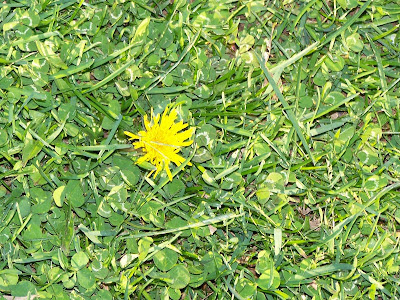
photo from last year

Like so many other plants, there is much lore attached to the little golden face of early spring.

For example:

  • Woven into a wedding bouquet, dandelions are considered good luck for the new couple. 
  • Dandelions in dreams mean a happy marriage. 
  • They are also seen as symbols of hope, summer and childhood. 
  • In medieval times, dandelions were used to predict a child's financial future when the flower was held beneath the child's chin; a golden glow meant the child would be rich. 
  • In 18th century England children held the dandelion under their chin too, they thought that the more golden the glow the sweeter and kinder the child was.
  • The dandelion stalk was used to predict how much a child would grow in the coming year, so children worked hard to find the tallest stalk they could.
  • Dandelions have also been like the daisy--plucking petals and chanting “he loves me, he loves me not” 
  • The dandelion flower opens an hour after sunrise and closes at dusk, so in some cultures the flower is referred to as a "Shepherd’s clock".
  • Make a wish immediately before blowing on dandelion, and your wish might come true. 
  •   Some say that dandelions are symbols of grief and connected to the Passion of Christ in religious symbolism; they are also one of the bitter herbs of Passover.
  • Five dandelion flowers are the emblem of White Sulphur Springs, West Virginia. The citizens celebrate spring with an annual Dandelion Festival. (from Wikipedia)

And then there's the seedhead: There are so many superstitions connected to blowing on the seedhead! Who would have thought it. We've probably all blown away the seeds from a dandelion's puffy seedhead. Many people believed that when the seeds are blown they carry good thoughts and affection to a loved one.  If you blow on a dandelion seedhead and all the seeds blow away, you are loved. If some seeds remain it might indicate that your true love is not all that sure about you. Another belief was that the number of seeds left on the dandelion's head showed how many children a girl would have. Some say that the number of seeds remaining are how many years you have left to live. A common belief is that the number of seeds left is the time--so if there are ten, it should be ten o'clock, I have never tested this, but this superstition led to the term "dandelion clock" for the seed head. 

Science tells us that the seeds' feathery "parachutes" (the pappus hairs) close when rain threatens. The dandelion is an excellent barometer, it seems. Its weather prediction skills are demonstrated best when the blooms have seeded and are in the fluffy, feathery state. In good weather the ball opens fully, but when rain is on the way, it shuts, very much like an umbrella. If the weather is  showery, the head stays shut, and only opens when all threat of rain is past.

Dandelion uses: 

The sticky white sap was used as a folklore cure for warts and corns. 
All parts of the plant may be eaten so dandelion is a valuable survival tool. The leaves were considered a spring tonic, helping to cleanse the blood after a long winter.
Dandelions are used to make wine, of course--only the flowerhead, though, and not the green parts as they will make the wine bitter. They are also used to make jelly, but I've never tried that--yet.
From Wikipedia:  "Its ground, roasted roots can be used as a caffeine-free coffee alternative.[46] Dandelion was also traditionally used to make the traditional British soft drink dandelion and burdock, and is one of the ingredients of root beer. Dandelions were once considered delicacies by the Victorian gentry, who used them mostly in salads and sandwiches."

The flowers of dandelions are typically eaten before they start to become seed heads, as although the fluffy "parachutes" are edible they are tasteless and their texture is considered unpleasant.

 Did you know that dandelions were intentionally transplanted from Europe to the New World in the early days of European settlement? Now they are at home all across America. 

There are many names for this little plant: bitterwort, blow-ball, lion’s tooth, cankerwort, clockflower, Irish daisy, priest's crown, puffball, swine's snout, telltime, yellow gowan, and probably many more. I find it very interesting that a French term for them, pissenlit (pee in bed) attests to the root’s diuretic qualities. England echoes this with their name, piss-a-bed.


A dandelion poem, from The Flower Fairies website:

Here’s the Dandelion’s rhyme:
See my leaves with tooth-like edges;
Blow my clocks to tell the time;
See me flaunting by the hedges,
In the meadow, in the lane,
Gay and naughty in the garden;
Pull me up—I grow again,
Asking neither leave nor pardon.
Sillies, what are you about
With your spades and hoes of iron?
You can never drive me out—
Me, the dauntless Dandelion!

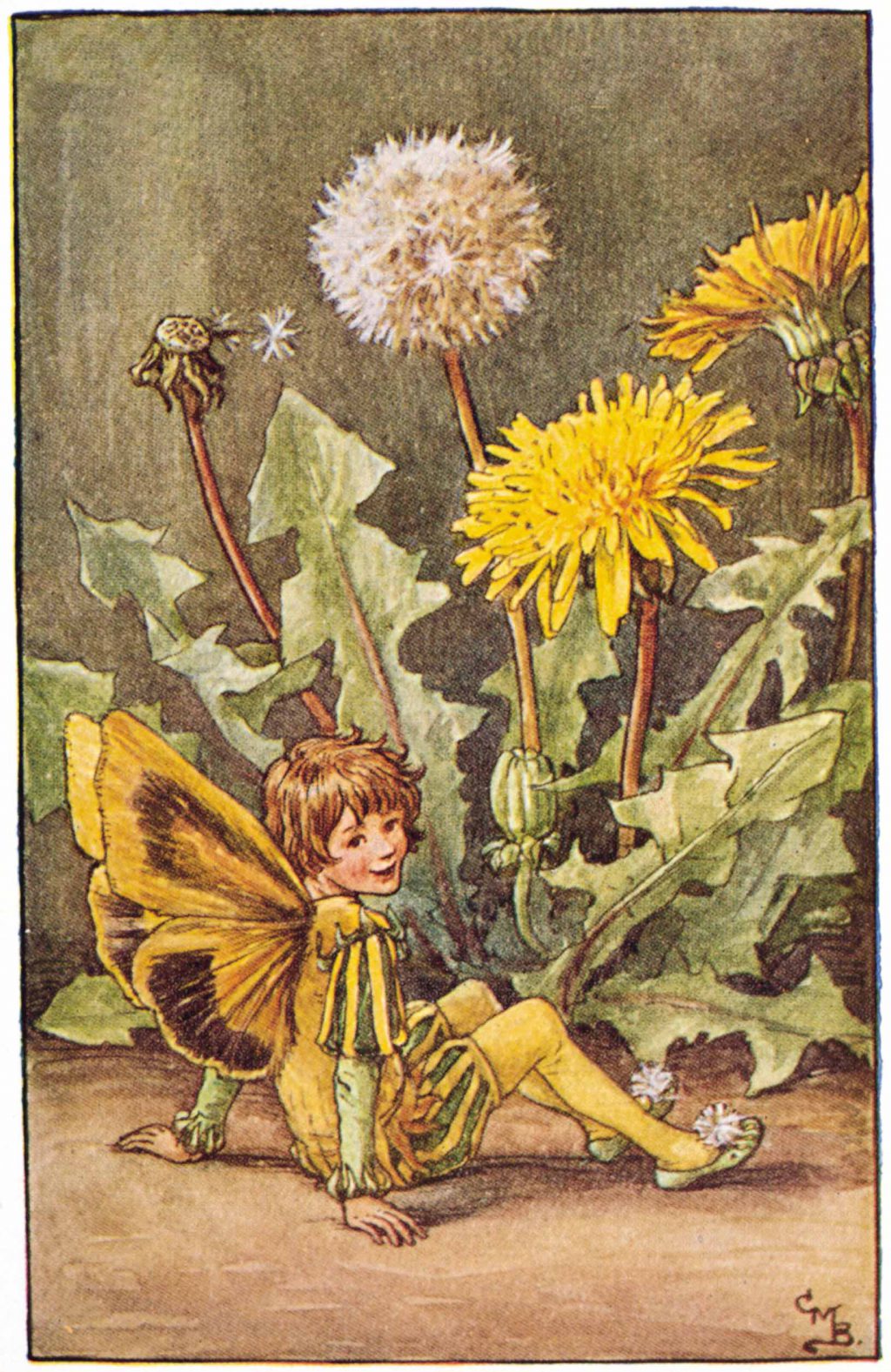
Long, long ago, so the story goes, the flowers had a huge argument about which of them was the most beautiful, the most special, the most loved by the humans and by the fairies. The argument lasted for weeks, with each flower claiming to be the most beautiful and the most loved. Finally, all of the flowers agreed to let the Flower Fairies decide.


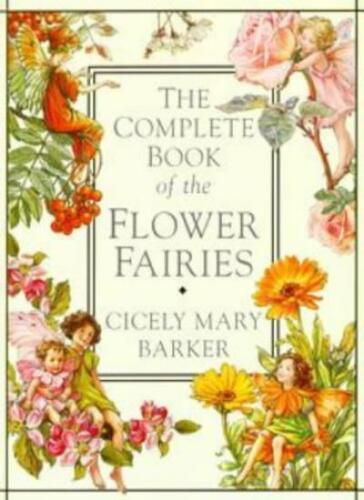
I believe this story, like the images above, are from one of Cicely Mary Barker's books about flower fairies. Ms. Barker (28 June 1895 – 16 February 1973) wrote many books about fairies and flowers, which remain popular today. I have found the story in many places online, with no attribution as to the author, so I am not sure of its source.

Dandelion and the Flower Fairies 

The Flower Fairies sent they're gentlest and kindest of spirit fairy to settle the problem and to give one plant her blessing and the title of the "most perfect" flower. The little Fairy decided to test each flower by asking them one question.

The first flower the Fairy talked to was the Rose.

"Where would you most like to live?" she asked it.

"I would like to climb the castle wall." said the Rose. "And then kings and queens and nobles would pass by everyday and exclaim over my beauty, my scent and my delicate nature."

The Flower Fairy walked sadly away from the Rose.

Next the Fairy came to a tulip, standing tall and proud. "Where would you most like to live?" she asked the Tulip.

"Oh, I want to live in a public garden" said the Tulip. "Where everyday people would come and admire my wonderful colors and see how straight and tall I stand." Once again, the Fairy walked a way feeling sad.

She walked until she came to a forest. There she found some Violets. She asked them "Where would you most like to live, little Violets?" "Oh" said the violets quietly "We like it here hidden in the woods where no one can see us and where the trees keep the sun from dulling our beautiful color." 

The fairy thanked the Violets and walked on looking for more flowers to talk to.

She talked to the Tiger Lily who was much too wild and fierce.

She talked to the Sunflower who barely answered her because all she wanted to do was be warmed by the sun.

The little Flower Fairy talked to the Orchids who only wanted to be taken out to dances and she tried to talk to the Narcissus but it was too busy looking at its reflection in the water to speak to her.
The little Fairy, with tears in her eyes, was ready to give up and go home when she came to a field with bright fluffy yellow flowers on long thin stalks. The leaves were long and jagged and very close to the ground. But the flowers....oh how happy and cheerful they looked in the field!

"Little one" said the Flower Fairy,z "What are you called and where would you like to live?"

"I am a dandelion" said the little flower."I'd like to live where ever there are children. I want to live beside the road, and in the meadows, and push up between the sidewalks in the cities, and make everyone feel happier when they see my bright colors." The Dandelion chattered on happily saying "I want to be the first flower that the children pick in the spring and take to their mothers. And I could tell if a child likes butter by being rubbed under their chins, and if a child makes a wish and blows my seeds, I could carry that wish on the wind."

The Flower Fairy smiled brightly and said "Little Dandelion, you are the most perfect and special flower of all and you shall have your wish! You will blossom everywhere from spring till fall, and be known as the children's flower."


And this is why the dandelion comes so early and pushes her head up everywhere with such strength and determination. And why she is so loved by children throughout her long life.

For a Romanian version of the story, check out this site.

For tons of dandelion fact, fiction, and crafts, this is a good source.

More folklore here.

Yet another story on this site.


Copyright Susanna Holstein. All rights reserved. No Republication or Redistribution Allowed without attribution to Susanna Holstein.

Wednesday, April 29, 2026

Dandelions!


Thursday, January 16, 2020

Dente De Lion: The Lowly Dandelion

63°f17°C, overcast after an overnight shower. More showers expected today. I hope so. We need it.

This is from a post I wrote a few years ago. I thought it deserved a re-post.

Dandelion: The French call it dente-de-lion, meaning lion's tooth, because the shape of the petals was thought to resemble the shape of  that cat's dentures.

photo from last year

Like so many other plants, there is much lore attached to the little golden face of early spring.

For example:

  • Woven into a wedding bouquet, dandelions are considered good luck for the new couple. 
  • Dandelions in dreams mean a happy marriage. 
  • They are also seen as symbols of hope, summer and childhood. 
  • In medieval times, dandelions were used to predict a child's financial future when the flower was held beneath the child's chin; a golden glow meant the child would be rich. 
  • In 18th century England children held the dandelion under their chin too, they thought that the more golden the glow the sweeter and kinder the child was.
  • The dandelion stalk was used to predict how much a child would grow in the coming year, so children worked hard to find the tallest stalk they could.
  • Dandelions have also been like the daisy--plucking petals and chanting “he loves me, he loves me not” 
  • The dandelion flower opens an hour after sunrise and closes at dusk, so in some cultures the flower is referred to as a "Shepherd’s clock".
  • Make a wish immediately before blowing on dandelion, and your wish might come true. 
  •   Some say that dandelions are symbols of grief and connected to the Passion of Christ in religious symbolism; they are also one of the bitter herbs of Passover.
  • Five dandelion flowers are the emblem of White Sulphur Springs, West Virginia. The citizens celebrate spring with an annual Dandelion Festival. (from Wikipedia)

And then there's the seedhead: There are so many superstitions connected to blowing on the seedhead! Who would have thought it. We've probably all blown away the seeds from a dandelion's puffy seedhead. Many people believed that when the seeds are blown they carry good thoughts and affection to a loved one.  If you blow on a dandelion seedhead and all the seeds blow away, you are loved. If some seeds remain it might indicate that your true love is not all that sure about you. Another belief was that the number of seeds left on the dandelion's head showed how many children a girl would have. Some say that the number of seeds remaining are how many years you have left to live. A common belief is that the number of seeds left is the time--so if there are ten, it should be ten o'clock, I have never tested this, but this superstition led to the term "dandelion clock" for the seed head. 

Science tells us that the seeds' feathery "parachutes" (the pappus hairs) close when rain threatens. The dandelion is an excellent barometer, it seems. Its weather prediction skills are demonstrated best when the blooms have seeded and are in the fluffy, feathery state. In good weather the ball opens fully, but when rain is on the way, it shuts, very much like an umbrella. If the weather is  showery, the head stays shut, and only opens when all threat of rain is past.

Dandelion uses: 

The sticky white sap was used as a folklore cure for warts and corns. 
All parts of the plant may be eaten so dandelion is a valuable survival tool. The leaves were considered a spring tonic, helping to cleanse the blood after a long winter.
Dandelions are used to make wine, of course--only the flowerhead, though, and not the green parts as they will make the wine bitter. They are also used to make jelly, but I've never tried that--yet.
From Wikipedia:  "Its ground, roasted roots can be used as a caffeine-free coffee alternative.[46] Dandelion was also traditionally used to make the traditional British soft drink dandelion and burdock, and is one of the ingredients of root beer. Dandelions were once considered delicacies by the Victorian gentry, who used them mostly in salads and sandwiches."

The flowers of dandelions are typically eaten before they start to become seed heads, as although the fluffy "parachutes" are edible they are tasteless and their texture is considered unpleasant.

 Did you know that dandelions were intentionally transplanted from Europe to the New World in the early days of European settlement? Now they are at home all across America. 

There are many names for this little plant: bitterwort, blow-ball, lion’s tooth, cankerwort, clockflower, Irish daisy, priest's crown, puffball, swine's snout, telltime, yellow gowan, and probably many more. I find it very interesting that a French term for them, pissenlit (pee in bed) attests to the root’s diuretic qualities. England echoes this with their name, piss-a-bed.


A dandelion poem, from The Flower Fairies website:

Here’s the Dandelion’s rhyme:
See my leaves with tooth-like edges;
Blow my clocks to tell the time;
See me flaunting by the hedges,
In the meadow, in the lane,
Gay and naughty in the garden;
Pull me up—I grow again,
Asking neither leave nor pardon.
Sillies, what are you about
With your spades and hoes of iron?
You can never drive me out—
Me, the dauntless Dandelion!

Long, long ago, so the story goes, the flowers had a huge argument about which of them was the most beautiful, the most special, the most loved by the humans and by the fairies. The argument lasted for weeks, with each flower claiming to be the most beautiful and the most loved. Finally, all of the flowers agreed to let the Flower Fairies decide.


I believe this story, like the images above, are from one of Cicely Mary Barker's books about flower fairies. Ms. Barker (28 June 1895 – 16 February 1973) wrote many books about fairies and flowers, which remain popular today. I have found the story in many places online, with no attribution as to the author, so I am not sure of its source.

Dandelion and the Flower Fairies 

The Flower Fairies sent they're gentlest and kindest of spirit fairy to settle the problem and to give one plant her blessing and the title of the "most perfect" flower. The little Fairy decided to test each flower by asking them one question.

The first flower the Fairy talked to was the Rose.

"Where would you most like to live?" she asked it.

"I would like to climb the castle wall." said the Rose. "And then kings and queens and nobles would pass by everyday and exclaim over my beauty, my scent and my delicate nature."

The Flower Fairy walked sadly away from the Rose.

Next the Fairy came to a tulip, standing tall and proud. "Where would you most like to live?" she asked the Tulip.

"Oh, I want to live in a public garden" said the Tulip. "Where everyday people would come and admire my wonderful colors and see how straight and tall I stand." Once again, the Fairy walked a way feeling sad.

She walked until she came to a forest. There she found some Violets. She asked them "Where would you most like to live, little Violets?" "Oh" said the violets quietly "We like it here hidden in the woods where no one can see us and where the trees keep the sun from dulling our beautiful color." 

The fairy thanked the Violets and walked on looking for more flowers to talk to.

She talked to the Tiger Lily who was much too wild and fierce.

She talked to the Sunflower who barely answered her because all she wanted to do was be warmed by the sun.

The little Flower Fairy talked to the Orchids who only wanted to be taken out to dances and she tried to talk to the Narcissus but it was too busy looking at its reflection in the water to speak to her.
The little Fairy, with tears in her eyes, was ready to give up and go home when she came to a field with bright fluffy yellow flowers on long thin stalks. The leaves were long and jagged and very close to the ground. But the flowers....oh how happy and cheerful they looked in the field!

"Little one" said the Flower Fairy,z "What are you called and where would you like to live?"

"I am a dandelion" said the little flower."I'd like to live where ever there are children. I want to live beside the road, and in the meadows, and push up between the sidewalks in the cities, and make everyone feel happier when they see my bright colors." The Dandelion chattered on happily saying "I want to be the first flower that the children pick in the spring and take to their mothers. And I could tell if a child likes butter by being rubbed under their chins, and if a child makes a wish and blows my seeds, I could carry that wish on the wind."

The Flower Fairy smiled brightly and said "Little Dandelion, you are the most perfect and special flower of all and you shall have your wish! You will blossom everywhere from spring till fall, and be known as the children's flower."


And this is why the dandelion comes so early and pushes her head up everywhere with such strength and determination. And why she is so loved by children throughout her long life.

For tons of dandelion fact, fiction, and crafts, this is a good source.

More folklore here.

Yet another story on this site.


Copyright Susanna Holstein. All rights reserved. No Republication or Redistribution Allowed without attribution to Susanna Holstein.

Thursday, March 17, 2011

An Irish Fairy Tale

THE FAIRIES' DANCING-PLACE
Richard Doyle's Dancing Fairies


Lanty M'Clusky had married a wife, and, of course, it was necessary to have a house in which to keep her. Now, Lanty had taken a bit of a farm, about six acres; but as there was no house on it, he resolved to build one; and that it might be as comfortable as possible, he selected for the site of it one of those beautiful green circles that are supposed to be the play-ground of the fairies. Lanty was warned against this; but as he was a headstrong man, and not much given to fear, he said he would not change such a pleasant situation for his house to oblige all the fairies in Europe.

He accordingly proceeded with the building, which he finished off very neatly; and, as it is usual on these occasions to give one's neighbours and friends a house-warming, so, in compliance with this good and pleasant old custom, Lanty having brought home the wife in the course of the day, got a fiddler and a lot of whisky, and gave those who had come to see him a dance in the evening.

This was all very well, and the fun and hilarity were proceeding briskly, when a noise was heard after night had set in, like a crushing and straining of ribs and rafters on the top of the house. The folks assembled all listened, and, without doubt, there was nothing heard but crushing, and heaving, and pushing, and groaning, and panting, as if a thousand little men were engaged in pulling down the roof.

'Come,' said a voice which spoke in a tone of command, 'work hard: you know we must have Lanty's house down before midnight.'

This was an unwelcome piece of intelligence to Lanty, who, finding that his enemies were such as he could not cope with, walked out, and addressed them as follows:

'Gintlemen, I humbly ax yer pardon for buildin' on any place belongin' to you; but if you'll have the civilitude to let me alone this night, I'll begin to pull down and remove the house to-morrow morning.'

This was followed by a noise like the clapping of a thousand tiny little hands, and a shout of 'Bravo, Lanty! build half-way between the two White-thorns above the boreen'; and after another hearty little shout of exultation, there was a brisk rushing noise, and they were heard no more.
The story, however, does not end here; for Lanty, when digging the foundation of his new house, found the full of a kam of gold: so that in leaving to the fairies their play-ground, he became a richer man than ever he otherwise would have been, had he never come in contact with them at all.

By William Carleton, from William Butler Yeats' book, Irish Fairy Tales

I've blogged about fairy rings before here and here and here. I happened on this story recently and thought it was a perfect tale for St. Patrick's Day.

Tuesday, August 10, 2010

Fairy Ring


Little Feet

Where in sleep we dream of beauty
fields of little feet did play
dancing to the faerie fiddle
in fields of yellow clay

dressed in brown and moss-green velvet
shod in tulip poplar flow’rs
they dance to midnight’s caller
in the forest’s hidden bowers

when the morning sun arises
shines on dew its diamond glance
a ring of grass grows deep and lovely
where the little people danced

c Susanna Holstein 2008


"Fairy roses, fairy rings, turn out sometimes troublesome things." William Makepeace Thackeray

I was riding with my daughter-in-law one day in mid-July as we traveled from one storytelling performance to another, when I noticed something on a side street.

It was in the yard of one of the houses. I yelled, "Fairy ring! Turn around!"

My daughter-in-law put on the brakes and obligingly turned the truck around. Sure enough, there in the grass was a beautiful ring of white mushrooms. I jumped out for a closer look, and noticed a man on the porch of the home next to the ring.

"Do you mind if I take a picture of the mushrooms?" I asked.

"Not at all," he said, "but that's actually my neighbor's yard."

The door of the house behind the mushrooms opened. "Hey there." A guy standing in the open door grinned at me.

"Hey," I replied. "This is a perfect fairy ring. Would you mind if I took a picture?"


"Go right ahead," he said. "Cool, isn't it? Used to be a big oak there, but it died. These mushrooms come up in the same spot every year."

Why are rings of mushrooms called fairy rings? According to my English mother, the mushrooms sprout on the places where the fairies danced the night before. Scientists, of course, have a different answer. I prefer my mother's explanation.

As to what kind of mushrooms these were, that's open to debate. I think they may have been Chlorophyllum molybdites but I can't be sure since I did not look closely to identify them. I was just enchanted by the ring.

My daughter-in-law asked me later how I saw the ring from the highway, since it was a couple houses away on a side street. I really don't know. Call it fairy magic.

If you see a fairy ring
In a field of grass,
Very lightly step around,
Tiptoe as you pass;
Last night fairies frolicked there,
And they're sleeping somewhere near.
Author unknown.


For more fairy ring stories, visit Fairy Ring Folklore.

Wikipedia offers an extensive, cited article on fairy ring lore; according to the article, it is the Scandinavian and Celtic cultures that believe the rings to be made by fairies or elves; other cultures consider the rings bad luck, and pretty much every one agrees it's not good for humans to enter the rings, or even worse, destroy them (so don't even think about getting rid of them to protect your green lawn!).

And then, you can always look back to a post I wrote a while back about fairy rings and fairy lore, including a nice booklist.

"There never was a merry world since the fairies left off dancing. . ." John Seldon

Have you ever seen a fairy ring, or heard a story about their formation? I wonder if there are other tales attached to this intriguing phenomenon.

Tuesday, December 7, 2010

The Christmas Fairy of Strasburg


I've been looking for some different Christmas folktales to share, and found this one recently. I like it for the combination of folklore--fairies and the origin of the Christmas tree. There are lots of legends about why we have the trees, but this one was new to me. 


The Christmas Fairy of Strasburg


A German Folktale by By J. Stirling Coyne
(adapted by Frances Jenkins Olcott and a little bit by me)
Image from German Christmas Traditions: visit them for recipes, games, customs and more)

Once long ago, there lived near Strasburg, on the river Rhine, a young and handsome count whose name was Otto. As the years flew by he remained unwed, and never so much as cast a glance at the fair maidens of the country round. For this reason people began to call him "Stone-Heart."

One Christmas Eve Count Otto ordered that a great hunt should take place in the forest surrounding his castle. He and his guests and servants rode forth, and the chase became more and more exciting. It led through thickets and forest, until at length Count Otto found himself separated from his companions.


He rode on alone until he came to a spring of clear water, known to the people around as the "Fairy Well." Here Count Otto dismounted. He bent over the spring and began to wash his hands in the sparkling water but to his wonder he found that though the weather was cold and frosty, the water was quite warm. A glow of joy passed through his veins, and as he plunged his hands deeper he thought that his right hand was grabbed by another hand that was soft and small. It gently slipped from his finger the gold ring he always wore. And, lo! when he drew out his hand, the gold ring was gone.

Full of wonder at this mysterious event, the count returned to his castle, resolving in his mind that the very next day he would have the Fairy Well emptied by his servants.

He retired to his room and tried to sleep but the strangeness of his adventure kept him awake. Suddenly he heard the hoarse baying of the watch-hounds in the courtyard, and then the creaking of the drawbridge, as though it were being lowered. Then came to his ear the patter of many small feet on the stone staircase, and next he heard indistinctly the sound of light footsteps in the chamber adjoining his own.

Count Otto sprang from his couch. As he did there sounded a strain of delicious music and the door of his chamber was flung open. Hurrying into the next room, he found himself in the midst of numberless Fairy beings, clad in bright and sparkling robes. They paid no attention to him but began to dance, and laugh and sing to the sound of mysterious music.

In the center of the apartment stood a splendid Christmas Tree, the first ever seen in that country. Instead of toys and candles there hung on its lighted boughs diamond stars, pearl necklaces, bracelets of gold ornamented with colored jewels, aigrettes of rubies and sapphires, silken belts embroidered with Oriental pearls and daggers mounted in gold and studded with the rarest gems. The whole tree swayed, sparkled, and glittered in the radiance of its many lights.

Count Otto stood speechless. Suddenly the Fairies stopped dancing and fell back to make room for a lady of dazzling beauty who came slowly toward him.

She wore on her raven-black tresses a golden diadem set with jewels. Her hair flowed down upon a robe of rosy satin and creamy velvet. She stretched out two small, white hands to the count and addressed him in sweet, alluring tones:

"Dear Count Otto," said she, "I come to return your Christmas visit. I am Ernestine, the Queen of the Fairies. I bring you something you lost in the Fairy Well."

As she spoke she drew from her bosom a golden casket, set with diamonds, and placed it in his hands. He opened it eagerly and found within his lost gold ring.


Carried away by the wonder of it all, and overcome by an irresistible impulse, the count pressed the Fairy Ernestine to his heart, while she, holding him by the hand, drew him into the magic mazes of the dance. The mysterious music floated through the room, and the rest of that Fairy company circled and whirled around the Fairy Queen and Count Otto; then gradually dissolved into a mist of many colors, leaving the count and his beautiful guest alone.

Then the young man, forgetting all his former coldness toward the maidens of the country round about, fell on his knees before the Fairy and besought her to become his bride. At last she consented on the condition that he should never speak the word "death" in her presence.

The next day the wedding of Count Otto and Ernestine, Queen of the Fairies, was celebrated with great pomp and magnificence, and the two lived happily for many years.

Now it happened one day that the count and his Fairy wife were to hunt in the forest around the castle. The horses were saddled and bridled, and standing at the door, the company waited, and the count paced the hall in great impatience; but still the Fairy Ernestine tarried long in her chamber. At length she appeared at the door of the hall, and the count addressed her in anger.

"You have kept us waiting so long," he cried, "that you would make a good messenger to send for Death!"

Scarcely had he spoken the forbidden and fatal word, when the Fairy, uttering a wild cry, vanished from his sight. Count Otto, overwhelmed with grief and remorse, searched the castle and the Fairy Well; no trace could he find of his beautiful, lost wife but the imprint of her delicate hand set in the stone arch above the castle gate.

Years passed by, and the Fairy Ernestine did not return. The count continued to grieve.

Every Christmas Eve he set up a lighted tree in the room where he had first met the Fairy, hoping in vain that she would return to him.

Time passed and the count died. The castle fell into ruins. But to this day may be seen above the massive gate, deeply sunken in the stone arch, the impress of a small and delicate hand.

And such, say the good folk of Strasburg, was the origin of the Christmas Tree.
 
Images 2 and 3 above are the work of Arthur Rackham. I was fortunate enough to buy a collection of his work at the used book sale, and I am enthralled by his fairy art. So I used th work of an Englishman to illustrate this German tale that was written by an Irishman. A truly multicultural Christmas offering. Amazon has some copies of Rackham's books listed, and I highly recommend having a look at them. His work is stunning.

Wednesday, February 27, 2008

Book Review: Story-Telling Poems

Story-Telling Poems: Selected and Arranged for Story-Telling and Reading Aloud and for Children's Own Reading
by Frances Jenkins Olcott
Books for Libraries Press, 1970 (reprint of 1913 Houghton Mifflin edition)

I picked up this book at a library book sale in Ohio. My edition is a 1970 reprint of the original 1913 title and its plain red cover hides the many rich tales inside.

Olcott was a children's librarian at the Carnegie Library, and her other collections of children's stories are well-known to storytellers. All, I believe, are now out-of-print, but many like this title, are available for download on the Internet. I prefer to have the book in my hand to read, but if that's not possible for you there are a variety of ways to view it online, and some look just like the real thing.

The story poems included in this collection were not written by Olcott; she "selected and arranged for story-telling and reading aloud and for the children's own reading" many classic poems and tales. Many are familiar: The Inchcape Rock, The White=Footed Deer, Apple-seed John, Tubal Cain, Paul Revere's Ride. Others are new to me: Goblin Market,The Fairies of the Caldon-Low, and this short Persian fable:

"How old art thou?" said the garrulous gourd,
As o'er the palm-tree's crest it poured
Its spreading leaves and tendrils fine,
and hung a bloom in the morning shine.
"A hundred years!" the palm-tree sighed:
"And I," the saucy gourd replied,
Am at the most a hundred hours,
And overtop thee in the bowers!"

Through all the palm-trees leaves there went
A tremor as of self-content.
"I live my life," it whispering said,
And every year, of all I've known,
A gourd above my head has grown,
And made a boast, like thine today;
Yet here I stand--but where are they?
--Anonymous

While the language will certainly be archaic to today's young audiences, yet there are many of us who still savor the taste of the older rhythms and styles of the past. A storyteller could, as Ms. Olcott did, adapt these poems for more modern telling; perhaps a better option is to tell them as written in this collection, taking time with the words, aiding comprehension through gesture and expression, and allowing for questions and explanation of unfamiliar words and phrases at the end of the telling.

I am intrigued by the notion that she selected these works for children. Certainly today's child's vocabulary would not stretch to these heights. Right and wrong in Olcott's book are easily recognized; today the lines seem more blurred and grayed. Moralistic endings are a given for most of the tales. As storytellers search for material to present for the currently popular character education theme being promoted by many schools, Olcott's collection may offer some fresh material and the opportunity to present classic literature to a new generation.

Will children of today enjoy these poems? I think so; presented well and with a storyteller's flair, I believe there is depth and color to the language and the themes. What child would not enjoy tales of knights, giants, dragons, fairies, and goblins?

(One of the neat things about buying used books is the notes, photos and other miscellenea left inside by past owners. am I the only person who loves to find these items, and wonder about how they came to be in the books?)

Thursday, August 14, 2008

Blog Posts Not to Miss

A few of my favorite, recently read blogs:

From the Hill Country of Monroe County blog: Beauty's Grave
http://hillcountryofmonroecountry.blogspot.com/2008/04/beautys-grave.html
Lovely, lovely post, haunting and moving.


The epic struggle of one woman against traffic court (seriously epic!)http://noblepig.com/2008/08/06/a-cop-a-judge-a-district-attorney-lies-and-me.aspx
...then read on to find great recipes and stories.

Mountain stuff: ginseng and timber rattlers:
http://appalachianlifestyles.blogspot.com/2008/08/of-snakes-and-sang.html
Matthew's in full voice here, describing sang hunts and rattlesnake catching.

Deborah Wilson's post on Tears of the Fairies:
http://deborahwilson.blogspot.com/2008/08/tears-of-fairies.html
Folklore and a story--what a good post.

Wednesday, May 1, 2019

Repost: Wash You Face in the Morning Dew

Reposting this from 2012. It's remained one of my most popular posts.

Did you run out first thing this morning to wash your face in the morning dew? According to folklore, doing so will enable you to see fairies in the coming year, or see the face of your new husband. I don't need a new husband, but I am hopeful of seeing fairies. One never knows what might do the trick.

Washing in the May morning dew is also supposed to make you more beautiful. At my age I don't think it will help much but I admit it felt wonderfully refreshing. Of course, it rained last night so perhaps what I was really washing in was rainwater. Either way, it felt cool and soft on my skin. (If you are interested in more fairy lore, do visit the Fairy Chronicles.) Men can benefit from a May morning wash too, if they wash in the dew from a hawthorn tree.

Today is May Day. My neighbor Belva called it Flower Day, the day it was safe to put flower seeds in the ground. She must have known something because every year she had the most beautiful zinnias. When I was young, Mom would create a "May Altar," a little shrine in the house with a statue of the Virgin Mary on a raised platform in the center. She would fill vases with sweet scented iris, peonies, roses and other May blooming blossoms and kept them refreshed all month. The house would smell so good, especially since the smells of wax and lemon oil still lingered from the Easter cleaning.

 May was also the month for the May procession, usually held the first Sunday in May. The photo at left is from the website of the Association of the Miraculous Medal in Perryville, MOwhere the procession has been held for over 90 years. This year they plan to have it this coming Sunday, May 6th.


When I was a child, we would dress in our prettiest clothes for this church event. All the children (and perhaps adults too, but I don't remember them) would walk in a long procession around the church grounds, carrying flowers and singing songs to the Blessed Virgin. The flowers were carried to the statue of Mary in the church and laid at her feet. I remember wearing my First Communion dress the year I received that sacrament and for several years after until it no longer fit. I was the girl selected to crown Mary, standing on a stool, I think, and stretching up to place the crown of flowers on her head, being very careful not to get it crooked. It was a special honor but at the time all I can recall feeling is scared I would somehow mess up my role. The whole event was very lovely and it remains one of my best memories of my years in the Catholic church. This photo at left was taken in 1954 when I was three, so it was a bit before my starring role in the procession!

Easter and May were times to wear our Easter hats. Mom loved hats and in fact always wore them to church even when it was no longer required that women do so. We had new hats or refurbished hats every Easter, to be worn into the summer until we'd finally put them up and wear our chaplets (small lace head coverings) because they were just easier. This is Mom in the early 1980's, dressed and ready to go. It must have been an early Easter that year because there are no flowers blooming and the grass had not yet greened up. But Mom looked lovely, didn't she?

So many May memories were stirred up this May morning. Let's close this post with a poem:


May Day by Sarah Teasdale
(1884-1933)

A delicate fabric of bird song
Floats in the air,
The smell of wet wild earth
Is everywhere.

Red small leaves of the maple
Are clenched like a hand,
Like girls at their first communion
The pear trees stand.

Oh I must pass nothing by
Without loving it much,
The raindrop try with my lips,
The grass with my touch;

For how can I be sure
I shall see again
The world on the first of May
Shining after the rain?


Copyright Susanna Holstein. All rights reserved. No Republication or Redistribution Allowed without attribution to Susanna Holstein.
Related Posts Plugin for WordPress, Blogger...