Pages

Showing posts with label Green Bottom. Show all posts

Tuesday, May 12, 2020

Covid Journal, Day 59: Green Bottom, Part 2


42 this morning, but felt colder. It has been a sunny, brisk day, wit a steady breeze. 

More photos from the wetland today. As Quinn commented on my last post, there seem to be more people getting out and into some of the places that normally see low use. A good thing, I believe. I hope this change in behavior will continue. We saw several families, apparently enjoying a slow stroll through the area on Mother's Day, and it made me smile. Americans need to get out more, and this virus has provided the motivation to do just that.


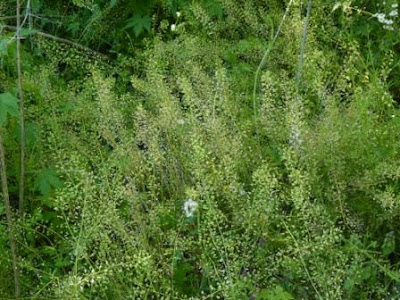
There were many of these large, ferny plants in the area. I do not know what they are. Can anyone identify?

Below, a brave fleabane blooms in the midst of a patch of cleavers gone to seed.


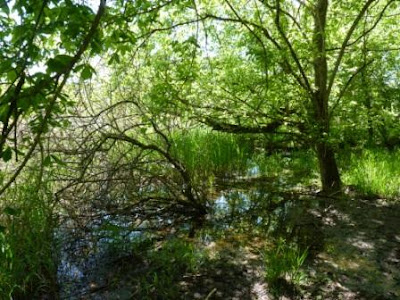
Green, green, green. In places it was like being in a green sea. Or a jungle.


Larry spotted this weird red fungus growing out from under a rotting log. I touched it and found it unpleasantly spongy. 

A sea of leaves, washed into a muddy shallows by recent high water. I assume the leaves blew down during some of the high winds we've had recently. Or perhaps the area had a frost that took them down.


Any suggestions as to what this plant might be? Perhaps a young tree of some kind? It was new to me.


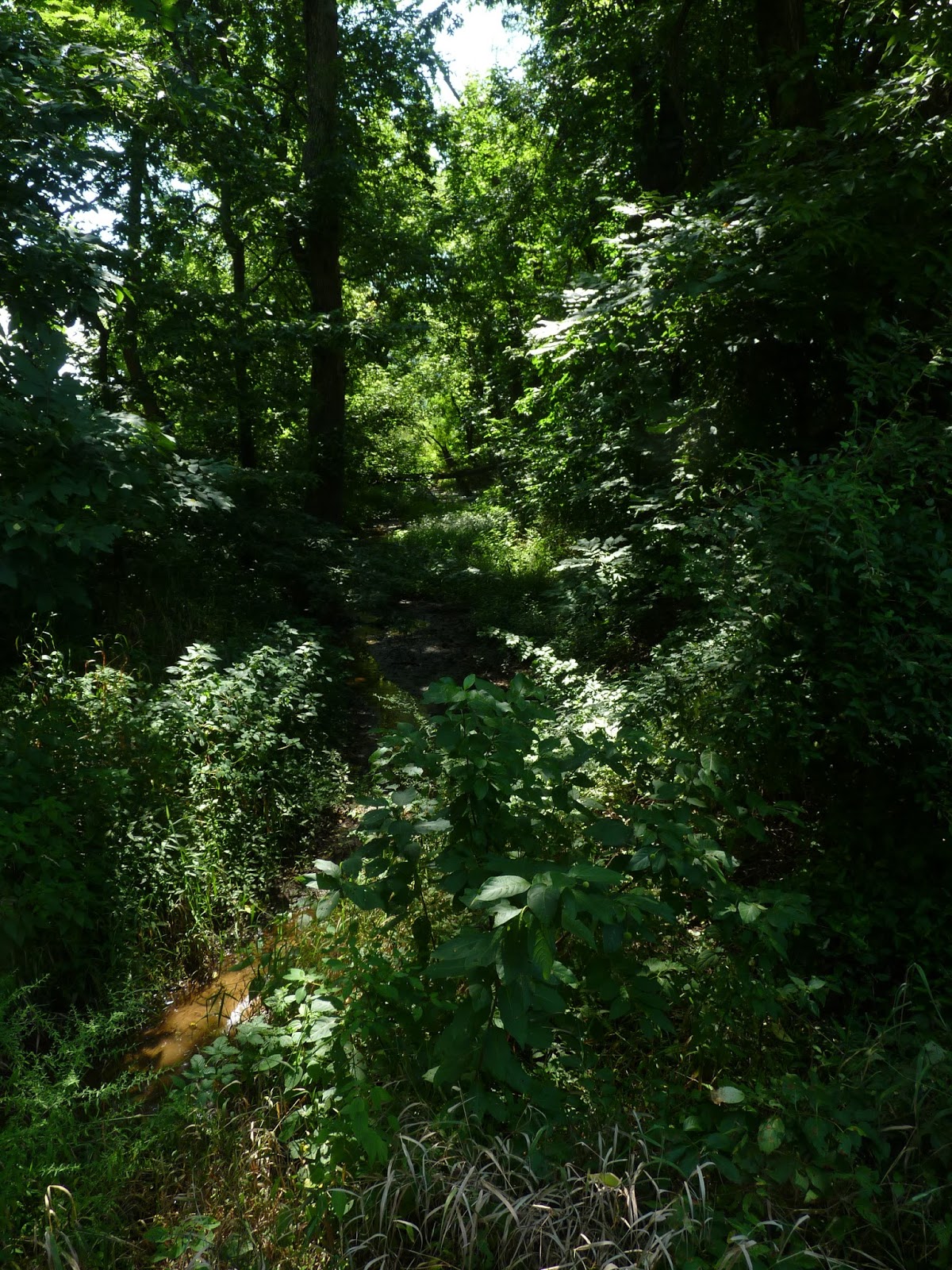
Inviting paths led off the trail here and there. To be explored another time.


The last time we visited here, we could drive back this rutted road for a ways, but now the road is blocked. My guess is there were probably some who found the remoteness of the area suited to nefarious activities. The upside is that the tadpoles can hatch undisturbed in the big puddles.


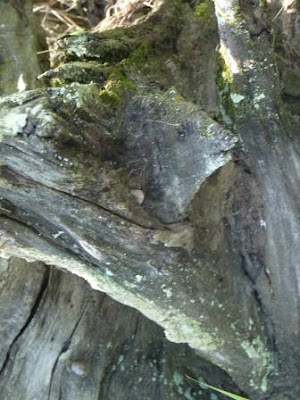
An interesting old tree stump yielded a surprise when I looked closer.


Do you see it? The face looks like either a fish or a hog. Larry and I could not agree on that!


Such peace. and so few people. Heaven.


A reminder of last year: one lone lotus pod.


And that's the end of our Sunday walk. I hope you enjoyed it.

Copyright Susanna Holstein. All rights reserved. No Republication or Redistribution Allowed without attribution to Susanna Holstein.

Monday, May 11, 2020

Covid Journal, Day 58: Green Bottom Wildlife Area, Part 1

39 again this morning, and overcast after a night of rain and wind.

Green Bottom Wildlife Management Area in Cabell county, West Virginia, was once a thriving plantation on the Ohio River where corn, wheat, cattle, hogs and other crops and livestock were raised. Today, the house stands empty, renovations stopped mid-stream due to electrical issues, and all of the cropland is long gone, having turned into marshes when the locks and dams system were installed on the Ohio River, and a railroad and a highway created a barrier to the former shape of the landscape. It is a magical place, full of wildlife, plants, water creatures, and insects.

We have stopped here several times over the years and enjoyed the ever-changing, strange beauty of the place. (Click here to see Green Bottom in summer photos, or here for a little more about the history of Green Bottom) I’ve been wanting to go back, so Sunday we celebrated Mother’s Day by packing a light picnic, camera, binoculars and a bird book and making our way to Green Bottom.

Here is just some of what we saw there.


A lone fisherman in a kayak takes advantage of the beautiful day.

Something big has been here. Maybe someone brought their dog along on a walk?

And someone lost a fluffy white feather. The marsh is full of birds of many varieties. I was happy to see a new one for me, a Great Tufted Flycatcher. I may have seen these before, but this time I could positively identify it. I got no bird photos today--they were far too quick for me.


And something little is here too--hundreds of minnows in a puddle. On the way back out we saw a killdeer merrily feasting on the hapless little things.


In summer these plants--I believe they are a kind of lotus--will be beautifully in bloom, reminding me of Monet's water lilies paintings.


This plant looks like purslane, but must be some other species since it lives in the water.


A fleabane sports vibrant pink petals against the red leaves of a baby maple tree.


And into the woods...


Ol' mud turtle was enjoying a nice sunbathing session. I am not sure what that cross is behind him. Any ideas?


Pretty Star of Bethlehem is a garden escapee that seems at home in the marsh.


A family of geese--mama, papa, and a string of young'uns.


I have more photos to post tomorrow of this beautiful place. It's a habitat so completely different from where we live that it just fascinates me. We hoped that there would be few people here, and we were right. Although several family groups and couples passed by, everyone kept a good distance apart and altogether I doubt we saw 20 people in the 3 hours we were there.

Copyright Susanna Holstein. All rights reserved. No Republication or Redistribution Allowed without attribution to Susanna Holstein.

Thursday, August 11, 2016

At Green Bottom Again: Summer in the Wildlife Management Area

A trip to the VA Hospital for Larry's appointment last week meant another opportunity to stop by Green Bottom wildlife management area. You might remember this post about GreenBottom when we stopped by there in April.  Now it is high summer in the bog, and the place is carpeted with wild hibiscus and American Lotus blossoms. (Edited--I thought they were water lilies but my friend Jenny corrected that. Actual name is N. lutea. Learning something new every day!)


I don't know the name of this little yellow flower--it's new to me. Can anyone identify it?


Deep shade, the sounds of thousands of insects and hundreds of birds filled the hot, humid air (temperatures were near 90 when we stopped).


One of dozens of dragonflies we saw as we followed the boardwalk through the swamp.


Another unknown flower. I'll have to find my flower identification books and take them with me next time we go to Greenbottom.

Another dragonfly. Their wings are so delicate, and their color is iridescent in the sun.


A hibiscus offers tempting pollination opportunities to the many bees that buzzed from flower to flower.


The water is murky, but we could see to the bottom, where tiny fish--or minnows, perhaps? darted quickly out of sight.


 In this area the water was covered with green algae, looking uncannily like a field of grass.


Shy jewelweed hides in a shady spot beneath taller growth. This plant places itself near poison ivy often, which is very handy since jewelweed is a great antidote for the ivy. Simply break the stems and smear the jelly-like substance inside over the affected area.


A bee works on the blossom of a plant I call bindweed--I detest it in my gardens but here it has a singular beauty.

Visitors! Raccoons must find this place a paradise.


A little of the sights and sounds--a patch of busy water, and the songs of insects and birds.


Have a lovely day, my friends, and stay cool if you can. It will once again be near 90 degrees here.

Copyright Susanna Holstein. All rights reserved. No Republication or Redistribution Allowed without attribution to Susanna Holstein.

Sunday, April 24, 2016

At Green Bottom


We have passed it by for years, this place of swamps. It is along West Virginia Route 2 between Point Pleasant, that place of Mothman fame and site of the creepy Richard Gere movie, the Mothman Prophecies, and Huntington, home of Marshall University and the site of the excellent movie, We Are Marshall with Matthew McConaughey. 
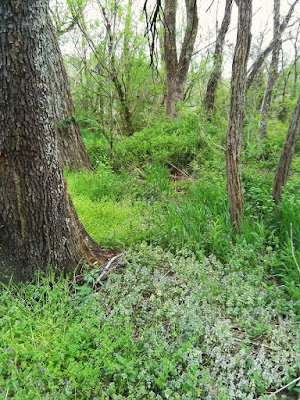
This is a long, mostly straight stretch of road, probably the straightest in the state outside of the interstates, and travels alongside of the Ohio River and the railroad tracks. Route 2 was probably an early Native route and one traveled by  frontiersmen and settlers. Today this area is largely rural with a smattering of small factories and plants, but mostly one travels through wheat, corn and produce fields. It's a peaceful, beautiful drive, and our route of choice when Larry needs to go to the Veteran's Administration hospital in Huntington for tests or whatever. 
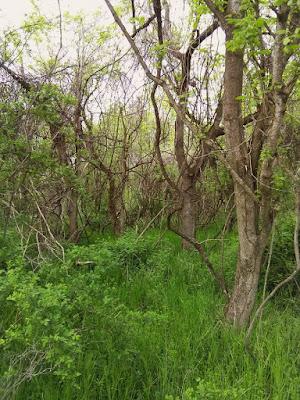
This swampy place I mentioned is called Green Bottom, the name given to it by the Jenkins family, who moved to the area from "old" Virginia and developed a thriving agricultural enterprise here. William Jenkins owned 4900 acres here of good rich river bottomland and even in 1850 the farm was valued at $80,000. The family (slaveowners with quite a few slaves, unfortunately) produced corn, wheat, barley, sweet potatoes, potatoes, wool and beef and in later years grew tobacco and other crops. I was once told that they also tried to grow rice, which might explain the swamps, but my research has not proved that to be true.

Albert Gallatin Jenkins was the son of the founder of this plantation. A Harvard law graduate, he entered the Confederate Army when the Civil War broke out, and left his estate in the hands of his father-in-law. Sadly, Jenkins lost his life in the war, and his estate eventually was divided up amidst much family controversy.


Today the former plantation is a wildlife management area with a focus on wetlands habitats. And for once we took the time to stop. What a great idea that was.

We found a rutted gravel track that led to a parking area and a boardwalk through the wetlands to an observation platform. The walk was almost ethereal, with the lush greens, overhanging vines, and birdsong everywhere. It is unfortunate that the noise of the nearby highway can still be heard but otherwise this is a place apart from the world of man.


Here you can see a beaver dam, and we saw a large beaver lodge as we passed by on the highway--no photo of that, but maybe next time.

We saw several varieties of ducks, some Canada geese, redwing blackbirds and many other birds as we followed the boardwalk. We also heard lots of splashes as little frogs dived underwater at our approach, and the croaking of some bullfrogs that sounded like mighty big fellas.

In this photo, you can just see the Jenkins mansion in the distance. This house was 50 feet long and 25 wide and there were many outbuildings during its heyday. Today only the house remains, and it is slowly being renovated to be a museum, although work on this state project seems to have come to a halt. At one time tours were offered, but now the windows are boarded up and the house is not accessible to the public.


It was such a peaceful place, and I tried to imagine how it might look in early morning, as the mist rises from the river. One day I'd like to see that.


I also thought about how it must have been in the Jenkins' time. Fields of corn and hay, wheat and barley. Fences and cattle, sheep and hogs. Slaves out working in the heat, the smell of cooking from the large kitchen that was a separate building from the bouse...

Somewhere under this water are those sneaky little frogs that would not let me see them.


I could barely see the slow trickle of water through this swampy patch, stirring those brown bits that looked to me like larvae of some type.


If you'd like to know more about Green Bottom and its history, I can recommend Archival Research on the History ofthe Albert Gallatin Jenkins HouseGreen Bottom, Cabell County,West Virginia , and excellent and well-researched online document. For more about Albert Gallatin Jenkins and his part in the Civil War, see this article by the West Virginia Division of Culture and History.


Better yet, stop by and visit Green Bottom. Its unique ecosystem is a delight, well worth the time to stop and listen as well as look.

Copyright Susanna Holstein. All rights reserved. No Republication or Redistribution Allowed without attribution to Susanna Holstein.
Related Posts Plugin for WordPress, Blogger...