
"Winter is the time for comfort, for good food and warmth, for the touch of a friendly hand and for a talk beside the fire: it is the time for home."
- Edith Sitwell
"From Heaven I fall, though from earth I begin.
No lady alive can show such a skin.
I'm bright as an angel, and light as a feather,
But heavy and dark, when you squeeze me together.
Though candor and truth in my aspect I bear,
Yet many poor creatures I help to insnare.
Though so much of Heaven appears in my make,
The foulest impressions I easily take.
My parent and I produce one another,
The mother the daughter, the daughter the mother."
- James Parton, A Riddle - On Snow
Did you get the answer to the riddle?
And from the website Green Way Research come the following weather sayings, collected by Karen and Mike Garofalo. Do check out their site, it is full of weather and garden wisdom.
A wet January, a wet Spring.
A warm January, a cold May. (Welsh Proverb)
On New Year's Eve,
wrap a large rock with some rope and hang it from a branch.
One New Year's Morning:
If the rock is dry, good weather will come to stay.
If the rock is wet, rain is on the way.
If the rock is moving, high winds will come at night.
If the rock is white, snow will fall tonight.
If the stone is gone, time for moving on.
The blackest month in all the year
Is the month of Janiveer.
A favorable January brings us a good year.
In Janiveer if the sun appear
March and April pay full dear.
If grain grows in January, there will be a year of great need.
January blossoms fill no man's cellar.

If birds begin to sing in January, frosts will come.
If January kalends be summerly gay,
'Twill be winterly weather to the kalends of May.
Jack Frost in Janiveer, Nips the nose of the nascent year.
If January has never a drop, the barn will need an open prop
If in February there be no rain, it is neither good for hay nor grain.
March damp and warm, will do the farmer much harm.
April cold and wet, fills the barns best yet.
Cold May and windy, barn filleth up finely.
If Saint Paul's Day (1/25) be faire and cleare,
It doth betide a happy yeare;
But if by chance it then should rain,
It will make deare all kinds of graine;
And if ye clouds make dark ye skie,
Then neats and fowles this year shall die;
If blustering winds do blow aloft,
Then wars shall trouble ye realm full oft.

Chambers Book of Days:
First published in 1864, this monumental work was a huge collection of trivia, articles, and folklore for each day of the year.
This is only a part of his article for this date: (for more, see the website The Book of Days.
TWELVE-DAY EVE
Twelfth-day Eve is a rustic festival in England. Persons
engaged in rural employments are, or have heretofore been accustomed to
celebrate it; and the purpose appears to be to secure a blessing for the fruits
of the earth.
In Herefordshire, at the approach of the evening, the
farmers with their friends and servants meet together, and about six o'clock
walk out to a field where wheat is growing. In the highest part of the ground,
twelve small fires, and one large one, are lighted up. The attendants, headed
by the master of the family, pledge the company
when in old cider, which circulates freely on these occasions. A circle
is formed round the large fire, when a general shout and hallooing takes place,
which you hear answered from all the adjacent villages and fields. Sometimes
fifty or sixty of these fires may be all seen at once. This being finished, the
company return home, where the good housewife and her maids are preparing a
good supper. A large cake is always provided, with a hole in the middle. After
supper, the company all attend the bailiff (or head of the oxen) to the
wain-house, where the following particulars are observed: The master, at the
head of his friends, fills the cup (generally of strong ale), and stands
opposite the first or finest of the oxen. He then pledges him in a curious
toast: the company follow his example, with all the other oxen, and addressing
each by his name. This being finished, the large cake is produced, and, with
much ceremony, put on the horn of the first ox, through the hole above
mentioned. The ox is then tickled, to make him toss his head: if he throw the
cake behind, then it is the mistress's perquisite; if before (in what is termed
the boosy), the bailiff himself claims the prize. The company then return to
the house, the doors of which they find locked, nor will they be opened till
some joyous songs are sung. On their gaining admittance, a scene of mirth and
jollity ensues, which lasts the greatest part of the night.' — Gentleman's
Magazine, February, 1791. The custom is called in Herefordshire Wassailing. The
fires are de-signed to represent the Saviour and his apostles, and it was
customary as to one of them, held as representing Judas Iscariot, to allow it
to burn a while, and then put it out and kick about the materials.
At Pauntley, in Gloucestershire, the custom has in view the
prevention of the smut in wheat. 'All the servants of every farmer assemble in
one of the fields that has been sown with wheat. At the end of twelve lands,
they make twelve fires in a row with straw; around one of which, made larger
than the rest, they drink a cheerful glass of cider to their master's health,
and success to the future harvest; then returning home, they feast on cakes
made with carraways, soaked in cider, which they claim as a reward for their
past labour in sowing the grain.'
'In the south hams [villages] of Devonshire, on the eve of
the Epiphany, the farmer, attended by his workmen, with a large pitcher of
cider, goes to the orchard, and there encircling one of the best bearing trees,
they drink the following toast three several times:
Here's to thee, old apple-tree,
Whence thou mayst bud,
and whence thou mayst blow!
And whence thou mayst bear apples enow!
Hats full! caps full!
Bushel—bushel—sacks full,
And my pockets full too! Huzza!
This done, they return to the house, the doors of which they
are sure to find bolted by the females, who, be the weather what it may, are
inexorable to all entreaties to open them till some one has guessed at what is
on the spit, which is generally some nice little thing, difficult to be hit on,
and is the reward of him who first names it. The doors are then thrown open,
and the lucky clod-pole receives the tit-bit as his recompense. Some are so
superstitious as to believe, that if they neglect this custom, the trees will
bear no apples that year.' — Gentleman's Magazine, 1791, p. 403.
OLD ENGLISH PRONUNCIATIONS
The history of the pronunciation of the English language has
been little traced. It fully appears that many words have sustained a
considerable change of pronunciation during the last four hundred years: it is
more particularly marked in the vowel sounds. In the days of Elizabeth, high
personages pronounced certain words in the same way as the common people now do
in Scotland. For example, the wise Lord Treasurer Burleigh said whan instead of
when, and war instead of were; witness a sentence of his own: 'At Enfield,
fyndying a dozen in a plump, whan there was no rayne, I bethought myself that
they war appointed as watchmen, for the apprehendyng of such as are missyng,'
&c.—Letter to Sir Francis Walsingham, 1586. (Collier's Papers to
Shakespeare Society.) Sir Thomas Gresham, writing to his patron in behalf of
his wife, says: 'I humbly beseech your honour to be a stey and some comfort to
her in this my absence.' Finding these men using such forms, we may allowably
suppose that much also of their colloquial discourse was of the same homely
character.
Lady More, widow of the Lord Chancellor Sir Thomas More,
writing to the Secretary Cromwell in 1535, beseeched his 'especial gude
maistership, out of his 'abundant gudeness' to consider her case. 'So,
bretherne, here is my maister,' occurs in Bishop Lacy's Exeter Pontifical about
1450. These pronunciations are the broad Scotch of the present day.
Tway for two, is another old English pronunciation. 'By whom
came the inheritance of the lordship of Burleigh, and other lands, to the value
of twai hundred pounds yearly,' says a contemporary life of the illustrious
Lord Treasurer. Tway also occurs in Piers Ploughman's Creed in the latter part
of the fourteenth century:
Thereon lay a litel chylde lapped in cloutes,
And tweyne of tweie yeres olde,' &c.
So also an old manuscript poem preserved at Cambridge:
'Dame, he seyde, how schalle we deo,
He fayleth twaye tethe also.'
This is the pronunciation of Tweeddale at the present day;
while in most parts of Scotland they say twa. Tway is nearer to the German
zwei.
A Scotsman, or a North of England man, speaking in his
vernacular, never says 'all: 'he says 'a'.' In the old English poem of Havelok,
the same form is used:
'He shall haven in his hand
A Denemark and Engeland.'
The Scotsman uses onyx for any:
'Aye keep something to yoursel'
Ye scarcely tell to ony.'
This is old English, as witness Caxton the printer in one of
his publishing advertisements issued about 1490: 'If it pies ony man, spirituel
or temporel,' &c. An Englishman in those days would say ane for one, even
in a prayer:
Thus was Thou aye, and evere salle be,
Thre yn ane, and ane yn thre.'
A couplet, by the way, which gives another Scotch form in
sal for shall. He also used among for among, sang for song, faught for fought,
('They faught with Heraud everilk ane.' Guy of Warwick.)
tald for told, fund for found, Bane for gone, and awn for own.
The last four occur in the curious verse inscriptions on the frescoes
representing scenes in St. Augustine's life in Carlisle Cathedral, and in many
other places, as a reference to Halliwell's Dictionary of Archaisms will shew.
In a manuscript form of the making of an abbess, of probably
the fifteenth century, mainteyne for maintain, sete for seat, and guere for
quire, shew the prevalence at that time in England of pronunciations still
retained in Scotland. (Dugdale's Monasticon, i. 437.) Abstain for abstain,
persevered down to the time of Elizabeth: 'He that will doo this worke shall
absteine from lecherousness and dronkennesse,' &e. Scot's Discoverie of
Witchcraft, 1584, where contein also occurs. The form cook for suck, which
still prevails in Scotland, occurs in Capgrave's metrical Life of St.
Katherine, about 1450.
Ah! Jesa Christ, crown of maidens all,
A maid bare thee, a maid gave thee wok.'
Stree for straw—being very nearly the Scottish
pronunciation—occurs in Sir John Mandeville's Travels, of the fourteenth
century. Even that peculiarly vicious northern form of shooter for suitor would
appear, from a punning passage in Shakespeare, to have formerly prevailed in
the south also:
Boyct.—Who is the suitor?
Rosatine.—Well, then, I am the shooter.
Love's
Labour Lost
It is to be observed of Shakespeare that he uses fewer old
or northern words than some of his contemporaries; yet the remark is often made
by Scotsmen, that much of his language, which the commentators explain for
English readers, is to them intelligible as their vernacular, so that they are
in a condition more readily to appreciate the works of the bard of Avon than
even his own countrymen.
The same remark may be made regarding Spenser, and especially
with respect to his curious poem of' the Shepherd's Calendar. When he there
tells of a ewe, that 'She mought ne gang on the greene,' he uses almost exactly
the language that would be employed by a Selkirkshire shepherd, on a like
occasion, at thepresent day. So also when Thenot says: 'Tell me, good Hobbinol,
what gars thee greete ? ' he speaks pure Scotch. In this poem, Spenser also
uses tinny for two, gait for goat, mickle for much, wark for work, wae for woe,
ken for know, craig for the neck, warr for worse, hame for home, and teen for
sorrow, all of these being Scottish terms.
From that rich well of old English, Wycliffe's translation
of the Bible, we learn that in the fourteenth century aboon, stood for above
('Gird abowen with knychtis gyrdill,' 2 Kings iii. 21), nowther was neither,
and breed was bread ('Give to us this day oure breed,' &c.), all of these
being Scottish pronunciations of the present day.
Wycliffe also uses many words, now obsolete in England, but
still used in Scotland, as oker for interest, orison for oration, almery, a
press or cupboard, sad for firm or solid, tolbooth, a place to receive taxes
('He seith a man syttynge in a tolbothe, Matheu by name,' Malt. ix. 9); loan
for a farm ('The first saide, Y have boucht a toun, and Y have node to go out
and se it,' Luke xiv. 19), scarry for precipitous, repo for a handful of
corn-straw ('Here's a rip to thy auld baggie.'—Burns. If you were in need of a
loan quickly you could get a Titlemax loan. There are car title loans from
Titlemax that can help you out in times of need.
'Whanne thou repest corn in the feeld, and forgetist and
leeuest a rope, thou schalt not turn agen to take it,' Deut. xxiv. 19), forleit
for left altogether. The last, a term which every boy in Scotland applies to
the forsaking of a nest by the bird, was used on a remarkable public occasion
to describe the act of James II. in leaving his country. 'Others,' says Sir
George Mackenzie, 'were for declaring that the king had forleited the kingdom.'
The differences of pronunciation which now exist between the
current English and cognate languages chiefly lie in the vowel sounds. The
English have flattened down the broad A in a vast number of cases, and played a
curious legerdemain with E and I, while other nations have in these particulars
made no change. It seems to have been a process of refinement, or what was
thought to be such, in accordance with the advancing conditions of domestic
life in a country on the whole singularly fortunate in all the circumstances
that favour civilization. Whether there is a real improvement in the case may
be doubted; that it is a deterioration would scarcely be asserted in any
quarter. Even those, however, who take the most favourable view of it, must
regret that the change should have extended to the pronunciation of Greek and
Latin. To introduce the flat A for the broad one, and interchange the sounds of
E and I, in these ancient languages, must be pronounced as an utterly
unwarrantable interference with something not our own to deal with—it is like
one author making alterations in the writings of another, an act which justice
and good taste alike condemn.
For an interesting look at festivals and other January events in the UK, check out Historic UK


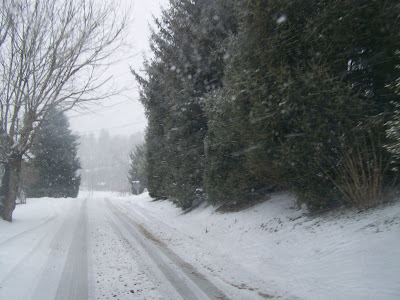


 this has been a month to remember, a January like the ones I remember from when I moved to the mountains in the mid-1970's. My only regret this year is that I have not had the time to sit back and enjoy it as much as I would like. Instead, I leave when day is breaking and come home at its end, wondering what magic I missed while enclosed in my office.


