Pages

Showing posts with label plant folklore. Show all posts

Tuesday, August 8, 2023

Honeysuckle

65, clear and crisp after yesterday's storms. We got 2 inches of rain in about 30 minutes.

Honeysuckle, so pretty in the wild, such a pest when it springs up where it's not wanted. Such is the case in one of my gardens. I have tried unsuccessfully to get rid of it, so, to try to make myself feel better about the vine's invasion into my space, I decided to look into the folklore of this most common of wildlings in my part of the world.


Here's some of what I have learned:

Other names for honeysuckle: Irish vine, woodbine, fairy trumpets, honeybind, trumpet flowers, goats leaf and sweet suckle.

The old name Woodbine describes the twisting, binding nature of the honeysuckle through the hedgerows of the Old World.

It was believed that if honeysuckle grew around the entrance to the home it prevented a witch from entering. In other places it's believed that grown around the doors it will bring good luck. If it grows well in your garden, then you will be protected from evil. In Ireland honeysuckle was believed to have a power against bad spirits, and it was used in a drink to cure the effects of the evil eye.

Bringing the flowers into the house will bring money with them.

Honeysuckle has long been a symbol of fidelity and affection. Those who wear honeysuckle flowers are said to be able to dream of their true love. Its clinging nature, in the book The Language of Flowers, symbolizes 'we are united in love,' and emphasizes the bond of devotion and affection between two people. It was also believed that if the blooms were brought into the house then a wedding would follow within a year.

In the Victorian era there was a ban on young girls bringing honeysuckle into the home because the heady fragrance of the flowers was believed to cause dreams that were far too risqué for their sensibilities.

The wood has been used to make walking sticks because of its nature to grow around and entwine saplings. Actually, I have never seen honeysuckle big enough for this, unless this is referring to the shrub?

The dried flowers are used for adding to pot-pourri, herb pillows and floral waters. Also, scented cosmetics are made from the fresh flowers.

The sturdy stems of honeysuckle have been used to make rope as far back as the Bronze Age, and in parts of Britain were commonly made into bridles and harnesses for pack ponies. Geoffrey Chaucer mentioned 'wodebyne' is a symbol of steadfastness.

Well, if having honeysuckle in my garden near the entrance to our walk, then perhaps it's a good thing. I just hope we can learn to co-exist peacefully. What are the odds? Not in my favor, I'm sure.


Copyright Susanna Holstein. All rights reserved. No Republication or Redistribution Allowed without attribution to Susanna Holstein.

Monday, October 12, 2020

Covid Journal, Day 204: Pears--Folklore, Stories and More

A rainy weekend, and cloudy today with showers expected tonight. Warmer, with a high near 80 today.

No one ever died for a bite
of one, or came back from the dead
for a single taste: the cool flesh
cellular or stony, white

My post last week about pears got me wondering if there are superstitions, folklore or stories connected with this fruit. And, of course, there is. I also wondered about the origin of pears. Are they originally from Asia--thinking of Asian pears--or some other place?

I found only a few superstitions connected to pears. For example, did you know that in China, you should never give someone a pear, or share a pear with someone, because that could be bad news for your relationship. According to what I found online, this is because the Chinese word for pear is very similar to the word for leaving, or parting. This does make me wonder if this is just a way to keep all the pears to oneself.


As to where pears come from, I found the following information on the Purdue Horticulture site: "The origin and early history of pear is well described in The Pears of New York by Hedrick (1921) and this review draws heavily on this great compilation. The genus Pyrus, native to the Northern Hemisphere of the Old World, consists of about 20 species of which half are found in Europe, North Africa, and Asia minor; and half in Asia. These have given rise to two groups of domesticated pears, the soft-fleshed European Pyrus communis and the crisp-fleshed Asiatic pears, principally P. pyrifolia (P. serotina). The pear has continually been a common fruit in the West as well and is considered part of the cultural heritage of Europe. In fact, in present day Spain there is a juvenile expression, Esto es “La Pera” (this is the pear), when referring to a particularly wonderful or enjoyable situation or experience. The precise origin of the European pear is still unknown but it has been with us since prehistoric times and dried slices have been unearthed in Swiss cave dwellings of the Ice Age. In Asia, the culture of pear goes back 2500–3000 years and has been chronicled in Chinese writings (Shi Jing) from at least 1200 years ago."  https://www.hort.purdue.edu/newcrop/janick-papers/pearinhistory.pdf

Painting by Paul Cezanne

And from the same source: "In Egyptian antiquity the pear was sacred to Isis. In Christian symbolism the pear frequently appears in connection with Christ’s love for mankind (Jakes 1961). In China, the pear is symbolic of justice, longevity, purity, wisdom, and benevolent administration. In Korea, the pear typifies grace, nobility, and purity, and the pear tree, comfort. There are a number of Korean legends which involve the pear as endowing fertility to women, good fortune in exams, wisdom, and health, while the pear flower, by its whiteness, is symbolic of the face of beautiful women and the transience of petals is a metaphor for the sadness and coldness of departure. In the Western “language of flowers” the pear blossom is the birthday flower for August 17 symbolizing affection (Ferguson, 1954). In many parts of the world the pear symbolizes the human heart which it resembles."

So to answer my own question, yes indeed, there are quite a few superstitions connected to the sweet pear. Fertility, wisdom, purity, grace, beauty. All good things, surely.

But then there is Lizzie Borden, who claimed she could not have killed her parents because she was outside eating a pear when they were murdered. Allrighty then. Seems a weak defense to me. A rather grisly connection to the pear, I'm afraid. But apparently enough to get her acquitted.

I found two folktales in which pears play a prominent role. 

The Golden Pears

Painting by Paul Cezanne

There was once a poor farmer in Bürs  (Austria). He had only three sons and a pear-tree that grew in front of his cottage. But these pears were very fine and the king delighted in them. One day the farmer said to his sons that he would send a basket of them to the king for a present.

He lined a basket with fresh leaves, laid the pears on them and sent his oldest son to offer them to the king. 

"Do not eat any of the pears, mind," the farmer said. "These are for the King alone.And don't let anyone rob you on the way." 


The boy answered: "I know how to take care of what I have."


The farmer covered the top of the basket with fresh leaves and the oldest son set off.


It was autumn, and the sun was still quite warm. When he came at last to a roadside fountain, he sat down to drink and rest.


A bent, wrinkled old woman was washing some rags at the same fountain and singing out of tune.


"A fair day, my lad!" said the little old wife; "but you have to carry a heavy burden. What are you carrying?"


"Only a load of sweepings off the road," answered the boy.


"Road-sweepings?" repeated the woman. "Well, if you mean it, no doubt it is so," and she went on washing and singing out of tune.


The boy soon continued on his way to the castle, where the King welcomed him at once.


"You have brought me some of your father's pears, my boy?" asked the King as he licked his lips.


"Yes, sire, I have them in this basket."


The King was delighted to hear this, but what do you think? Under the leaves was nothing but sweepings off the road! The poor oldest son was thrown into jail for disappointing the King, and lying on top of it.


The first and second day in jail the boy blamed the old wife, but as he thought more closely, he saw he had brought it on himself by lying to her.


A year later, the farmer said to his other two sons, "Your elder brother has perhaps pleased the King so much that he has got a great office near him and has become a rich man."


The second brother said, "May I give the King a basket of pears too? If the King makes me rich, I will send for you and make you rich too."


"Well said, son," answered the father; "for I have worked hard for you all my life and it is fit that in my old age you should share your wealth with me."


As the season for pears had just come round again, the second son made another basket, lined it with fresh leaves and laid several beautiful pears in it.


The following day, he walked a long way carrying the pears. But the sun was as hot as it had been last year. When he came to the fountain by the wayside on the third day, he was glad to sit down to rest and refresh himself.


Who do you think was at the fountain? Why, the same old doubled-up woman. She stood washing her rags at the fountain and singing out of tune. When she saw the boy with his basket, she said, "I see you carry a heavy burden. What are you carrying?"


"A load of sweepings off the road," answered the boy, for he and his elder brother had come up with that answer together last year, when they were considering how to keep from being robbed.


"Road-sweepings?" repeated the woman. "Well, if you mean it, no doubt it is so." And she went on washing and singing out of tune.


The boy went on to the King's castle. When he brought his basket to the King it was once again filled with street-sweepings, not his father's luscious pears. The King's guard hurried him off to jail for offending the king like that, and put him in the next cell to his brother.


Another year passed. The father got very uneasy. The third son was thought to be a dull boy and had often been laughed at by the others for it.


"If I dared trust you, I would gladly send you to see what has happened to your brothers," said his father.


"I can go, Father," he said. "I'll find my brothers, I promise."


"Do you really think you can keep yourself out of harm's way?" said his father. "Well, I will not let you go empty-handed." The pears were just ripe again, so he laid the choicest of the year's stock in another basket and sent him on his way.


The boy walked along. All went smoothly, except that he got rather scorched by the sun. So when he reached the fountain by the wayside, he was glad to sit down to rest and refresh himself.


The old wife was washing her rags in the water and singing out of tune. "Here comes a third boy with a basket of pears - as if I didn't know the scent of ripe golden pears from road-sweepings!"


"Good morning, little mother!" said the boy, in his countryman way, before he sat down.


"He is better mannered than the other two," thought the wife as she stopped singing to return his greeting.


"And what are you carrying, my boy?" she went on. "It ought to be a precious burden to be worth carrying so far as you seem to have come. What is in your basket?"


"I carry golden pears and my father often says there are no finer grown in the whole kingdom. I am taking them to the King because he is very fond of them."


"Only ripe pears and yet so heavy?" wondered the old wife.


The boy assured her they were nothing but pears and went on his journey after the rest.


When the servants saw another peasant boy from Bürs come to the palace with the story that he had pears for the King, they said, "No, no! We have had enough of that! Go back!"


But the boy was so disappointed at the idea of not doing as his father had asked him to, that he sank down on the door-step and sobbed bitterly. There he remained sobbing till the king came out.


The king had his daughter with him. When she saw the boy sobbing, she asked what was the matter, and learnt it was another boy from Bürs who had come to insult the King with a basket of road-sweepings. The guards asked if they should take him off to prison at once.


The boy sobbed: "My father says there are no finer pears in the whole kingdom."


"Yes, yes, that is exactly what the others said!" answered the servants, and made ready to drag him away.


"But won't you look at my pears first, lady? I have brought them all this way for the King. My father will be so sad if I do not give them to him!"


He seemed so earnest that the princess wanted to see what was in his basket. She removed the covering of leaves and discovered that what he had brought were golden pears - each was of solid shining metal! "Let us show these to my father," she said.


The King was pleased to see his favourite fruit in gold, and said to the boy, "Whatever you ask shall be given."


"All I want is to find my two brothers, who may hold some great office at court," said the boy.


"Your brothers are in jail if they are the ones I suspect," said the King and commanded that they should be brought. The boys at once ran to embrace each other, and the King made them each recount all their adventures.


"You see how dangerous it is to depart from the truth!" the King said to the two eldest when they had done. "You might have remained in prison to the end of your days but for your straightforward brother that you thought was less than yourselves."


Then he ordered that the tree that brought forth golden, but eatable pears should be transplanted to his palace, and made the father and his three sons places among his gardeners. And so they lived in plenty and were well content.


Here is yet one more pear story, and I rather like this one. Aunty Misery, below, is believed to be from Puerto Rico. The story of Soldier Jack, also known as The Man Who Caught Death in a Sack, has a similar theme--it is told as an Appalachian tale, but probably has roots in England. The folklorist Arthur Ransome has a version from Russia, and I am sure there are many others.  It is also very like Godfather Death, from The Brothers Grimm. I do love the way stories, or parts of them travel from culture to culture. I found this story on several sites online.


Aunty Misery 


This is a story about an old, very old woman who lived alone in her little hut with no other company than a beautiful pear tree that grew at her door. 


She spent all her time taking care of her pear tree. But the neighborhood children drove the old woman crazy by stealing her fruit. They would climb her tree, shake its delicate limbs, and run away with armloads of golden pears, yelling insults at “Aunty Misery,” as they called her. 


One day, a pilgrim stopped at the old woman’s hut and asked her permission to spend the night under her roof. Aunty Misery saw that he had an honest face and bade the traveler come in. She fed him and made a bed for him in front of her hearth. 


In the morning while he was getting ready to leave, the stranger told her that he would show his gratitude for her hospitality by granting her one wish. 


“There is only one thing that I desire,” said Aunty Misery. 


“Ask, and it shall be yours,” replied the stranger, who was a sorcerer in disguise. 


“I wish that anyone who climbs up my pear tree should not be able to come back down until I permit it.” 


“Your wish is granted,” said the stranger, touching the pear tree as he left Aunty Misery’s house. 


And so it happened that when the children came back to taunt the old woman and to steal her fruit, she stood at her window watching them. Several of them shimmied up the trunk of the pear tree and immediately got stuck to it as if with glue. She let them cry and beg her for a long time before she gave the tree permission to let them go, on the condition that they never again steal her fruit or bother her. 


 Time passed and both Aunty Misery and her tree grew bent and gnarled with age. One day another traveler stopped at her door. This one looked exhausted, so the old woman asked him what he wanted in her village. 


He answered her in a voice that was dry and hoarse, as if he had swallowed a desert: “I am Death, and I have come to take you with me.” 


Thinking fast, Aunty Misery said, “All right, but before I go I would like to pluck some pears from my beloved pear tree to remember how much pleasure it brought me in this life. But I am a very old woman and cannot climb to the tallest branches where the best fruit is; will you be so kind as to do it for me?” 


With a heavy sigh like wind through a catacomb, Death climbed the pear tree. Immediately he became stuck to it as if with glue. And no matter how much he cursed and threatened, Aunty Misery would not give the tree permission to release Death. 


Many years passed and there were no deaths in the world. The people who made their living from death began to protest loudly. The doctors claimed no one bothered to come in for examinations or treatments anymore, because they did not fear dying; the pharmacists’ business suffered too because medicines are, like magic potions, bought to prevent or postpone the inevitable; the priests and undertakers were unhappy with the situation also, for obvious reasons. There were also many old folks tired of life who wanted to pass on to the next world to rest from the miseries of this one. 


Aunty Misery realized all this, and not wishing to be unfair, she made a deal with her prisoner, Death: if he promised not ever to come for her again, she would give him his freedom. He agreed. 


And that is why so long as the world is the world, Aunty Misery will always live. 


Closing this very long post with this poem by Ruth Stone:


The Pear

There hangs this bellied pear, let no rake doubt,
Meat for the tongue and febrile to the skin,
Wasting for the mildew and the rot,
A tallow rump slow rounded, a pelt thin
And for the quickest bite; so, orchard bred,
Heaviest downward from the shaking stem.
Whose fingers curve around the ripened head
Lust to split so fine a diadem.

There is the picker, stretches for the knife,
There are the ravening who claw the fruit,
More, those adjuring wax that lasts a life,
And foxes, freak for cunning, after loot.
For that sweet suck the hornet whines his wits,
But husbandman will dry her for the pits.

December 1951

Copyright Susanna Holstein. All rights reserved. No Republication or Redistribution Allowed without attribution to Susanna Holstein.

Friday, February 16, 2018

Thinking of Spring and Daffodils

 (Note: all photos are from years past--no flowers yet this year!)


I noticed in the gardens yesterday that the green tips of daffodils were beginning to show through the mulch. Last year by this time, they were up so far they were almost ready to bloom, far too early. This year we seem to be back on a reasonable schedule for Spring, and I am already looking forward to flowers and green. How about you?

Daffodils are one of my favorite flowers, right there with violets and roses. I bet I am not alone-these brave early bloomers bring brightness to the landscape after the soft grays and whites (and recently brown, as in mud) of winter. They have, in many cultures, been considered lucky, and will reward you with good fortune if you avoid stepping on them and crushing them. I wonder if my dogs would listen if I told them that.


Some people believe that daffodils growing in the wild indicate the past location of a former church or other religious site. I can see where this comes from, since daffodils were frequently planted on graves, and they naturalize easily. A Christian legend says that daffodils appeared in the Garden of Gethsemane after the Last Supper; my husband calls them Easter Flowers, and perhaps that name arises from this legend--or is it just because the daffodils are usually in bloom on Easter? The Egyptians used daffodils in funeral wreaths and Roman soldiers carried them in case of their death--presumably to grow on their graves, I would guess.

How often do you see wild daffodils and notice foundations stones or a crumbling house or barn? For me they certainly seem to indicate the site of some form of human habitation, living or dead. The bulbs might also wash out in floods and scatter along creeks and rivers, and there is no prettier sight in my book than yellow flowers bobbing along the banks and mingling with tree roots and wildflowers.


The daffodil is poisonous, however--all of its parts, but most particularly the bulbs. I remember a lady calling me a few years ago to ask if she could make jelly from them; some quick research delivered a very decided "No" in answer to her question. I don't think I would even use them as decoration on food, either, even though they would be so pretty on a cake or a salad. No sense taking chances. In Greek mythology, the Furies wore them in their hair and used them against their enemies--the name daffodil derives from a Greek word meaning narcotic, so you can imagine how the Furies might have employed them as a weapon. One of the effects of daffodil poisoning is convulsions and stupor, not something any enemy would enjoy.

Most people know the story of Narcissus, the Greek lad whose name was given to the two-flowered member of the daffodil family. He admired his reflection in a pool of water so long that he fell in love with himself and pined away from unrequited love. The gods took pity on him and turned him into a flower, the narcissus.


In Wales, the daffodil has become a national symbol, right up there with the red dragon although not nearly as ancient in that role. Apparently its importance as a symbol began when David Lloyd George, a Welshman, served as Britain's Prime Minister. He wore one as a bouttoniere and was a strong supporter of the flower--which is grown today in Wales to produce galantamine, a drug used to treat Alzheimer's Disease.

A few superstitions associated with daffodils:


*Never bring in just one bloom, bring a bunch. Otherwise you will see penury and hard luck throughout the year.

*Never pick daffodils before the first chicks hatch or you will have no hatchlings. And if you pick just one, your hens will hatch only one chick.

*A daffodils whose nodding head is turned toward you is not good. As in this old quote from the Encyclopedia of Superstitions, Folklore, and the Occult Sciences by Cora Linn Daniels and C.M. Stevans:

"When a daffodil I see,
Hanging down her hear toward me,
Guess I may what I must be!
First I shall decline my head,
Secondly I shall be dead,
Lastly, safely buried."

Let's not leave each other on that somber note!

The Daffodil Fairy

I’m everyone’s darling: the blackbird and starling
Are shouting about me from blossoming boughs;
For I, the Lent Lily, the Daffy-down-dilly,
Have heard through the country the call to arouse.
The orchards are ringing with voices a-singing
The praise of my petticoat, praise of my gown;
The children are playing, and hark! they are saying
That Daffy-down-dilly is come up to town!

By Cicely Mary Barker from her book, Complete Book of the Flower Fairies published in 1923.

You might also like: Daffodil: The Remarkable Story or the World's Most Popular Spring Flower by Noel Kingsbury and Jo Whitworth.
Copyright Susanna Holstein. All rights reserved. No Republication or Redistribution Allowed without attribution to Susanna Holstein.

Wednesday, November 8, 2017

Pteridomania: A Victorian Craze

"Gathering ferns," by Helen Allingham, Illustrated
London News, July 1871
Pteridomania swept England in the middle to late 1800's. The mania was widespread, led to at least one death and to countless people traipsing the countryside.

What was it?

The Fern-Gatherer,
 by Charles Sillem Lidderdale, 1877
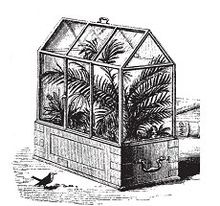
Fern collecting. That's right--ferns. People sought high and low for rare examples, built exotic terrarium-like furniture to house them, and wrote books about them. I had never heard about this, but I happened to stumble on a bit of fern folklore that set me to researching online, and I stumbled right into pteridomania. Who would have thought?

The Victorians decorated their china, glass planters, upholstery, wallpaper...almost everything...with fern designs. Fern houses were displayed in the most stylish parlors of the day, and young ladies sketched delicate portraits of fern fronds in their sketchbooks.

from Wikipedia
The fern houses were called Wardian cases, and they were elaborate things indeed. These were named after their inventor, Nathaniel Bagshaw Ward. Previously it was almost impossible to transport delicate foreign plants over the seas to England; the plants just could not survive the journey. Mr. Ward's glass structures provided an environment more suitable to the cause, and the glass houses were found to be well-suited to fern-growing as well. Another factor that was dangerous to the health of ferns and other woodland plants was the polluted air of England's cities at that time, but the cases also protected against that problem.

People went to great lengths to obtain their plants, hiking into wild places and hanging off cliffs if need be. One fern gatherer named William Williams lost his life that way in Wales; his body was found at the foot of a cliff where he had been trying to obtain some choice specimens.


I like seeing ferns in the woods; the lend an almost tropical air to almost any forest. I like to pick them for bouquets too, and once pressed and framed a few to hang on my walls, but that's the extent of my fern "mania."

The fern is the subject of some interesting folklore. Although ferns do not flower, there is a superstition in some parts of the world that the plants will flower, very briefly, on the eve of the summer solstice. If one is lucky enough to find a plant in flower, that person will gain extraordinary powers--being able to understand the language of the animals, for example, or to have great luck or wealth in their life. One story says that prior to the birth of Christ, all ferns flowered. On the night of his birth, all the flowers in the world burst into bloom except the fern, and as punishment the ability to produce flowers was taken away from the ferns.

In Staffordshire, England, it was once believed that burning ferns would cause rain, and the practice was employed whenever conditions were too dry in many other places in England and Scotland.

A Cornwall belief held that eating the first fern to emerge in spring would prevent toothache all year long. "A person who can wear fern seed about him will become invisible," and "fern found growing on a tree will cure stomach ache," according to the Encyclopedia of Superstitions. But don't wear ferns, because if you do you will lose your way and be followed by snakes.


Sources:

Pterdomania. Wikipedia article.

Atlas Obscura. How the Victorian Fern-Hunting Craze Led To Adventure, Romance, and Crime

Finding a fern flower. Wikipedia article.

Fern Folklore. Comstock's West Virginia Heritage Encyclopedia, vol 7, pp 1550-1551. Richwood WV 1976.

Historical medical use of ferns. Papers Past.

Radford, Mona and Edwin. Encyclopedia of Superstitions. Burning ferns to bring rain, pp

Copyright Susanna Holstein. All rights reserved. No Republication or Redistribution Allowed without attribution to Susanna Holstein.

Tuesday, November 7, 2017

The Language of Fall Flowers

I have a lovely little book titled The Language of Flowers, by Margaret Pickston. It was written, so the flyleaf says, by her father as a gift to her mother, and there is an inscription signed F.W.L., August 8, 1913. My copy is a reprint made in England around 1973.

In Victorian times, floriography was quite popular. The assigning of meaning to various blooms is an old custom dating as far back as early Christianity and Judaism; even Shakespeare included it in Hamlet:

There's rosemary, that's for remembrance.
Pray you, love, remember. And there is pansies, 
that's for thoughts. […] 
There's fennel for you, and columbines. 
There's rue  for you; and here's some for me; we 
may call it  herb of grace o' Sundays. You must wear your 
rue with  a difference. There's a daisy. I would 
give you some violets, but they withered all 
when my father died.

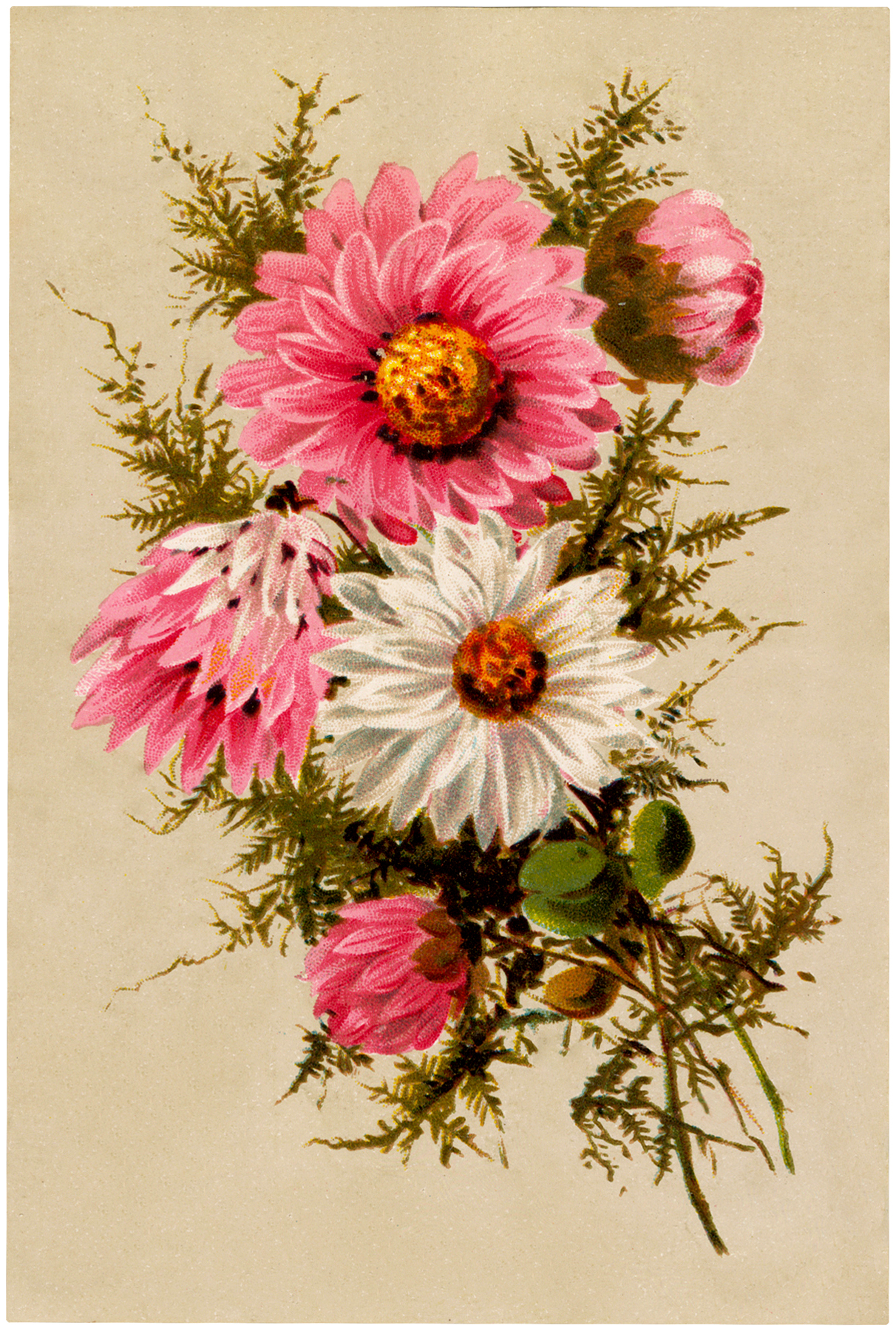
Here are some of the meanings given to the flowers and plants of autumn by F.W.L. All illustrations are from The Graphics Fairy.

from The Graphics Fairy


Aster: variety
Chrysanthemum: cheerful under adversity
but different colors of chrysanthemum also had different meanings--
Red Chrysanthemum: I love

Chrysanthemum from The Graphics Fairy

Yellow Chrysanthemum: slighted love
White Chrysanthemum: truth
Cranberry: hardness
Dead leaves: sadness, melancholy
Goldenrod: precaution, encouragement
Holly: foresight
Marigold: grief, despair
Michaelmas daisy: afterthought
Moss: eternal love
Mountain ash: prudence
Nasturtium: patriotism

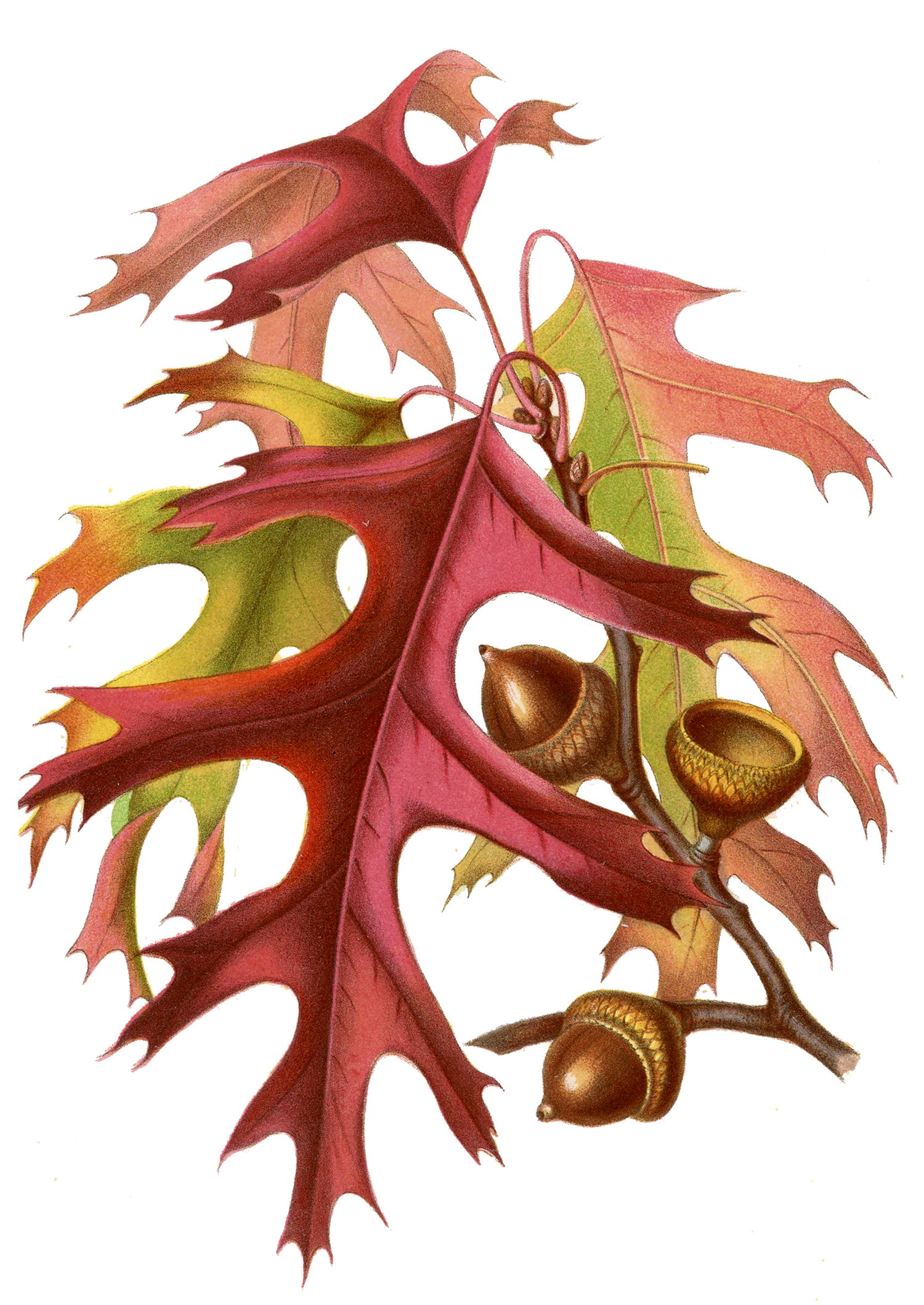
from The Graphics Fairy

Oak leaves: bravery
Oak tree: hospitality
White Oak: indepedence
Pears: affection
Pear tree: comfort
Persimmon: bury me among nature's beauty
Pine: pity
Spruce: hope in adversity
Potato: benevolence
Pride of China: dissension

Christmas Rose from The Graphics Fairy

Christmas rose: relieve my anxiety
Rosemary: remembrance
Sunflower, dwarf: adoration

Sunflower from The Graphics Fairy

Sunflower, tall: haughtiness
Walnut: intellect, strategem
Witch Hazel: a spell
Wormwood: absence
Yew: sorrow
Zinnia: thoughts of absent friends

Reading through this list, it seems endurance, memory, melancholy and strength seem to be
the theme for this time of year. Which makes sense, as we look back and remember, as nature begins to draw in and die off for the winter months, and as we gird our loins as well for cold weather.

Some other reading on the topic of floriography:

Floral Poetry and the Language of Flowers, an 1877 book now online

Language of Flowers in Emily Dickinson's Poetry

Language of Flowers Project

Flower Meanings

Victorian Bouquets encoded messages


Copyright Susanna Holstein. All rights reserved. No Republication or Redistribution Allowed without attribution to Susanna Holstein.

Wednesday, July 19, 2017

Dilly Beans and Dill Lore

The second picking of our Tenderette green beans yielded a half bushel, and since we don't need more canned beans, with 40 quarts in the cellar already, I decided to use these to make a family favorite: dilly beans.

These beans are crunchy and packed with flavor from dill, mustard seed and red pepper. They're simple to make too. My recipe is from my old and trusted pickling cookbook, a book I've had since the early 70's. It's where I learned about pickling, and I've tried a lot of recipes in it. from simple dills to pickled bananas and pickled crabappples. (These two are really more candied and spiced than pickled, and I like them both. Not so the rest of the family, sadly.)

To make the dilly beans: remove top and  tip of fresh snap beans. Pack into clean, sterilized pint jars with a head of dill, 1/4 teaspoon of red pepper and 1/2 teaspoon of mustard seed. You can use a whole red hot pepper and dried dill instead, whatever you have on hand. Boil 3 cups of water, 3 cups white vinegar, and 6 tablespoons of pickling salt. Ladle that over the beans in the jars, clean the jar rims and put on the lids and rims and tighten. Process in a boiling water bath for 20 minutes.

Here's a photo of the recipe I use:


Dill can be a useful herb to have around, and not just for cooking. People used dill as a protection against bad luck and evil, and often placed it in babies' cradles to keep the babies safe. Some carried little sachets of dill in their pockets, and in Greece some hung stalks of it in their homes.

Apparently dill was considered a valuable herb, one used to pay tithes, as mentioned in Matthew 23:23--

“Woe unto you, scribes and Pharisees, hypocrites! for ye pay tithe of mint and anise and cummin, and have omitted the weightier matters of the law, judgment, mercy, and faith: these ought ye to have done, and not to leave the other undone.” (from the King James version).


A drink was made of dill and other ingredients to as a remedy for a bad spell cast on someone. Dill was also considered to bring financial fortune; perhaps the seeds reminded people of Lunaria, Money Plant.  Dill was once part of traditional wedding bouquets, thought to bring comfort to the nervous bride. And of course, in that apparently never-ending quest to attract a mate, dill was often included in love potions.

Some people still use dill to help with indigestion and to prevent infections.

The website AppreciateGoods gives the following dill trivia:

The Serbian proverb “bitimirodjija u svakoj čorbi” (to be a dill in every soup) means ‘to be involved or be knowledgeable in many things’.
In ancient Greece, athletes used to apply dill essence over their body as a muscle toner before participating in the games.
During the medieval period in Europe, dill was believed to protect people from witchcraft and curses.
One tablespoon of dill seed contains more calcium than there is in one cup of milk.
In Sweden, dill is used to flavor potato chips, which they call ‘dillchips’.

So, back into the kitchen I go to finish the last batch of dilly beans. This house is smelling good!

Copyright Susanna Holstein. All rights reserved. No Republication or Redistribution Allowed without attribution to Susanna Holstein.

Tuesday, July 18, 2017

Since I've Been Talking Cabbage: Folklore and Superstitions

As usual, whenever I get involved with something, I wonder if there are superstitions attached to it. Lately I've been on about cabbages, so I had to go look, and of course, there are plenty of beliefs attached to the homely plant.

We have probably all heard of the importance of eating cabbage on New Year's Day to have luck (or money) in the coming year. I follow my mother's tradition of putting wrapped coins in the cooked cabbage to assure we'll have plenty of money in the coming year. It's never made me rich and I wonder if all I'm doing is making sure pennies continue to multiply in my wallet, but hey, I'm not taking any chances, so the wrapped money will continue to be hidden in my New Year's cabbage.

But did you know that you need only dream of cabbage to assure good fortune? There is another conflicting belief though, that if you dream of cabbage a friend is seriously ill and probably won't recover. Dire, that.

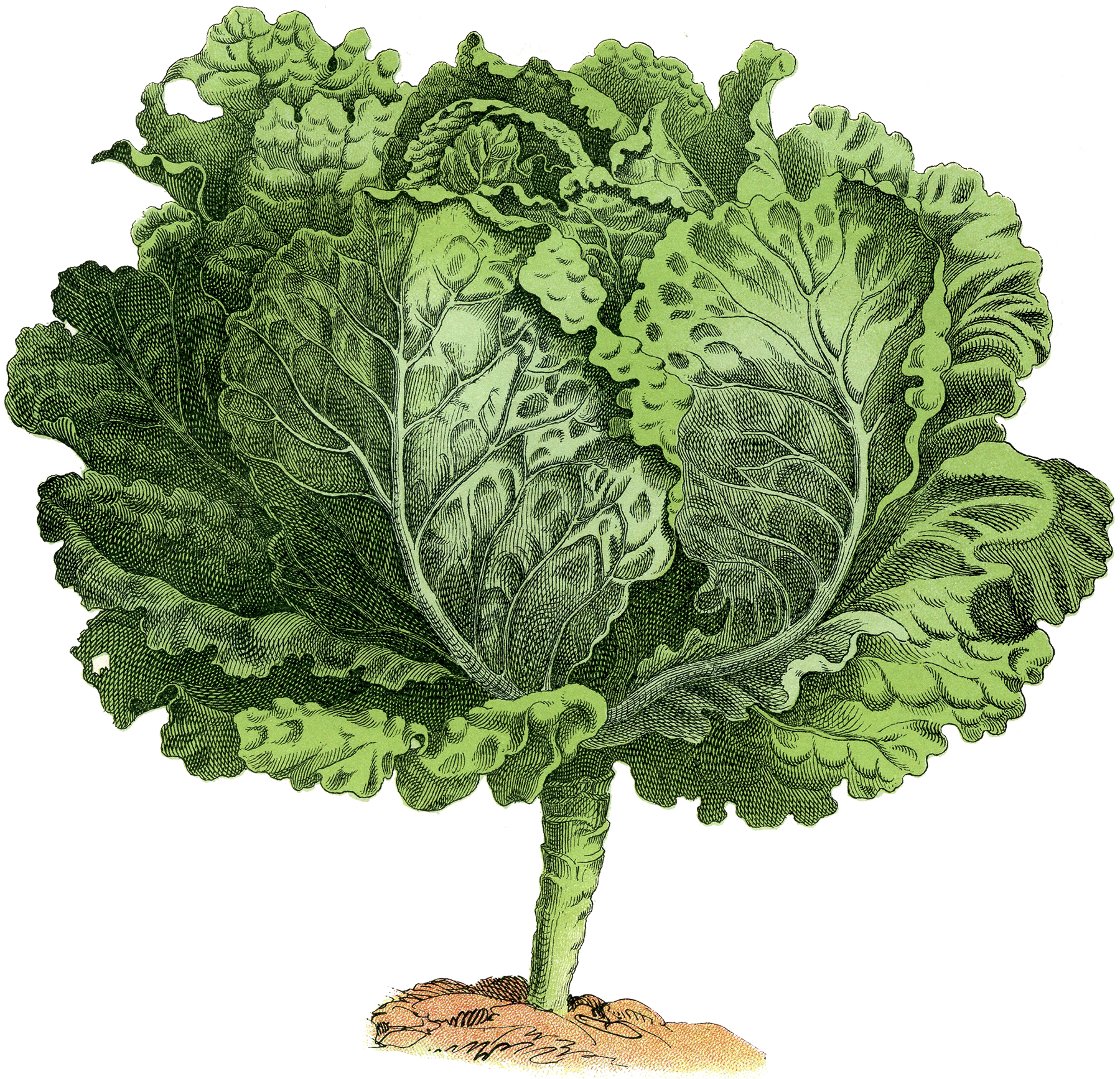
from The Graphics Fairy Website
Another thing I remember my mother doing was cutting a cross in the bottom of the cabbage core before then cutting the cabbage into quarters. According to the website HistoryExtra, this is why:

"Do you dread the annual ritual of preparing the mountain of Brussels sprouts for that family Christmas dinner, painstakingly cutting a cross in every stalk before you toss them in the pan? Why do we do that? People claim we cut a cross in the bottom to help the sprouts cook better, but you don’t find them served like that in most restaurants.

Without knowing it, you may be following a superstition dating back to the medieval times, when it was believed that evil spirits or tiny demons hid between the leaves of lettuces, sprouts and cabbage. These spirits could enter anyone who swallowed them, making the person ill or at the very least giving them stomach ache. So before cooking, a cross was cut in every sprout or cabbage to drive the evil spirits out from the leaves."

Well, who knew?

There is a variety of cabbage called Jersey, which comes from the Isle of Jersey, and according to old folklore the seed for this cabbage should only be planted during the waning moon or the seed will not germinate.

Along with this, my friend and reference librarian extraordinaire Elizabeth told me that one of the first reference questions she had to answer was what was the right sign of the moon for making kraut. She found that it was the full moon, as that would "draw" the brine. Hmmmm....we just made ours in the waning moon so I hope that has the same drawing effect.

A cabbage can predict your future mate, prosperity and happiness too, according to the Irish. Go on over to Irish American Mom's blog to get the details and directions to assure you do it properly.

photo credit: National Archives
The National Endowment for the Humanities website includes a bit about "Cabbage Night":

"An 1895 story from the Hawaiian Gazette explained that Halloween was rarely celebrated in the United States (only by young boys, who knew it as “Cabbage night”).  The paper then, however, gleefully detailed the many ways nuts, cabbages, and apples had been used to reveal a future spouse’s face in the old country."


from the Graphics Fairy website
In Gregory the Great's Life of Benedict, Vol. 2, there is a story about a nun who became violently ill after eating a cabbage which she had not blessed. The Saint was called on to expel the demon that had possessed the nun, and according to one version of this story, the demon then complained that he was just minding his own business and sitting on the cabbage when the nun came along and ate him!

Here in America, author Jane Manaster writes in her book, Horned Lizards: The Book of Horny Toads, of a spell wrought by a woman on a girl who she thought was trying to steal her husband. "Kill a horned toad, salt it like salt pork, cook it with cabbage and feed it to the girl." Apparently the girl went mad and went to the "hoodoo doctor" for her own cure! (page 39).

Now, I am back to looking for red cabbage recipes. And I will remember to cut that cross in the bottom of the core, you'd better believe!

Copyright Susanna Holstein. All rights reserved. No Republication or Redistribution Allowed without attribution to Susanna Holstein.
Related Posts Plugin for WordPress, Blogger...