Pages

Showing posts with label weather superstitions. Show all posts

Wednesday, July 2, 2025

So This is July

65°f/18°C, overcast and very foggy after yesterday's heavy rain.
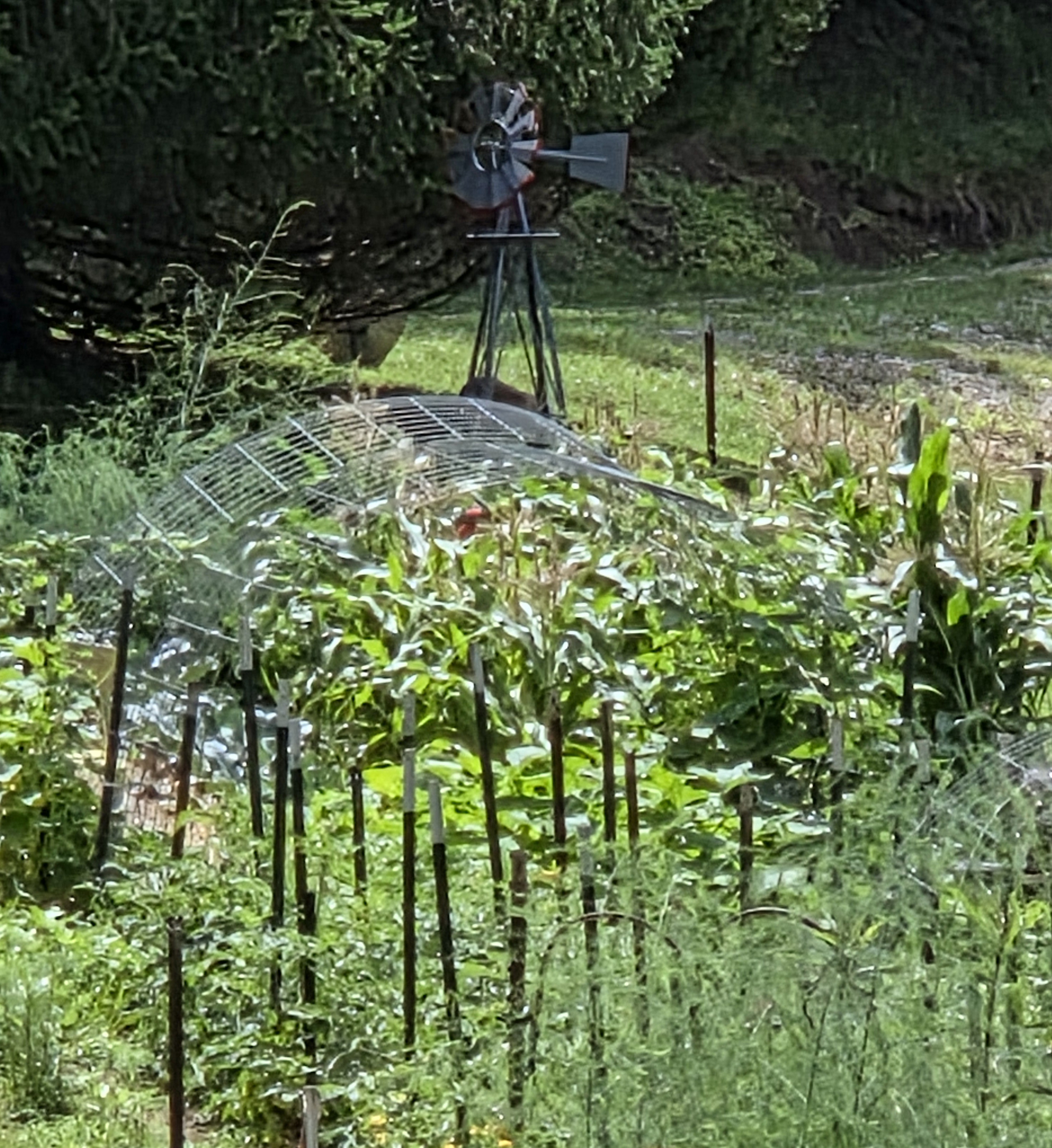

Can you spot Larry in the corn? Hint: he's a red dot in the center.

Well, here we are, already charging forward into July. I admit, July is my least favorite month. I hate the heat. I hate the humidity. But it's unavoidable so I soldier on and will this month to be over quickly.

I was curious about what lore and superstitions might be attached to this month, and found it is laden with them. Here's some if what I turned up:

Then came hot July boiling like to Fire,
That all his Garments he had cast away...
~Edmund Spenser, The Faerie Queene, 1596

If the first of July be rainy weather,
It will rain, more or less, for four weeks together.
~English proverb

According to legend, Hercules is positioned upside-down in the sky so he can be head-to-head with the second of our celestial giants, Ophiuchus, the Doctor. Ophiuchus discovered the magic formula to eternal life; unfortunately for him, this didn’t bode well for Pluto, the god of the Underworld, who would then lose all his future inhabitants, so Pluto sent a serpent down to Ophiuchus, under the premise that should the good doctor prove victorious, we would all life forever; if the serpent won, Pluto would continue to receive us at the end of our lives. We can see the battle still raging, because on either side of Ophiuchus is a section of the snake, the constellation Serpens.

July 3rd marks the beginning of the “Dog Days of Summer.” Spanning from July 3rd to August 11th, this period marks when the Sun aligns with Sirius, the Dog Star. In ancient times, people believed that this celestial event resulted in scorching hot weather when Sirius and the Sun worked together.


July 15 — St. Swithin’s Day — if on St. Swithin’s Day ye do rain, for forty days it will remain.
Both of these are from the Old Farmer's Almanac.


Please, don't marry in July! Save your guests the misery of a hot wedding, and yourself a lifetime, apparently, of misery.

Married in July with flowers ablaze, bitter-sweet memories in after days.”

“Those who in July do wed, must labour for their daily bread.”

“A July bride will be handsome, But a trifle quick-tempered.”


And more:

"Ne'er trust a July sky." This suggests the weather in July can be unpredictable.
"If ant hills are high in July, the coming winter will be hard." This is an old belief about predicting winter severity based on ant behavior.
"As July, so next January." This suggests the weather in July might indicate the weather for the following January.
"No tempest, good July, Lest the corn look ruely." This implies that a calm July without storms is favorable for corn crops.
"Whatever July and August do not boil, September can not fry." This suggests that if the weather in July and August isn't hot enough to mature crops ("boil"), they won't ripen in September ("fry).
These last are from AI, but are verified by many other sources.

Sunday, February 21, 2021

Words on Ice

5 degrees and clear this morning.


It's cold. Really cold. Icy cold. Blue-cold. Some friends are reporting below zero temperatures, so I am feeling grateful for our 5 above this morning. Which to Celsius friends, is about -15. Brrrr--that sounds so much colder.

Ice, it seems has always inspired poets, writers, thinkers, and the superstitious. So I thought this morning would be a good time to share some frozen words, so to speak. Like this one by Robert Frost:

Some say the world will end in fire,
Some say in ice.
From what I've tasted of desire
I hold with those who favor fire.
But if it had to perish twice,
I think I know enough of hate
To say that for destruction ice
Is also great
And would suffice.

Fire and Ice, by Robert Frost

This work by Sara Teasdale isn't about ice specifically, but isn't it implied in the words? The frozen pond, the crisp crunchy snow, silver sunlight...

A Winter Bluejay
by Sara Teasdale

Crisply the bright snow whispered,
Crunching beneath our feet;
Behind us as we walked along the parkway,
Our shadows danced,
Fantastic shapes in vivid blue.
Across the lake the skaters
Flew to and fro,
With sharp turns weaving
A frail invisible net.
In ecstasy the earth
Drank the silver sunlight;
In ecstasy the skaters
Drank the wine of speed;
In ecstasy we laughed
Drinking the wine of love.
Had not the music of our joy
Sounded its highest note?
But no,
For suddenly, with lifted eyes you said,
“Oh look!”
There, on the black bough of a snow flecked maple,
Fearless and gay as our love,
A bluejay cocked his crest!
Oh who can tell the range of joy
Or set the bounds of beauty?

-----------------------------------

I love this old English rhyme, a riddle really I suppose.

The wave, over the wave, a weird thing I saw,
through-wrought, and wonderfully ornate:
a wonder on the wave --- water become bone.


Then I think of all the ways we speak of ice in everyday phrases:
  • hands like ice
  • the icy hand of Death
  • ice-cold
  • tip of the iceberg
  • walking on thin ice
  • break the ice--or at gatherings, ice-breakers
  • cuts no ice with me
  • ice up
  • like a hog on ice
  • when the Devil learns to ice skate
And my favorites, the superstitions:
  • As long as ice hangs from the eaves will the flax hang from the distaff. I need a spinner to explain this one to me. Is it a good thing,or a bad thing? I think it may mean a good thing, meaning there will be a good crop of flax to spin?
  • The Oxford Handbook of Witchcraft In Early Medieval Europe says that the "Little Ice Age" in Europe was caused by witches. From Wikipedia: "One example of the violent scapegoating occurring during the Little Ice Age was the resurgence of witchcraft trials, as argued by Oster (2004) and Behringer (1999). Oster and Behringer argue that this resurgence was brought upon by the climatic decline. Prior to the Little Ice Age, "witchcraft" was considered an insignificant crime and victims were rarely accused.[35] But beginning in the 1380s, just as the Little Ice Age began, European populations began to link magic and weather-making.[35] The first systematic witch hunts began in the 1430s, and by the 1480s it was widely believed that witches should be held accountable for poor weather.[35] Witches were blamed for direct and indirect consequences of the Little Ice Age: livestock epidemics, cows that gave too little milk, late frosts, and unknown diseases."
  • Putting ice cubes on your porch or flushing ice cubes down the toilet will bring snow. Really? I don't think I want to try it. Although, come to think of it, when our power was off last week we did put the icetrays on the porch. And it has snowed a little or a lot every day since. Hmmm.


Meteors, nickel-filled, crystals as fragments
of a solid throne
because of heaven being ice, and shattering
despite some wishes,
I wear topaz for heat, strewn in my iris like straw,
lark's eye wrapped in a wolf skin.

Stay warm, friends. Spring isn't far away, although it's hard to believe at the moment.


Copyright Susanna Holstein. All rights reserved. No Republication or Redistribution Allowed without attribution to Susanna Holstein.

Wednesday, November 11, 2020

Covid Journal, Day 234: The Bright Hollow Fog

Warm as can be yesterday, high in the upper 70's. Rain moved in overnight and is still falling today. Temps cooled off too, and will be in the 40's tonight. 


Such a perfect November kind of day, after a couple weeks of abnormally warm weather. Today was rain and fog, dark and dreary. 

The fog, and my cousin John's beautiful post on his blog By Stargoose and Hanglands, made me think about folklore about fog. And, of course, there is. I did not find much particular to the Appalachian region in my searches, although it is often thought that the fogs and mists that rise from our hollows in these mountains are the source of many a ghostly experience. And no wonder, for the fog twisting and winding through trees can easily make one think it was something unworldly, and not just a natural phenomena. 

The only local lore I have heard about fog is that is there is a heavy fog in the morning in spring, there will be no frost. Also, a morning fog in summer means no rain that day. I have found both of these to hold true most of the time. And of course, a misty/foggy ring around the moon means rain on the way--when it will fall depends on how many stars are within the ring. If none, it will rain the next day; if 2, then rain in two days, and so on.

I did find quite a few superstitions about fog and mist, almost all of them weather-related. Which makes sense, right? For example:

If a morning fog rises rapidly, or is there is mist in the air at dawn in winter, rain is on the way.

According to one source, a foggy day was regarded with care because people thought it meant the gods wanted to communicate. Gatherings would be held at sacred places in hopes of receiving these communications. 

A day when the fog hangs around most of the day, like today, was believed in some cultures to mean something good was on the way. I certainly hope this one is right. We could use some good things happening. However, in other places, it was thought to mean that death or some other terrible event was about to take place. 

A foggy morning in a West Virginia state park.

And then, in still other places, it was said that if you were single and met someone on a foggy day, marriage would come of it. That reminds me of the movie we just watched tonight, Return of the Native, based on the book by Thomas Hardy. The book has long been a favorite of mine and I have had a copy on my bookshelves for probably 50 years. In the story, a young man is walking through a heavy fog when a beautiful woman and a white horse appear in front of him--and the woman disappears when a heavy drift of fog momentarily hides her from sight. And yes, the couple does get married. 

Fog off the cost of Inis Mor, Ireland, when we were there in 2017.

And a few more about the weather:

Fog in winter foretells wind and cold.

The number of fogs in August is an indication of the number of snows we'll have in the coming winter.

The following are from the book Weather Lore: A Collection of Proverbs, Sayings and Rules Concerning the Weather, written by Richard Inward in 1898. 

A good hay year, a bad fog year.

Much fog in autumn, much snow in winter.

A winter fog will freeze a dog.

If in winter the barometer rises very high, and a thick fog sets in, it is a sure sign that the south-west and north-east winds are " fighting each other." Neither of them can make head against the other, and there is a calm, but there is great danger of such a state of things being followed by a bad gale.—United States.

Fog in January brings a wet Spring. Fog in February means frosts in May.

There will be as many frosts in June as fogs in February.

Fogs in March, frosts in May.

Fog in March, thunder in July.

As much fog in March, so much rain in summer.

As much dew in March, so much fog rises in August. And fog in August means plenty of snow in January.

Fogs in April foretell a failure of the wheat crop--this one from Alabama.

If the first three days of April be foggy, there will be a flood
in June.

If the first three days in April be foggy.
Rain in June will make the lanes boggy.

Observe on what day in August the first heavy fog occurs, and expect a hard frost on the same day in October. from the US.

In the Mississippi valley, when fogs occur in August, expect fever and ague in the following fall

A very foggy topic! So to finish up, here's a lovely tune, The Bright Hollow Fog, by the group Inis Fail. I confess I'd never heard of them until turning up this video, but I like this. I first heard the tune being played by my friend Jenny Allinder, but don't have a video of her playing it on fiddle with her friend Jim Mullins on guitar, but this version is pretty nice. Enjoy.


Copyright Susanna Holstein. All rights reserved. No Republication or Redistribution Allowed without attribution to Susanna Holstein.

Friday, December 22, 2017

Happy Winter!

Happy Winter, my northern hemisphere friends! Like it or not, the season is officially here. If you are wondering what to expect weather-wise, there is plenty of advice and caution out there in folklore-land.

Here are 10 examples:

If October is warm, February will be very cold. Check.

Neighbor's cattle

The closer the new moon is to Christmas Day, the colder the winter will be. New moon was Wednesday, so kinda close...

If there was a big berry crop, the winter will be cold. Berries did very well in our area this past summer.

A heavy mast means a bad winter ahead. Check--the acorns were thick on the ground this fall.

What kind of weather did you have on October 9? Sunny=cold, hard, winter. Rainy=mild winter. I can't remember for sure, but I believe it was sunny here.

Ancient texts reported the belief that the weather for the entire year was settled during the twelve days between winter solstice and New Year's Day. During that time, the sages said, earth rested and laid the groundwork for the coming year.

When leaves fall early, winter will be mild. When leave fall late, winter will be severe. They fell late here, that's for sure.

A warm November is a sign of a bad winter. Very warm, it was.

If there is thunder during Christmas week, the weather will be anything but meek. We shall see!

If the first snow falls on unfrozen ground, winter will be mild. Our first snow was on unfrozen ground, so this is a good sign!

a cabin along my road


If a cold August follows a hot July, winter will be cold and dry. Can't say this was true this year; the weather both months was not as hot as usual.

So, what does this portend for you? And the most pressing question: do any of these outweigh the others in importance/significance? Most of the signs for my area point to a bad winter, but there are a few favorable to mild weather.

And of course, the old sayings did not take global warming into account. Perhaps we will need to come up with some predictions of our own now?

Since I like winter and its snow and cold, I'm happy with whatever comes. We can't change it, so the best thing is to hunker down and enjoy the season of quiet and rebirth. And watch to see if the old ones knew what they were talking about!
My house in winter

Copyright Susanna Holstein. All rights reserved. No Republication or Redistribution Allowed without attribution to Susanna Holstein.

Saturday, July 15, 2017

Will It Rain for 40 days? Saint Swithin's Day and Other Weather Lore

Happy Saint Swithun's (or Swithin's) Day!

I've just been reading about St. Swithun at the A Clerk of Oxford's site. I didn't know much about Swithin, except this rhyme:

St. Swithin, from Wikipedia
St Swithun's day if thou dost rain
For forty days it will remain
St Swithun's day if thou be fair
For forty days 'twill rain nae mare

Oh dear. It dawned fair here, but there were some showers last night. Were they finished before midnight? I don't know. I'd like to have a nice balance of rain and fair, please, Saint Swithin! But how would one do that, given the words of the proverb.

another English rhyming proverb about rain says

The rainbow in the morning
Is the shepherd’s warning
To carry his coat on his back;
The rainbow at night
Is the shepherd’s delight
For then no coat will he lack.

And from Scotland, there is this:
The weather’s taking up now
For yonder’s the weather gaw;
How bonny is the east now!
Now the colors fade awa’.”

Decipher that for me?  This one is more clear to my Western brain:

from wikimedia
If the robin sings in the bush,
Then the weather will be coarse;
If the robin sings on the barn,
Then the weather will be warm.

The wind plays a role in weather we will have rain or not, apparently, so take heed:

James Gillray, c1808

The west wind always brings wet weather,
The east wind cold and wet together,
The south wind surely brings us rain,
The north wind blows it back again.

Whatever the weather, we will have it, whether or no, that's for certain. It looks to be a fair St. Swithin's Day here, and perhaps the grass will dry enough to be mowed this evening. In the meantime, there is a pile of cabbages waiting on me today, so I'll be inside anyway.


Copyright Susanna Holstein. All rights reserved. No Republication or Redistribution Allowed without attribution to Susanna Holstein.

Tuesday, August 9, 2016

Dog Days: Sleeping on Bones, Rabies in the Water, and More

I wrote a bit about Dog Days a couple weeks ago, but here's more on this odd topic: my Two Lane Livin' article last month.

It’s hot. Steamy hot, and even the dogs prefer the coolness under the deck to their usual place under the porch ceiling fan. 

We call this time of year Dog Days, generally accepted as those days between July 3 and August 11. But why dog days? 

At our house every day seems like dog days to me-they get treats, they sleep when they like and have their food delivered to them, they get petted and fussed over whenever they want, and they do little if any actual work. Seems like a pretty good life to me!

Originating in the Mediterranean area, the term came into use because the hottest weather of the year usually occurred at the same time of year that the dog star Sirius rose just after sunset as part of the Canis Major constellation.  

Homer, the early Greek poet, wrote that, “Sirius rises late in the dark, liquid sky On summer nights, star of stars, Orion's Dog they call it, brightest Of all, but an evil portent, bringing heat , And fevers to suffering humanity.”

The ancients associated dog days with evil. Dogs went mad, they claimed, the seas were turbulent, storms were fierce and damaging, and disease spread quickly. Some believed that snakes went blind, wounds would not heal properly and people were generally on edge and cranky.

In England dog days began on Saint Swithin’s Day, July 15th, and people looked to that date for weather predictions for the next six weeks, which was harvest season. Rain on Saint Swithin’s meant at least 40 more days of rain and bad luck for the crops. “Dog days bright and clear indicate a happy year – but when accompanied by rain, for better times our hopes are in vain.”

A few other strange beliefs connected with dog days: when putting on socks, you should know that you should always put on the left one first, because it prevents getting a toothache (maybe this explains the verse in the song Old Dan Tucker, who dies of a toothache in his heel?). But people believed that the right sock should be put on first on the first of the dog days or else they risked falling and breaking their leg.

You should never let a child sleep on a bone during dog days--very unlucky at this particular time of year. Children should also not be allowed to sleep on a grave and in Texas they were kept out of the sun during dog days for fear that the heat caused strange illnesses. They were warned not to go barefoot either because of potential diseases in the soil.

It is dangerous to go swimming in dog days, people in the Ozarks believed, because the green scum on the water might convey rabies. (Untrue of course, but how did this idea start in the first place?) People did not cut their hair and would put off having surgery during dog days.

Snakes are more likely to strike during dog days, some say, but others contend that snakes are less likely to bite because the heat makes them languid. Dog days were blamed for Cows catching diseases, hogs getting cholera, henhouses becoming lice-infest, tickbites more numerous and all sorts of other unpleasant events.

To sum up: put your socks on correctly, don’t swim in slime-infested water or let your children sleep on bones or graves, get rabies shots for your pets, be mindful of snakes.  You are now forewarned, so go out and enjoy the rest of your summer!


Copyright Susanna Holstein. All rights reserved. No Republication or Redistribution Allowed without attribution to Susanna Holstein.

Tuesday, January 19, 2016

Speaking of the Weather...

Apparently there is quite a storm heading our way this weekend, if the forecasters are to be believed.

I think I may follow the example of Carolyn over at Roundtop Ruminations and watch the birds to see if they begin feeding more heavily in the next few days, an indication of bad weather on the horizon. My husband always says that the deer will be out feeding too, before bad weather, and then disappear as the storm gets closer. For myself, I find that I get very thirsty the day before a snowstorm. I don't know why that should be true, but there it is.

I've written quite a few weather posts over the years I've been keeping this blog, with several about weather folklore. Here are links to some of those posts:


Sundogs? Weather Dogs? Yes indeed. Pogonips too.

January, it seems, could have its own weather book,
But so could November.


How to prepare for winter, according to folklore, anyway.


Winter isn't alone in having lots of weather sayings and beliefs. There are plenty for rain too.


Then are websites that offer more advice for predicting weather by watching the world around you:

Even TV weathermen get into it, apparently.

Tristan Cooley, who runs a natural navigation school and has written several books on the topic, offers an interesting list of lore and fact on his website.

Homesteading blogger Granny Miller has a list of 50 weather signs to watch for on her website, and claims she can just watch her dogs and cats and know what's coming weatherwise.

So let's see how these old-time predictors fare with the coming storm. Will they be accurate? Will they fail? Or will the weather just be the weather, whether we want it or no?


Copyright Susanna Holstein. All rights reserved. No Republication or Redistribution Allowed without attribution to Susanna Holstein.
Related Posts Plugin for WordPress, Blogger...