Pages

Showing posts with label Granny Sue. West Virginia storyteller. Show all posts

Wednesday, July 17, 2013

Lots and Lots of Storytelling

This is a week of stories for me. So far I've done five performances this week, and have nine more to go before the week ends and I head to Virginia to see my sisters, and then to do a couple performances in West Virginia's Eastern Panhandle.


There is something special about telling stories in small rural communities. Everyone comes to the programs, from the newborn babies to the grandparents. Everyone joins in too, singing, clapping or whatever else I ask of them. This year my summer library programs have started with a take-off on Lion Hunt--I wrote Treasure Hunt and everyone joins in as we cross highways, swim rivers, etc. (I noticed that in many current versions of Lion Hunt, all mention of guns and bullets is removed. A sign of our times--and there is no mention of them in my song either). I love watching the faces of the adults as they join the fun; I think many of them recall doing this same activity when they were children. We follow that with my shortened version of Ali Baba and the 40 Thieves, a story that has captivated every audience this summer. Old stories, old games, new fun.

Telling in rural libraries has special challenges. Space is one of them. Some libraries are so small there is literally no place for programs, so furniture is moved, shelves are often on rollers so they can also move, and children sit on the floor. Others may have no air conditioning; still others may be on the second or third floor of a building with no elevator.

I plan my programs to be flexible; I can adapt my display to the space available, adapt the stories to fit the age groups in front of me, dress so that I can stay relatively cool whatever the environment, and bring my own sound system in case the space and the audience are large. I also bring my own folding table, extension cord, bottle of water and an open mind. The less worry for the library staff, the better so I also plan to arrive at least 30 minutes early to set up and be ready to start on time.

I am willing to wait a few minutes to start because some communities just tend to be late arrivers. I watch the weather to determine the best route to the day's performance--if there's been heavy rain I might have to take a longer way around to avoid flooded areas, and if it's winter I might also have to plan to leave a lot earlier in case of snow or ice.

It's all part of the game, and it's a game I love to play. As long as there are listeners in these libraries, I want to be there to tell stories to them, and to watch the faces of young and old light with the same delight. There surely is no better reward for what I do.


Copyright 2012 Susanna Holstein. All rights reserved. No Republication or Redistribution Allowed without attribution to Susanna Holstein.

Wednesday, June 19, 2013

Busy Storytelling Times Ahead

Today was another work-on-the-booth day. I was in Athens, Ohio, adding new items to my booth and getting the accounting of my sales straightened out. Thankfully it proved to be an easy task, and in the end I was well pleased with the results. This booth is really doing well.

Tomorrow is the start of three days of storytelling. I'll be in Clendenin, WV tomorrow night with my musician friend Jeff Seager, presenting stories and songs in celebration of our state's 150th birthday. If you're in that area, stop by the library around 6pm and say hello.

Friday I'll be in Glenville, WV to tell stories in the Oral Traditions Tent at the West Virginia State Folk Festival. This is one of the best oldtime festival around--small enough to be enjoyable, with a stunning array of musical talent lined up along with dancing, a spelling bee, shape-note singing and much more. It's a step back to a better time.

Then Saturday is the real hoopla: The Sesquicentennial Celebration at the WV State Capitol in Charleston, WV. I will be one of four storytellers on the Capitol grounds, telling stories for our state's history and culture. It will be a grand day, make no mistake. I am so excited about being part of it.

So if I'm quiet here, you know why. The gardens continue to bless us with goodness, the new truck is finally home, and all is well at chez Holstein. I hope the same is true for you.

Copyright 2012 Susanna Holstein. All rights reserved. No Republication or Redistribution Allowed without attribution to Susanna Holstein.

Tuesday, April 16, 2013

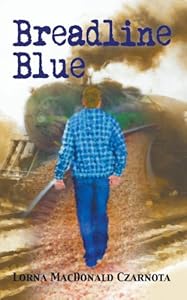
Book Review: Breadline Blue

Lorna MacDonald Czarnota is a stellar storyteller and ballad-singer; add to her accomplishments Young Adult novelist. Her new book, Breadline Blue was recently published by Little Creek Press.

Breadline Blue is the Depression-era story of young William Saxton who decides to make his way to Washington DC to speak with Eleanor Roosevelt about his family's pressing needs. It seemed a reasonable plan to him--just hop a train, ride to the city, go to the White House and ask to speak to the First Lady.

The reality was far different from what he expected, leading Blue, as William came to be called, into adventures both dangerous and eye-opening. The experiences change Blue's perceptions in this coming-of-age story that provides insights into the world of the rail-hopping men who kept moving on to "Next Town" in search of a better life. Sobering, uplifting and thought-provoking, the book is a must-read for teens interested in the Depression; adults will find it a fascinating read as well.

I was honored to be a reader of the first draft of Breadline Blue; yesterday I sat down and read the finished book cover to cover, in one sitting. I was transported to a time of great change, to the life of a boy who became a man along his journey, and put the book down reluctantly when I finally turned the last page. I hope Lorna will consider a sequel and let her readers know what happened to Blue as he matured; I am reluctant to let him go.

Lorna will be in Jackson County this weekend to perform with me at the Parkersburg Scottish and Celtic Festival. She will also be performing at a house concert at my home on Sunday afternoon. If you would like to attend, please send me a message at susannaholstein@yahoo.com .

Copyright 2012 Susanna Holstein. All rights reserved. No Republication or Redistribution Allowed without attribution to Susanna Holstein.

Wednesday, April 3, 2013

Fed from the Blade Readings and Book-Signing this Saturday

I am so looking forward to this! Hanging out with some of my favorite writer friends and signing copies of the new anthology, Fed from the Blade, at Taylor Books in downtown Charleston, WV.

The Date: this Saturday, April 6
The Time: 11:00am-2:00pm
The Place: Charleston's independent bookstore, Taylor Books, on Capitol Street.

Very cool place, very cool people and a hot new book make a combination that's difficult to resist, right? I hope some of my blog friends will be able to stop by, listen to some of the readings (good stuff in this book, no lie) and enjoy the good coffee and friendly atmosphere of the bookstore. If you buy a book, that would be nice too.

Woodland Press is sponsoring the event. This West Virginia independent publishing company has a wide array of titles by respected writers to its credit in its short history. Owner Keith Davis is supportive of Appalachian writers and his work and vision have paid off as Woodland Press continues its successful career in the tricky world of publishing.

Saturday's event will feature eight of the authors included in Fed from the Blade, reading and discussing their work. All would be happy to meet you and talk writing! Writers include Cat Pleska, Jason Roth, Beverly Bisbee, Christine Roth, Lynne Schartz-Barker, Frank Larnerd, Ginger Hamilton, and me, along with Woodland Press CEO and founder Keith Davis.

So come on down to the bookstore, have some coffee, hear some great stories, and get your copy signed!

Copyright 2012 Susanna Holstein. All rights reserved. No Republication or Redistribution Allowed without attribution to Susanna Holstein.

Sunday, March 24, 2013

A Storyteller's Trip Through History: Dailey, West Virginia

I have been through Dailey, West Virginia, before on my storytelling travels but I never knew the history of this small mountain community. Nestled in the Tygart River Valley just below Elkins, West Virginia, Dailey was part of the Tygart Valley Homestead Project and was built by the Roosevelt administration to be a planned, self-sufficient community that would grow its own food, produce crafts and other work for income and provide all other needs of the residents such as housing, education, medical help and so on. It was a grand plan and included the communities of East Dailey and Valley Bend.

(from WV State Archives)

Built in 1934, Dailey was the largest of three New Deal resettlement communities built in West Virginia (the other two being Arthurdale and Eleanor). The target population was men who had lost jobs in the timber industry, lumber mill and railroads. The men were to work at the community farm and the lumber mill three days a week  to pay back the very modest cost of the homes. I later learned that these homes had oak flooring on the first floor and pine on the second floor--exactly like my first house in Virginia, a small log cabin built by a former Civilian Conservation Corps worker. I suppose he got this idea, along with the skills to build with logs and quarry stone, from his days in the CCC. The men also worked an additional 3 days a week to provide for the other needs of their families, and the women cared for the gardens, canned and put up food, and perhaps worked at the weaving shop in the Trade Center.

All of the houses were built in one of two styles designed by architect Benjamin Smith: there were gambrel roofed houses (barn-shaped) and others called A-frame. These were truly homesteads, with root cellars, chicken houses, a garden plot, fruit trees, etc. Homesteaders could "check out" gardening tools from the community library.


The school where I was to tell stories was part of the original settlement too, although built later in 1939.

(photo from WV State Archives)

It looks very like other school buildings constructed in the late 30's-early 40's, but what struck me about this building was that it included some things that have been left behind, sadly, in today's elementary schools: things like a music room, an art room, a library, a theater and gymnasium. All aspects of education were included, while today music, art, libraries and physical education are often left out of building planning. What a loss for our children. I learned on the school's website that many children attending the school today are descendants of the original homesteaders.

I ate lunch in the building originally called the Trade Center (currently for sale--see here). It was built of stone, with many windows, a beautiful place. As I ate, I thought of how Dailey must have been in those early days: bustling with workers, women weaving rugs in the Trade Center, children playing at the school, the fruit trees blooming in each yard. Perhaps some would argue that this was too much interference by government but to those early settlers I would bet it was a dream come true, a chance to regain a respectable life and hope for a stable future. The town was able to pay off its debt to the government when the lumber mill was sold to a private firm; today Dailey still boasts many of the original structures.

To think I stood perhaps in the same place Eleanor Roosevelt stood when she visited the town in early December of 1937, was a happy thought. And yet visit she did, to dance with local residents at a square dance as she enjoyed the fruits of at least one of her efforts to create a future for rural Americans.

It is just one small town, a place you might zoom through on your way to the ski areas at Snowshoe or the kayaking at Marlinton or the rugged Kumbrabow State Forest. But next time you're traveling south on US 219, take a moment to stop in Dailey and consider the history of the site; have lunch at the Trade Center building and maybe buy some of their delicious fudge. And tip your hat to Eleanor Roosevelt and the other planners of such projects that enabled a rural population to establish a long-lasting community by providing a solid base from which to start.


Sources:

Comstock, Jim. West Virginia Heritage Encyclopedia, 1976, vol COP-DIS, p. 1227/

Barbra E. Rasmussen, Erin Riebe, and Alan Rowe (June 2003). "National Register of Historic Places Inventory Nomination Form: Tygart Valley Homesteads Historic District". State of West Virginia, West Virginia Division of Culture and History, Historic Preservation

Roberts, Kathy. "Tygart Valley Homestead: New Deal Communities in Randolph County." Goldenseal Magazine, Vol 31:2; p10.

Scott, Barbara Bamberger. "The Tygart Valley Homesteads." Homestead.org

"The Homestead Project and the Homestead School." Randolph County Board of Education, Homestead School website.


Copyright 2012 Susanna Holstein. All rights reserved. No Republication or Redistribution Allowed without attribution to Susanna Holstein.



Related Posts Plugin for WordPress, Blogger...