Pages

Showing posts with label Granny Sue. Show all posts

Friday, August 2, 2019

The Many Moods of a Storyteller

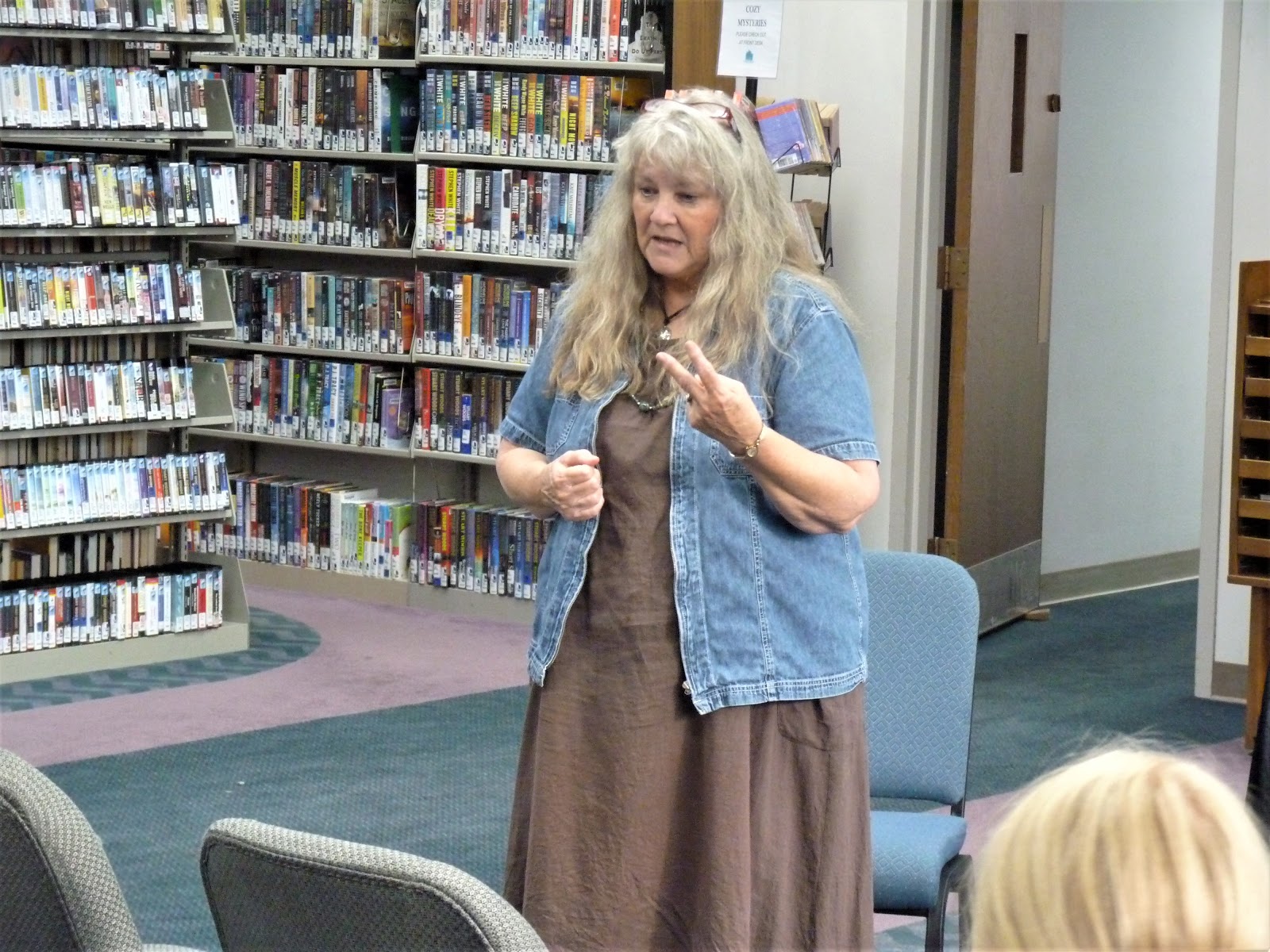
My friend Tom  took these photos while his wife Judi and I were presenting our Celtic program. I thought they were a good example of storyteller's face while telling--and also the fact that a storyteller's hands are seldom still.

Be still for a second, Susanna!

and open your eyes!

One of those audiences where no one wanted to sit in the front row. What's up with that anyway?


I have no idea what part of what story or ballad this was.

But this, yes, I remember, talking about how the term "knock on wood" came about.

And about how the skull of your enemy used to be the vessel of choice for wassail.

Talking about one of the slides we showed.

Singing a sad ballad

same ballad


Remote in hand, talking about slides no doubt

Two of what I wonder?


And the end! Happy to be done, happy it was a good session,
and glad to be presenting it with my good friend Judi Tarowsky.

Copyright Susanna Holstein. All rights reserved. No Republication or Redistribution Allowed without attribution to Susanna Holstein.

Wednesday, June 12, 2019

Telling Tales in Philippi

Yesterday was a storytelling day, this time in Philippi, WV for their Arts series.

My program centered around stories and songs from England, Ireland, Scotland, and Wales. Usually I present this topic with my storytelling friend Judi Tarowsky, but this time I was on my own, and the program was different too--geared to children instead of adults.

These stories and the folklore of the Celtic region can be a little above the heads of many children. I had to explain things we adults understand, like peddlers and gypsies. But the magic of the stories catches people of any age, and we explored boggarts and selkies and brownies, peat and Brigid's cross and the Welsh love spoon among other things. We started with a short little song that was easy to teach, but the trick with the song is that we sing it faster and faster until it just gets silly.

The flannelboard story and song of Aiken Drum was another hit--I made the flannel pieces years ago and it continues to be popular with every audience I use it with. We sang and put the pieces on his face as we went along.

The program ended with the song and circle dance Old King Glory. Instead of doing it in a circle, I did it by walking through the group and adding children to our chain as I walked--this worked better in the limited space we had to work with. When every child was holding hands in the chain, we walked through the library bookstacks, singing as we went, then came back to the original space and made a circle to end. Great fun!

Telling to children is an art in itself. My style is front porch. In this particular tight space, I sat down to be more on a level with the children so they wouldn't have to crane their necks. I interact with the children as if we are all sitting on my front porch, talking and having a good time. Yesterday one little girl decided to be my helper, and pulled her chair up beside me. Since the other children were okay with it, that's where she stayed. A baby got passed from mother to older brother and we all had to stop and talk to the baby for a minute; he was such a happy little guy. Another little boy was just not having a good day and his mother ended up taking him to another part of the library. These and other things might be called interruptions, but they're just a natural part of children being children.

My hope is that the children will remember enough of the stories to want to explore more, and that the parents that attended will also be intrigued and want to learn more about the culture that was, for most of them, the source of their heritage.

Next for storytelling for me is Appalachian stories for a tour group presentation at the Tamarack Arts Center in Beckley, WV tomorrow night. Today, I am going with a neighbor to help her sort through the estates of her grandparents and aunt.  I am sure I will hear many stories and memories as we work.

Copyright Susanna Holstein. All rights reserved. No Republication or Redistribution Allowed without attribution to Susanna Holstein.

Thursday, November 29, 2018

Deep into Christmas

With ghost stories and Thanksgiving behind me, I am now buried in Christmas. Not decorations or baking though--right now it's stories and songs that occupy my mind.

I have 6 performances scheduled this year, each one slightly different from the other. The first three I am doing with fellow storyteller Stas Ziolkowski of Sharpsburg, MD. First is a library program in Hancock, MD. For that I am preparing a wide range of stories for audience members of all ages--because at library programs you never know for sure who will turn up. So my storybag will have stories for little ones as well as stories that the whole family can enjoy. These will be secular stories and songs, lots of folklore and Santa! (Click on the posters to see them full-screen to read the details)


Following that program on Saturday, I'll be doing a private house concert with Stas. I have been doing this house concert for 5 years or maybe more, so each year I bring something different to the performance.

This year, with the 100th anniversary end of WWI in 1918, my mind has been on wartime and how holidays might have been celebrated in those times. So I will be telling the story of the Christmas Truce of 1914 with a personal twist--two of my great-uncles were in the region of France where the truce was observed. I will also tell the story of the tiny truce of WWII, a surprising tale I happened on last year. It's a heartwarming tale of bravery and humanity. Then there was the Civil War. What must that have been like for the troops, and for those at home? So a few wartime stories, along with Stas' stories, favorite carols and sing-along...it will be a good time.

The following day Stas and I will be at Victory Garden Ranch in Sharpsburg, a veteran-centered store, bringing our stories and songs.


So the war stories will have another airing, mixed with some of the stories from the library program if there are children and families present.

My great-uncle James Barnes Wilson, my mother-s uncle--at Neuve Chappelle, France, after the battle there. All that remains of the church is a few stones, one timber and the crucifix. James is standing by a roll of telephone wire--that was his job, stringing the line from the rear to the front for communication between the planners and the battle line. He died at the battle of Festubert on May 22, 1915, a battle in which over 16,000 British troops lost their lives.

Next, after this weekend in Maryland, I will be home in my own county, telling Christmas stories to the local CEOs group (formerly the Extension Homemakers). Then a break for a couple weeks before another day of stories on December 19th. On that day I'll be in Salem, WV to tell Appalachian stories to the local garden club, then more Christmas stories and songs in the evening at the Philippi, WV library, accompanied by musician David O'Dell. David and I performed together at the lbirary last year, and it was the perfect mix of dulcimer, guitar, singing and stories.

So it's back to work for this old lady. But it's a labor of love, so can I really call it work?

Copyright Susanna Holstein. All rights reserved. No Republication or Redistribution Allowed without attribution to Susanna Holstein.

Tuesday, October 16, 2018

Now Buy My CDs on eBay!

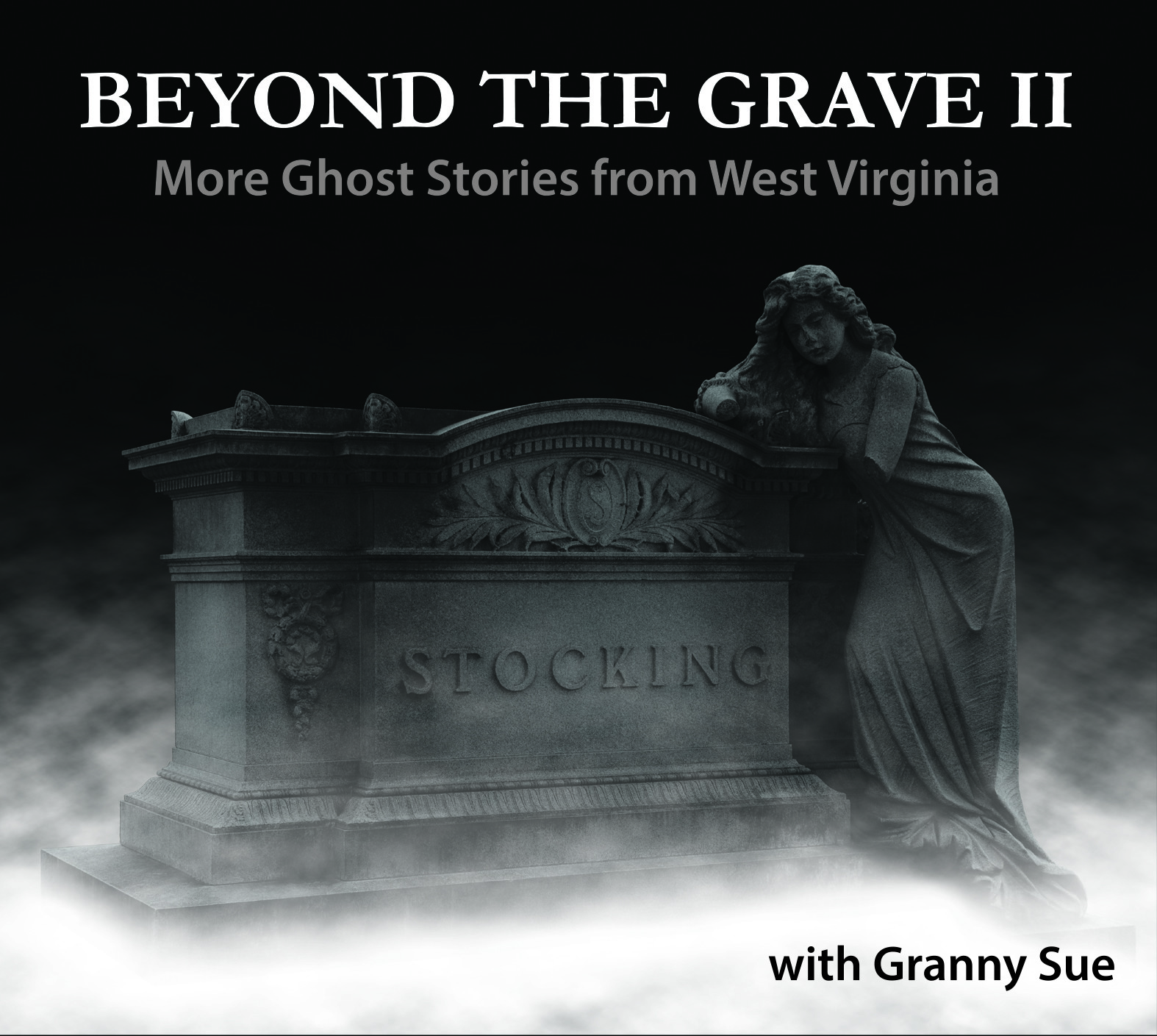
I decided to make it simpler to buy my CDs. Just click on this link to get my newest CD, Beyond the Grave II, 


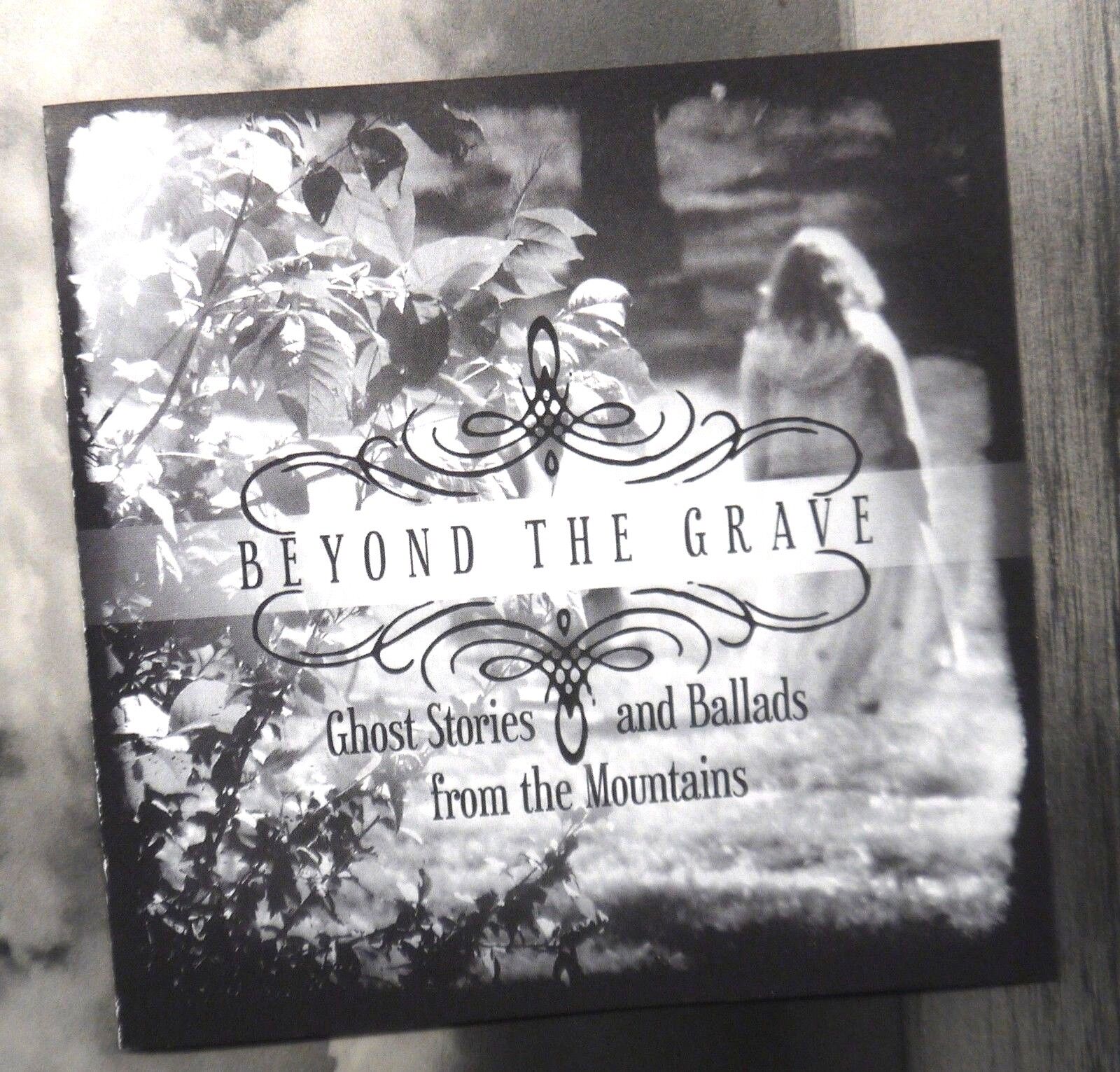
and on this link to get my first ghost stories CD, Beyond the Grave.


I will add the others soon. eBay accepts credit cards, debit cards and Paypal.

Lots of great, spooky stories from West Virginia! Like the one about the boy who was buried 3 times, how some places got their names by not the most savory means, and even a tale of exorcism.

Copyright Susanna Holstein. All rights reserved. No Republication or Redistribution Allowed without attribution to Susanna Holstein.

Saturday, October 13, 2018

Ghost Walk Tonight

The first ghost walk for this October in Ripley, WV is almost sold out!


The walk starts on the courthouse steps at 7:00pm. I am really excited about this year's walk as I have several new stories to add to the mix and new information on the old stories so it will be a different walk than in past years.

We also have more character appearances than in past years: a grieving mother, a woman who survived a murderous attack, a Confederate soldier, a graveyard ghost and a stern sheriff. Added to the mix will be more Civil War stories from our town, an area I've wanted to explore before--this year I dug into the research and turned up some interesting tales.

It will be a cool evening, with temperatures in the low 50's down to the 40's, so I'll be bundling up!

We will repeat the walk on Halloween, October 31, at 7:00pm so if you miss this one, there's one more chance this year.

Copyright Susanna Holstein. All rights reserved. No Republication or Redistribution Allowed without attribution to Susanna Holstein.

Tuesday, October 9, 2018

Now Available! Beyond the Grave II

It's here! It's here!


My latest CD, Beyond the Grave II: More Ghost Stories from West Virginia. Want one? Here's 3 ways to get yours: 1. Message me and I'll send you a Paypal invoice! Or 2. Send $15 to my Paypal: susannaholstein@yahoo.com Or 3. mail me a check, and your CD will be in the mail pronto. Stories include The Last Public Hanging, Gamble's Run, Ikie's Tomb, The Haunting of Cale Betts and many more! Music by the fantastic duo Born Old.


Copyright Susanna Holstein. All rights reserved. No Republication or Redistribution Allowed without attribution to Susanna Holstein.

Thursday, March 29, 2018

Coming Up: Storytelling Workshop Day in Lottridge, Ohio!


Mix a quaint little community with a bunch of storytellers and what do you get? A fun, entertaining, and exciting opportunity to learn and meet others with like interests!

Saturday, April 7, is the date for the Appalachian Ohio Storytelling Project's Storyteller's Workshop. I'll be there presenting a session called Developing Your Story for the Stage. 


If you have wondered what it takes to move confidently in front of an audience with a story you really want to share, this is for you.

If you've been telling a long time and feel the need to recharge, this is for you.

If you make presentations to groups, this is for you.

If you've never told a story, this is for you.


This full day includes a session with storyteller Ken Bowald, certified interpretative guide instructor and storyteller, who was also named as 2012 Ohio Outstanding Educator by the Project Learning Tree (PLT) International Conference. Ken does living history characters, environmental storytelling and will share his knowledge of interpretive storytelling with attendees.

Two meals are included in the registration fee.

Here is the schedule for the day:

08:30 - 09:00 Registration, Coffee and Cinnamon buns
09:00 - 10:15 Interpretive Methodology for the Storyteller
presenter - Ken Bowald
10:15 - 10:30 Break
10:30 - Noon Developing Your Story for Telling, and Taking It To
The Stage
presenter - Granny Sue Holstein
Noon - 01:00 Lunch - provided
01:00 - 02:00 Promoting Your Event - Round Table discussion
led by Thomas Burnett of The Applachian Ohio
Storrytelling Project
02:00 - 02:15 Break
02:15 - 05:00 Rehearsal, Critique and Individual Coaching
Ken and Granny Sue
05:00 Supper - provided
Registration cost - $25
07:00 - 09:00 Open Concert of Tellers - included for workshop
registrants - $5 for public, kids under 12 free

Contact information:
2754 Lottridge Rd, Guysville, OH 45735
Contact us at (740) 331-0432

Registration form: https://goo.gl/forms/arTj7lCEnuQU2oDF2

Hope to see you there!

Copyright Susanna Holstein. All rights reserved. No Republication or Redistribution Allowed without attribution to Susanna Holstein.

Friday, November 24, 2017

The Christmas Carols Program: Random Thoughts

I did an interview for a local TV station the other day, so that morning I sat down to think about what questions the reporter might ask, and what I might say in response. I am posting some of what I wrote, although it really just touches the tip of all the things I wanted to say about Christmas carols and why I love researching and presenting them. So this is formatted in question/answer format as I thought my way through my responses. Our first performance this year is coming up on Sunday (November 26th, 2:00pm, Alpine Theater, Ripley, WV), so my mind is really wrapped around the topic right now.


 How did you get interested in carols?

My mother was a WWII English war bride, and she brought many of her favorite English Christmas traditions with her to America. Things like making fruitcake and plum pudding on stir-up day, decorating with lots of live greens, making mince pies, and singing carols. She loved to sing. There were 13 children in our family so singing carols at Christmas was a lot of fun.

I had always thought about doing a Christmas program around carols as a way to bring people together to sing. I happened on the story behind Rudolph the Red-Nosed Reindeer accidentally and I was so intrigued I began looking into the background of other carols. This book is actually a reprint of the original Rudolph book, and the song which was developed from the story varies quite a bit from the way Bob May wrote it in 1939.

Some of the most famous carols, like Frosty the Snowman, have great stories—and Frosty, as you know, was written Jack Rollins from Keyser, WV. I found others with Appalachian connections as well.

The more I researched, the more fascinated I became. I ran into my friend Jeff Seager one day and we got talking about carols somehow and I was telling him about what I’d been doing. He was interested and thought it sounded like fun so we started working together on this program.


As a storyteller, I like to include a lot of audience participation, particularly when the audience is children or family audiences. So as we developed this program I looked for songs that had opportunities to include participation, like Chrissamas Day in the Morning, which really was a harvest song in which farmers acted out the various animal parts. But with the addition of the refrain “Chrissamas Day in the morning…” it became a Christmas song. So we do that one. And there are others that also allow for audience participation. And of course many carols are great for singalong as people either know them or can pick up the refrain easily. Jeff likes to sing Children Go Where I Send Thee, a spiritual that is also a counting song. Some historians believe that slaves used this song as a way to teach counting.

What’s your favorite carol?

I love the traditional ones, like Deck the Halls. They remind me of my childhood and Deck the Halls in particular has such a happy melody. It also has an Appalachian connection you know—it is believed to have originated in Wales, and brought to the US by coal miners working in the coal fields here in Appalachia.


If I have to name a favorite, though…that’s hard. One is The Holly Bears a Berry. This one came from Cornwall, England, and is also called the Sans Day Carol, as the first record of it was noted at Saint Day Church in Cornwall. What I like about this song is the folklore behind it. The song is probably quite old, dating back to pagan and druid times. When Christianity came to the British Isles, the monks sought to lead people to this new religion by adapting the old songs to include Christian motifs. So this one talks about the Holly’s characteristics, and ties them to Christian beliefs. It also includes a nice refrain for the audience to sing along.

There’s also the Cherry Tree Carol, another one from the British Isles that was adapted here into an Appalachian version. It is one of the Child ballads, one of the very few in that ten-volume collection to have a religious theme.

And then Down in Yon Forest, a haunting tune and rarely heard, at least in my experience. It was collected by John Jacob Niles in Appalachia in the 1930’s, around the same time as he collected I Wonder as I Wander, which is more familiar to most people. But Down in Yon Forest has Arthurian overtones in the lyrics; it was originally sung on Corpus Christi feast day, but in the mountains the line “sing all good men for the newborn baby” was added and it became a song for the Christmas season. I love to sing it.

Where do you offer this program?

All kinds of places! Churches, libraries, theaters, state parks, private house concerts. It really fits almost any venue. And almost any audience, as we can vary the songs to suit the group in front of us at the time.


Copyright Susanna Holstein. All rights reserved. No Republication or Redistribution Allowed without attribution to Susanna Holstein.

Saturday, August 12, 2017

A Simple Hello, A Memory, and a Ghost

I thought I recognized the lady getting in her car across from mine. Only I remembered her as a teenager, and this woman was middle-aged. I debated whether to speak; after all, I hadn't known her well, and she probably didn't remember me at all.

But I got past my reservations and asked, "Are you L***?"

And I was right, this was the grown-up version of the girl I knew. She remembered me too, surprisingly. We talked a few minutes, just catching up, and she asked what I've been doing. I mentioned storytelling, and that soon I'd be busy with ghost stories. Her husband chimed in then, saying that where he grew up in coal country there were all kinds of ghosts; there were lots of things, he said, that happened down there.

Then his wife spoke up. "I remember when we lived on Bucket Run. It's haunted down there, all right. I heard it myself.:

Bucket Run borders the back of our property--or used to border, before we sold part of our land. And I'd heard a tale about the place myself. The lady went on, "We used to walk out the road to catch a ride to church, and it would be dark when we came back. When we passed the Fulmer place, we'd hear a baby crying, and a woman too. I heard it many times. It always scared me so bad!"

The holler that runs down our land to Bucket Run is known to the old-timers as Fulmer holler. I thought it was named for the people who once lived just below where our house now stands, because there was an old cellar there before we moved here. Someone dug it out with a backhoe, looking for treasure, I guess. We figured if there was a cellar there, there must have been a cabin nearby, and since no one remembered who had lived here, the name of the holler must have come from those long-forgotten residents. But apparently there was a house on Bucket Run where our little creek joins that one, and that house was the Fulmer house. And it was haunted. Wow.

The story I heard was a bit different, or perhaps I remembered it wrong, as it was told to me about 40 years ago by my friend's aunt. She said that some men were coon-hunting on Bucket Run and that the dogs started digging and whining under the old schoolhouse that once stood there. The dogs dragged out something wrapped in a blanket; when the men unwrapped it they found it was a little dead baby. No one ever knew whose baby it was, but people always said they heard a baby crying when they passed the schoolhouse.

Was this two different stories of haunting, or the same story being remembered incorrectly by me or by the lady who told it to me? I don't know, but it was satisfying to hear confirmation of the story told to me so long ago.

Bucket Run is an abandoned road now--indeed, it has been ever since I have lived here, although I remember there was one family living along that holler for a while. I think all the old houses have fallen down or been torn down. I haven't been down there in almost ten years, and last time I was there I hardly recognized the road. But I have this story, and now I have a name for the house, and someone who remembers how it was.

I am so glad I got over myself and said hello.

Copyright Susanna Holstein. All rights reserved. No Republication or Redistribution Allowed without attribution to Susanna Holstein.

Wednesday, August 9, 2017

Buttons, Buttons, and Brailing for Mussels

Every time I visit the Ohio River Museum in Marietta I learn something new. This time it was mussels that fascinated me--not the kind my youngest son has, but the kind that live in the Ohio River and were once harvested for a surprising use.

I wondered about this boat.


What was it? Why so many hooks? I've seen this boat every time I've visited or performed at the museum but never paused long enough to really look at it or read the information panels.

Mussels? Buttons? Really?

Really.

In the early part of the 1900's fishing for mussels became a popular activity along the Ohio River. At first the mussels were a novelty and people looked for them to get the freshwater pearls hidden inside. The mussels were cooked in large bonfires and the cooked meat inside discarded or fed to the dogs--people rarely if ever eate them. What a wastes.

But an industry soon developed that focused not on pearls but on a different use: button-making.

A factory to manufacture shell buttons was built in St. Marys, WV in 1910 and remained in operation until 1928. Another factory was located at Newport, Ohio and there were others further downstream.

from WVGenWeb

mussel fisherman, from the Smithsonian's National Museum of American History collection

Poaching and over-fishing the mussels led to a sharp decline in their numbers, and mussel-fishing was eventually outlawed. It is making a slow, controlled comeback today, under strict regulations. They are no longer harvested for buttons however; that industry died out with the coming of plastic buttons.Before the decline of mussels it was discovered that the shells could be ground into little pellets, which were then shipped overseas to be implanted in oysters--the pellets developed into what are called cultured pearls. This is still the current use for mussel shells.

The zebra mussel, an invasive, non-native species, is now threatening the native mussel population and is a cause of great concern.

But about those boats:
The mussel boats were flat-bottomed jon boats, fitted with a rack on which long poles holding a multitude of strong lines with four-pronged hooks at the end, called brails.

At the Ohio River Museum, Marietta

When brailing, the poles would be lowered and the brails dragged through the water. Each hook had a small ball on the end that the mussels would grab hold of. Musselers could tell by the weight on the pole when it was time to pull the brail in.


Nathan Lynn, who provided music and river history during the Inland Waterways Festival last weekend, used to go musseling with his father, who did this for a living at the time. His description of the process, and the song he wrote about it, made me wish I'd been a river rat when I was young too.

An article in the Parkersburg News by Dianne Hott is quoted on the Newport, OH history page, giving this description of mussel boats: "Each boat was equipped with poles about ten feet long, bamboo if available, or sometimes a straight branch cut from the nearest tree.  These were fastened to upright braces affixed to the sides of the boats. 

 Each pole had 30 or 40 heavy lines going down from it, and at the bottom of each line were study [this is the word used—seems it would have been sturdy mm] hooks, each with four barbs.  The poles were lowered into the water and towed along, lines and hooks dragging the bottom.  As a hook slid into an open mussel shell, the shell closed over it.  At intervals, the workers raised up the poles and the mussels were pried off and tossed into the bottom of the boat."

I had to go looking in my button jar for shell buttons. I found that I did have a few:


Then I looked on ebay and found this mussel hook, a cut shell and blank buttons. These are now on their way to me! Because, you know, I just might be developing a new story about musseling and buttons.


Copyright Susanna Holstein. All rights reserved. No Republication or Redistribution Allowed without attribution to Susanna Holstein.

Friday, June 16, 2017

Telling Tales in Craigsville

And my goodness it was fun!

Every year I plan a new program that reflects the national library summer reading theme. This year's theme is Build a Better World. I took a little different approach, at the request of one library; rather than addressing bricks-and-mortar building, I planned a program that focused on building community and working together to make this world a better place. 

And stories teach this so well, not in a beat-you-over-the head way, but with humor and excitement and thoughtfulness. Research proves that we learn best through stories, after all, and the best part of that is that we enjoy the learning. 
  
To illustrate my theme, I used cardboard blocks (ordered some sturdy ones meant for children's play) on which I attached a world map cut into pieces. I told stories from all around the world: from Ghana and Burma and China, the US and Thailand, India and France. 


I used puppets, chants, drums, mbira (thumb piano), a flannelboard story and songs to keep the audience engaged since there is usually all ages present, and we all learn differently. 

Telling Margaret Read MacDonald's story Grandfather Bear is Hungry, using puppets and audience participation

Handing out feathers for the story How Vulture Got His Bald Head. We also used little plush birds that "sing" the bird's call, adding a little more learning to the story.

This time I also used a crankie story, something most children have not seen.

 
Not the best photo as this was between frames. The pictures scroll as I tell the story and turn the crank.
At the end of the program, we used the blocks to put the world back together again, building a world that I hope might be a tiny bit better because of the stories we shared.

We had a blast at the Craigsville library, and I am looking forward to presenting this program at more libraries around West Virginia. Truly, the world will be a better place if we will listen to each other's stories.


Copyright Susanna Holstein. All rights reserved. No Republication or Redistribution Allowed without attribution to Susanna Holstein.

Sunday, June 11, 2017

Writers Conference Aftermath


Moon over Cedar Lakes last night (Sat, 6/10/17)
My past weekend was dominated by the West Virginia Writers Conference, which is held right here in my county--lucky me! I went over Friday night to register and visit with friends, and came home just before midnight. It was so awesome to spend a long time talking with Lisa Minney, the publisher of Two Lane Livin' magazine which I have been writing for for the past 9 years. I haven't seen her in five years. What a treat to get to know her better. She's an amazing woman.

Saturday I was there by 9:00am, and didn't make it home until almost 3 this morning. I did come home in the evening to get Larry, because he likes these writer people too and the evening get-togethers are great fun.

So we listened to Larry Groce of Mountain Stage playing some of his songs in a concert with his wife and musician extraordinaire (and founder of the WV Music Hall of Fame) Michael Lipton, then headed over to the usual gathering place for talk, stories, poetry reading and more music, along with a little sippin'.

What a great time. It's such a pleasure to connect with so many good people that I often see only at this conference, and a talented group it is. From Joe Limer with his driving, mesmerizing performance poetry to Pete Kosky with his original, unusual, historical (listen here to his song about pioneer Simon Kenton) and sometimes just plain ornery songs to Kirk Judd's powerful poems (listen here to my favorite, My People Was Music) to Crystal Good and her friend Tuesday (never got her last name) giving us a snippet of their in-progress performance piece Redneck Valley Girls (a reclaiming of the word "redneck" for its historical origins in the mines) that includes social commentary, songs, hilarity, and so much more in a rich multilayered, deep-textured piece. I can't wait to see and hear the final product of their collaboration. Here's a video of her performing her poem Black Diamonds in Abu Dhabi.


There was Daniel and Cat and Larry and Dan and George and Cheryl and Sherrell and Suzette and the lady from Seattle who comes every year, and others whose names I cannot remember, all sharing and laughing. I had a part too, telling one of my favorite world folktales, Freedom Bird, because it dovetailed so well with a piece Joe performed, and the ballad Pretty Saro to follow up on a poem by Kirk. What. A. Blast.

We dragged in later than we have in a long time, and I sure felt it this morning! We weren't up until almost 10, and were so tired we decided to take an easy day and take a few things to our Marietta booth and pick up our check for last month's sales. Good choice, I think. (So was the decision to stop for pie and ice cream on the way home.)

I am still filled up with the magic of the conference and all the splendid works I heard. I feel humbled to be able to hang out with such talented people, that's the truth. It makes me more resolved to get myself back to writing more often than I've been doing lately--not blogging which I have no problem doing, but more poetry and stories.


Copyright Susanna Holstein. All rights reserved. No Republication or Redistribution Allowed without attribution to Susanna Holstein.

Friday, March 10, 2017

It Was a Beautiful Day in the Neighborhood

Stealing a little from Mr. Rogers (whose show, by the way, I never saw) because it perfectly described yesterday.

I began feeling better by degrees--as the day warmed up, I felt better! Well enough to do some computer work, some laundry, some eBay, and even cooking.


In the late afternoon I ventured outside to sit on the swing. I wish I had had my camera then because I was immediately inundated by every four-legged critter we own. I think they must have missed me the last couple days. When I finally went inside for my camera, they went back about their business, of course.

The flowers are in such beautiful bloom right now. Daffodils everywhere. We are missing quite a few under the maple but I believe they were a victim of two dry summers and the thirsty water maple. Still we have plenty to keep me happy.

Larry has been busy as can be outside. His current project is tearing down the old turkey house. We used to raise them but haven't done so for quite a few years and the building had become an eyesore. There's plenty of salvageable lumber and roofing tin though.

Our part of the world is greening up so nicely, and I am so afraid it will all be for nothing because it is just too early. Maybe we'll get lucky. Right now I am happy to sit in the swing and enjoy the beauty. A side benefit of being sick is taking time to do things like that.

I even made some chicken noodle soup from scratch too. It is exactly what I want to eat right now. And being outside to enjoy this soft spring weather? It's exactly what I wanted to do, too.

Here's the basic recipe for the soup:


Chicken Noodle Soup
Boneless chicken, cooked and cut into chunks
Onions and celery, chopped (I used the onions I dried last summer)
Herbs to your taste (I only used parsley this time)
Garlic, black and red pepper
Worchestershire sauce
Water and chicken broth
Noodles

For this soup, since I had no chicken broth, I used bouillon cubes. I used 4 quarts of water and 3 cubes.

Add everything except the noodles to the cooking pot and bring to a boil. When boiling, add the noodles. When it returns to a boil, turn down the heat and cook for about 10 minutes or until the noodles are done.

I don't measure when I make soup bu here's a guess at the amounts I used to make 4 quarts of soup: about 3-4 cups of cut-up cooked chicken, about 1 large onion, 2 stalks of celery, a teaspoon of parsley, 1/2 tsp dried minced garlic, 1/2 tsp red pepper flakes, 1/4 tsp black pepper, 1 tsp Worchestershire sauce, 1/2 pound or less of noodles. No salt because bouillon is full of salt and no additional was needed.

Copyright Susanna Holstein. All rights reserved. No Republication or Redistribution Allowed without attribution to Susanna Holstein.
Related Posts Plugin for WordPress, Blogger...