Pages

Saturday, January 31, 2009

Old Man and the Snow

Men may grow older, but it doesn't mean they can't have fun. Larry has never been able to resist sledding, or playing in the snow for that matter. Forget that he has to shovel, plow, cart in firewood, clean off vehicles and all the other myriad tasks that come with a good snowfall.

He still can't resist a good sled ride.

He's off!


Umm, is that a creek down there?
He's heading right for it!
Fortunately he stopped just in time.
Mission accomplished! (blur is rain water on my camera--sledding in the rain. A new song?)

Jared made a run too, but he used the old runner sled which didn't go very well in the slushy snow.
Larry had to check out the igloo...


and go inside, of course.


Back at home, he seems to be considering what else he can do in the snow.

I love being married to a man who at almost 60 years old, still loves to play.

Friday, January 30, 2009

Snow Pics 2


The ice goes out on Elk Fork as the rain forces the creeks up and out of their banks on Wednesday. Fortunately the rains stopped before we had flooding.

Larry shakes ice out of the White Oak so that we could drive under it without hitting the branches. White Oaks retain their leaves much longer than most oaks.

Lemon Balm makes a brown study in the ice and snow.

Otis loves the snow. Can you tell? He's everywhere in it, making paths, rolling, digging. He thinks we ordered it especially for him.


Looking homeward.


Snow Pictures 1


These were taken prior to the more recent snows. This was the foggy-snowy-rainy-icy day.

This first pic is looking up the driveway; you can see the slushy mess in the tracks.


The ice wasn't thick but it was and still is beautiful. The weather hasn't warmed up enough to melt it off.


Here you can see the thick fog hanging over the ridge. It was actually very pretty.


Ice-covered spirea looked like red lace.


Pine boughs still tied to the porch rail were a pretty, pretty sight.


It's an icy, snowy track out of Joe's Run. To the right over the bank is the lake. No one wants to go sliding at this point in the road.


The late Orville Hartley's home. It is mostly unoccupied but still maintained by his son. I love this little place; looking at it is a trip back in town. Note the well to the left. Joe's Run was up and muddy because of the pouring rains that changed to pouring snow.


Greater downtown Gay, West Virginia, looking like a Norman Rockwell painting. Pardon the blob on upper right of the picture--that was rain on my camera. This small community was once quite a thriving place, but has dwindled since the major roads took different directions over the year,s leaving the community fairly isolated--but still the main route of travel for people who live in the very rural ares surrounding it. The road to the left is Peniel Road; to the right is Elk Fork. Both lead into Roane County, but one comes out on US Rte 33, the other after a winding way through the country on Rte 119. Where you reach 119 depends on which choices you make on the back roads.


Traveling the driveway is good for an adrenaline rush these days. I'm proud to say my little Buick Rendezvous has been up to the challenge so far, even though it does scrape a little in the center. More snow today will make the trip home interesting.

Thursday, January 29, 2009

Pogonip

Is that a word?

Yes, it is. A word I had never heard until the other day when my son said that was what we were having with the snow, fog and ice--a pogonip.
photo from Wikipedia


I had to come home and look it up. And find pictures of it. It's beautiful! What is it?

The Old Farmer's Almanac offers a definition of the pogonip as "ice fog," noting that the word is believed to have originated from a Native American word. Apparently the pogonip is reserved for the valleys of the western US.

I found more complete information and theories about the origin of the term at WordInfo. This author links the term to Greek, not Native American, origins. The photos included in the article are stunning.

Are there any Westerners reading this who can offer more information about this unusual word and the type of frost it describes? Is it the same thing as hoarfrost? Or is there more to the pogonip?

The Igloo: That Snow Project

The Igloo:


Construction crew: Derek (job supervisor), Jared and Haley (skilled craftworkers)

Materials: Snow, lots of it. Sleds for hauling snow. Hands for placing snow.

The interior: note the side light and the abundant floor and headspace.


What a neat project! It took Derek and his kids about 5 hours to build this, and when completed it stood well over 6 feet tall. When we saw it today, it had been melted and "condensed" by the rain, but was still sturdy and big.

Wednesday, January 28, 2009

Snow, Ice, Rain, Fog, and More Snow

The weather has been winter. All-at-once, every-kind-of-bad-weather winter.

Yesterday's snow stopped with about 7 inches and it was beautiful. Overnight, the temperatures warmed up and it started to rain.

Rain!

With all that snow on the ground. The rain froze on contact to trees, buildings, plants, wires and anything else it hit. It was beautiful and not worrying because the ice wasn't too thick.

Oddly, there was also a heavy fog--and flood warnings were out for flash flooding because of the rain and melting snow. How many kinds of weather can you have at once? At least five, apparently--snow, rain, ice, fog and flooding. Weird.

There is a saying "A January fog will freeze a hog" which means, I have been told, that you will have as many frosts in May as fogs in January. Have you heard that saying, or a different explanation of its meaning?

We managed to get the truck out and ran to town for milk and bread because there is more snow on the way. We stopped at Derek's to see the kid's igloo, and Larry took a sled for a run down the hill. I'll share pics when the internet is more dependable. The ice on Elk Fork was braking up and an ice jam caused the creek to back up pretty seriously. It was an interesting sight.

As we were leaving Derek's, the rain changed to snow and it quickly turned to almost blinding snowfall. I was so grateful to get home! Another 1/2" of snow was on the ground before that little squall moved on, and Larry decided it was now or never to move my Buick up the hill. We were both leery about the chance of success because the driveway is about 2 inches deep in slush, with ice under that--and his big 4WD pickup did some serious sliding on the way down the hill. Not encouraging.

But little Buick trotted up the hill without spinning a wheel, even pushing snow as it went. It is now safely located where we know I can get out in the morning unless we get another 6 inches of snow tonight.

Now we are waiting to see what the evening brings. Will the predicted snow arrive? Will the electricity go off again as the wind is picking up and icy branches are falling? We're staying tuned for the next episode in this winter weather blitz.

Some of my friends ask me why I live so far out, and I know the people I work with wonder the same thing. What can I say? This was home before I ever had a job, and I cherish the memories, solitude, and beauty of this place. Inconvenient it can certainly be, but no comfy house in town could provide me with the riches I find here. Those who live "out" know why I choose to stay.

Tuesday, January 27, 2009

Things to Do on a Snowy Day

With this much snow on the porch when I got up, going to work was not one of the things on my to-do list today.


With 5 inches on the ground and the snow still falling heavily at 6 am, I made the choice to not try to get out this morning. Reasons: it's about 1/4 mile of uphill driveway, a mile to paved road, 4 miles to a two-lane road, and none of the above gets cleared until long after all the other bigger roads are done, and sometimes not even then. After that, it's another 12 miles to the interstate where, according to the radio, no clearing had yet been done. With the snow still falling, Larry didn't want to get out the tractor yet.


Otis and Jeb enjoyed the snow--especially the walk Larry must have cleared just for them.


So---snow day! I called work to be sure everything was covered, and then set about making breakfast. Sleep in? Why? I've got a day off!


After writing about pancakes on First50 this morning, I was ready to make some to eat. When I make pancakes, I don't measure anything; it's a guess-and-go routine. Here's what I used today:


About 1 and 1/2 cups of self-rising flour
About a tablespoon of sugar, maybe a little more than that
1/2 teaspoon of cinnamon


Mix the dry ingredients together until well blended. Then add:
2 eggs
about a tablespoon of light olive oil
enough apple cider to make a thick batter. Milk is the usual liquid but we like the flavor of the pancakes with cider. Adding the liquid is the hardest part, but honestly, if you get it too runny, your pancakes will just be thin, and if it's too thick, they'll be thick pancakes, so it's not to worry about. You can add more cider if it's too thick, or more flour if it's too thin.


Heat a cast iron skillet with a little cooking oil spray in it until a drop of batter cooks quickly, then keep the heat on medium-to medium low to cook your pancakes. Use a ladle to pour in your batter. I like to make small pancakes; some people like to make great big pan-sized ones. It's up to the cook-you can make Mickey Mouse and all sorts of shapes too, by the way you pour the batter.


That's all there is to making pancakes from scratch.


Now, what else to do today? Well, you could visit Warren's Home Among the Hill's blog. I just found it this morning, and he has the coolest warble run you can make to put on your refrigerator--wow! He also has a nifty catapult, how to make a hat and all sorts of other great ideas to share.


You can also make Snow Ice Cream. I know, I kn0w--snow is dirty, unsafe, yada yada. So live dangerously! I've made and eaten snow ice cream for many years and I'm still kicking at 57. CLEAN snow is a good idea, of course; don't get snow from where the animals like to visit, or from the roadside. Even if you don't actually eat any of it, just making it is a fun thing to do.


Yum!


Here's the recipe in my nothing-is-exactly-measured style:

Get a big bowl of snow. Add sugar, milk and vanilla and whomp it up. If it's too soupy, add more snow; too thick, add more milk. It takes a lot of snow, so don't be surprised if you have to go outside to get more. You can make chocolate by adding chocolate syrup, and other flavors by using your imagination.

So there's two things to do. Here's one more: cut an apple in half, cover it with peanut butter, roll it in bird seed or sunflower seeds or other seeds you might have for cooking (like sesame) if you don't have any birdseed handy, and put it outside for a treat for your birds. Then sit back and watch them go after it!


Don't forget to get a black cloth and a magnifying glass and catch some snowflakes. Snowflake Bentley used a more sophisticated method to capture the first photos of snowflakes. To read more about him and to see my snowflake photos and get links to stunning pictures of flakes, you need to see my blog from last February.

That's three good things to do, and two good things to eat. Of course, you could always just watch it snow and take pictures, which is what I plan to do a lot of today.

Tommy's Bodybuilding: 7 weeks from showtime

Tommy is going to try an earlier show for his bodybuilding because he's down to the right level of bodyfat for a bodybuilding show--6.5%. He learned about a show in Covington and he's going to enter that one as well as the April show in Parkersburg.


Here is a picture of Tommy at his current level of training. This pose is to show the develop of his triceps.

This pose is called "most muscular." It's not a full shot, but does show chest, stomach, traps (those muscles and dip on each side of his neck), triceps and arm development.


Monday, January 26, 2009

A Quiet Winter Weekend

Saturday was a cold and snowy day. We spent it doing errands in town and visiting friends in Charleston. It was a good way to spend an otherwise dreary day.

Today I decided to cook enough dinner meals to last us for the week. It was another cold day with snow sifting down anyway--not enough snow to be exciting, but just enough to let us know it was cold out there and a good day for inside work. Larry, bless him, spent a few hours outside anyway, restacking the wood in the shed to be ready for the predicted storms this week.

He also brought in some potatoes, and I noticed that they are keeping very well in the potato bin in the cellar. Here we are at the end of January, and the potatoes are firm and showing very few signs of sprouting. I wish I could remember the variety of red potatoes we grew this year. They have been excellent in production, health of the vines, keeping ability and especially flavor.


I used the potatoes along with a roast I found on sale and other vegetables to make a good pot roast,


and then combined chicken, noodles, carrots, onions, celery, chicken broth and herbs to make a thick chicken noodle soup. Just the thing for this cold, blustery day.


This evening I sat down finally and ordered my garden seeds. I am shocked to see how the variety of seeds available each year dwindles. This year Gurney's dropped the lemon cucumber that I love; I had to look elsewhere for the Royal Burgundy bush beans too. I did not locate seeds for Gypsy peppers but still have a few places to look. Garden Huckleberries seem to have disappeared too.
I used to love all the unusual things Gurney's offered, like cotton seeds, tobacco, and broom corn. Some of these items are a thing of the past and only the commonplace seeds seem to be left. I was thrilled to find the lemon cucumber seeds in the R.H. Shumway catalog. I've never ordered from this company, but I'm doing it this year to get my little yellow cucumbers. This year I will save my own seeds as a safeguard against the possible loss of a future source. Scary.
Here's the rough recipes for the soup and pot roast. I can't give exact ingredients because I didn't measure anything:
Chicken Noodle Soup
I used boneless chicken tenders, cut into chunks. (I think the package was about 1 to 1.5 pounds)
Cook the chicken in a small amount of olive oil in the bottom of the soup pan until all sides of the chicken looked cooked. Add about 3-4 cups of chicken broth (or abut 2 cans), and about twice as much water as broth.
Cut up one large onion, about 5 regular carrots and 3 stalks of celery. Add to the soup pot.
Add 2-3 bay leaves, crushed rosemary and thyme to your taste (I used about 1 teaspoon of each), chopped garlic, about 1/2 teaspoon of red pepper, a teaspoon of salt, and 1/2 teaspoon of black pepper.
Let this simmer under the vegetables are tender. Bring to a boil and add 1/2 pound (more or less, depending on how thick you want your soup) of egg noodles.
Cook until the noodles are tender. Remove the bay leaves. Serve with rosemary bread or your favorite hot bread.
Pot Roast
Sear the roast on all sides in hot olive oil. Move the meat to a slow cooker and add chopped carrots, onions, celery and potatoes. The amount depends on the size of your slow cooker; I have a big cooker and I used about 2 cups of carrots, 1 cup on onions, 1 cup of celery and 4-5 cups of potatoes, I think. Add water to cover.
Add 2 teaspoons of Worcestershire sauce, 2 cubes of beef bouillon, 2-3 bay leaves, chopped garlic, salt and pepper to taste. Cook on high until a meat thermometer shows the meat is done.
If you like, you can thicken the broth with a mixture of about 3 tablespoons of corn starch in 1/2 cup of warm water. Dissolve the corn starch thoroughly by mixing it with the water, and add to the liquid in the cooker.
Cook on high for a bit longer, until the broth thickens. Then reduce heat to low until you are ready to eat. Serve with your choice of breads and a green salad for a hearty, satisfying winter meal.

Sunday, January 25, 2009

More Photos of Peniel Road

I promised to post a few more photos from our drive through Peniel Road last weekend. The computer has been so balky this week (gotta love that saltellite!) that I have been able to post very few photos, but today the powers that be are being gracious, so here are the prmised pics:

An old homestead showed signs of continued care, even if no one lives here.


Ah! The sign on the building told me whose place this was--Elmer the maple syrup man! This must be his sugar shack. As far as I know, he is the only person in our county who still makes maple syrup. I was fortunate enough to be given a small amount of Elmer's syrup by my son a few years ago, and it was delicious. When I first moved to Jackson County, I tried my hand at tapping trees for a few years. But though I trekked to my trees to collect sap every day and boiled it down carefully, I never got more than a few ounces for all my work. Elmer, it seems, has the secret knowledge I lacked.

An icy waterfall to the side of the road attested to the day's temperatures.
Old barns graced a meadow and hillside near the end of the road.


And finally, where Peniel Road exits onto US Rte 33. The yellow building on the right is the general store at Peniel, which proudly proclaims itself as "the best little general store in Peniel." Of course, it's the only general store in Peniel...

Favorite Blogs: Some Recent Great Posts

I try to keep up with a lot of blogs and sometimes get behind in my reading. As I've been catching up, I found some posts that I must share because they are just so good:

At Glanbrydan's Weblog, she's cooking up some delicious potato-leek soup. If you have never tried it, you've missed out on a good, good soup. I enjoy reading her descriptions of the many different pies they make, her gardening plans and other things that go on in a country cottage in England.

Susan at Stony River Farm always cracks me up, but her post about her family's World War II experience made me laugh, cry and hold my breath in suspense all at the same time. She is a brilliant writer, chatty, informative, funny, tender and so good at connecting with her readers. Her blog is a bright spot in my day.

Terry Thornton at Hill Country of Monroe County made me laugh in pain and agreement with his post about those "word verification" things so often encountered when trying to post a comment on a blog. His blog is always thoughtful, well-written and surprising.

I hope you enjoy these blogs as much as I have. I have only put a dent in the reading catch-up, and there are so many other posts to share with you. I need a few more hours in my days.

Saturday, January 24, 2009

The Little Glass Slipper: A German Fairy Tale


A story from the German island of Rugen (also called Rugia), in the Baltic Sea north of Germany. Rugen is the largest of the German islands.


This story is from the book Fairy Mythology by Thomas Keightley. The book is available as e-text on the Sacred Texts website.


From the painting "The Chalk Cliffs on Rugen" by artist David Friedrich (1774-1840)
THE LITTLE GLASS SLIPPER
A PEASANT, named John Wilde, who lived in Rodenkirchen, found one time a glass shoe on one of the hills where the little people used to dance. He clapped it instantly into his pocket and ran away with it, keeping his hand as close on his pocket as if he had a dove in it; for he knew that he had found a treasure which the underground people must redeem at any price.

Others say that John Wilde lay in ambush one night for the underground people, and gained an opportunity of pulling off one of their shoes, by stretching himself there with a brandy-bottle beside him, and acting like one that was dead drunk; for he was a very cunning man, not over scrupulous in his morals, and had taken in many a one by his craftiness, and, on this account, his name was in no good repute among his neighbours, who, to say the truth, were willing to have as little to do with him as possible. Many hold, too, that he was acquainted with forbidden arts, and used to carry on an intercourse with the fiends and old women that raised storms, and such like.

However, be this as it may, when John had gotten the shoe, he lost no time in letting the folk that dwell under the ground know that he had it. So at midnight he went to the Nine-hills, and cried with all his might, "John Wilde, of Rodenkirchen, has got a beautiful glass shoe. Who will buy it? Who will buy it?" For he knew that the little one who had lost the shoe must go barefoot till he got it again, and that is no trifle, for the little people have generally to walk upon very hard and stony ground.

John's advertisement was speedily attended to. The little fellow who had lost the shoe made no delay in setting about redeeming it. The first free day he got, that he might come out into the daylight, he came as a respectable merchant, and knocked at John Wilde's door, and asked if John had not a glass shoe to sell? "For," says he, "they are an article now in great demand, and are sought for in every market." John replied that it was true he had a very little little, nice, pretty little glass shoe, but it was so small that even a Dwarf's foot would be squeezed in it; and that God Almighty must make people on purpose for it before it could be of any use; but that, for all that, it was an extraordinary shoe, and, a valuable shoe, and a dear shoe, and it was not every merchant that could afford to pay for it.

The merchant asked to see it, and when be had examined it, "Glass shoes," said he, "are not by any means such rare articles, my good friend, as you think here in Rodenkirchen, because you do not happen to go much into the world. However," said he, after hemming a little, "I will give you a good price for it, because I happen to have the very fellow of it." And he bid the countryman a thousand dollars for it.

"A thousand dollars are money, my father used to say when he drove fat oxen to market," replied John Wilde, in' a mocking tone; "but it will not leave my hands for that shabby price; and, for my own part, it may ornament the foot of my daughter's doll. Harkye, friend: I have heard a sort of little song sung about the glass shoe, and it is not for a parcel of dirt that it will go out of my hands. Tell me now, my good fellow, should you happen to know the knack of it, that in every furrow I make when I am ploughing I should find a ducat? If not, the shoe is still mine, and you may inquire for glass shoes at those other markets."

The merchant made still a great many attempts, and twisted and turned in every direction to get the shoe; but when he found the farmer inflexible, be agreed to what John desired, and swore to the performance of it. Cunning John believed him, and gave him up the glass shoe, for he knew right well with whom he had to do. So the business being ended, away went the merchant with his glass shoe.

Without a moment's delay, John repaired to his stable, got ready his horses and his plough, and drove out to the field. He selected a piece of ground where he would have the shortest turns possible, and began to plough. Hardly had the plough turned up the first sod, when up sprang a ducat out of the ground, and it was the same with every fresh furrow he made. There was now no end of his ploughing, and John Wilde soon bought eight new horses, and put them into the stable to the eight he already had--and their mangers were never without plenty of oats in them--that he might be every two hours to yoke two fresh horses, and so be enabled to drive them the faster.

John was now insatiable in ploughing; every morning he went out before sunrise, and many a time he ploughed on till after midnight. Summer and winter it was plough, plough with him evermore, except when the ground was frozen as hard as a stone. But he always ploughed by himself, and never suffered any one to go out with him, or to come to him when he was at work, for John understood too well the nature of his crop to let people see what it was he ploughed so constantly for.

But it fared worse with himself than his horses, who ate good oats and were regularly changed and relieved, while he grew pale and meagre by reason of his continual working and toiling. His wife and children had no longer any comfort of him; he never went to the alehouse or the club; he withdrew from every one, and scarcely ever spoke a single word, but went about silent and wrapped up in his own thoughts. All the day long he toiled for his ducats, and at night he had to count them and to plan and meditate how he might find out a still swifter kind of plough.

His wife and neighbours lamented over his strange conduct, his dullness and melancholy, and began to think that he was grown foolish. Everybody pitied his wife and children, for they imagined that the numerous horses he kept in his stable, and the preposterous mode of agriculture that he pursued, with his unnecessary and superfluous ploughing, must soon leave him without house or land.

But their anticipations were not fulfilled. True it is, the poor man never enjoyed a happy or contented hour since he began to plough the ducats up out of the ground. The old saying held good in his case, that he who gives himself up to the pursuit of gold is half way in the claws of the evil one. Flesh and blood cannot bear perpetual labour, and John Wilde did not long hold out against this running through the furrows day and night. He got through the first spring, but one day in the second, he dropped down at the tail of the plough like an exhausted November fly. Out of the pure thirst after gold he was wasted away and dried up to nothing; whereas he had been a very strong and hearty man the day the shoe of the little underground man fell into his hands.

His wife, however, found after him a considerable treasure, two great nailed up chests full of good new ducats, and his sons purchased large estates for themselves, and became lords and noblemen. But what good did all that do poor John Wilde?
http://sacred-texts.com/neu/celt/tfm/tfm067.htm

Friday, January 23, 2009

Storytelling in Columbus

Last night was SpeakEasy night in Columbus, Ohio, for a Storytellers of Central Ohio (also known as SOCO) event.

I love doing this--storytelling after dinner at a quaint German restaurant in the German Village of Columbus. We managed to get lost first--both Larry and I thought we knew exactly how to get to the restaurant, and of course we both were wrong. After 30 minutes of cruising around Columbus and seeing the state capitol, library and other sites of interest that we hadn't planned to see, we stumbled on the restaurant. God does protect fools.

The crowd was smaller than last year, but it was a good, storytelling crowd. That means that they were interested in where I found the stories, the different kinds of stories I told, and they had no problem singing along when asked.

I was excited about doing this event for several reasons: first, I would get to see many friends that I had not seen all winter; second, the restaurant is awesome; third, I had not told stories (except on this blog!) since mid-November, and fourth, I had some new stories and ballads I wanted to try out.

Usually for me storytelling is very quiet in the winter months, and that is fine by me. The roads and weather are never trustworthy in winter. I try to use the months to advantage by searching for new material. This winter I've added a story or two to my story bag, and I'm working on some new songs. So for the event last night, I chose the following material:

1. The Swapping Song--I sang the Appalachian version, but I found and am working on an English, longer version of this funny song that allows for audience participation.

2. The Big Potato--a story I heard told by the owner of a WV winery, and so funny I wanted to share this variation on a very old tale.

3. Sworn on the Odin Stone--an Orkney story that I first read in the book The Hogboon of Hell and I was so drawn to it I wanted to tell it--but it seemed to be under copyright. Later I found the story online; I emailed the website owner who happened to be a descendant of the story's author and he graciously gave me permission to tell the story. I tell it with the addition of an old lullaby, and I can tell after having told it only twice that it will be one of my best.

4. Trees They Do Grow High--an old ballad I have been working on. I didn't do it as well as I would have liked; it wasn't quite ready for performance, I found after I started into it. Ah well. We can't all be perfect, and it gave me a chance to find out just what needed a work. I love the melancholy and romance of this song.

5. Burnt House--a ghost story based on events in a small community in central WV that are supposed to be true. This is one of my best stories and it went well last night.

6. The Glass Slippers, a new story for me which I will post tomorrow, is a story from an island off German'ys Baltic coast. Since we were in a German restaurtant, it seemed a fitting choice.

7. The Devils' Nine Questions ballad--based on Child Ballad #1 (Riddles Wisely Expounded) this ballad is fun for it's playfulness and the opportunity for audience interaction.

Later, after an open mic session that included MC Joyce Geary, stories from Ohio storytellers Larry Staats (originally from Sandyville, actually-my address), Melanie Pratt, Cathy Jo Smith, Julie McGhee, and Frank McGarvey, I wrapped up the evening with the traditional Bright Morning Stars.

It was a wonderful evening, and well worth the drive. We got home around midnight, stoked the fires and hit the bed because the alarm would be going off at 6am and I'd be off to work again.

Now I'm tired and I think I'll go to bed, but I wanted to share the fun of last night's storytelling.

Thursday, January 22, 2009

Snowy Dog Days

Coming home on a snowy day is such pleasure...


...when you're greeted by Thing #1 (Jeb) and Thing #2 (Otis)...


...who are always so glad to see anyone who visits. Great watchdogs, these two.


But I'd rather have friendly, welcoming dogs than scary, biting dogs any day.


How about you?

Wednesday, January 21, 2009

Groundhogs, Pagans and Saints: From Groundhog Day to Imbolc to St. Brigid

There's a song I use at almost every performance that has a verse about groundhogs. Once, while telling at a state park, a gentleman came up and wanted to talk about groundhogs.
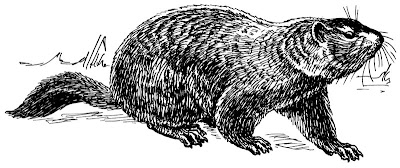

He said, “You ever eat groundhog?”

“No sir,” I told him, “I can’t say I ever have.”

“You sure about that?” he asked.

“Pretty sure,” I said.

“Well, I’m betting you have,” he said. “Not only that, I bet you’ve ate it more than once.”

“I don’t think so,” I assured him.

He grinned at me and asked, “You ever ate sausage? What’s that but ground hog?”

Groundhogs are good for other things too--like making a banjo head ( although the sound isn't very good, so I hear) or cutting the hide into strips for shoe laces.

Brian Fox Ellis has a good groundhog story on his website.

Urban Legends offers a wealth of links to more groundhog information that most of us are interested in reading.

If you prefer print media, Don Yoder's well-researched book Groundhog Day provides the European background of the holiday, along with weather folklore and much more.


February 2nd is also known as Candlemas Day (a Catholic holy day), Imbolc (to the early pagans) and it is Brigid's day (later transformed from a celebration of the Celtic fertility goddess Brigid to the feast day of St. Bridgid or Bridget on February 1). Both of these have their own celebrations and rituals far removed from the groundhog.

Candlemas Day is the celebration of the purification ceremony for Mary 40 days after the birth of Christ. It is celebrated by many with the lighting of candles. It is also one of the traditional days for taking down the Christmas decorations (January 6th is another) so if you're still putting it off, you have a good reason for it!

Brigid's day was commemorated with rituals to encourage fertility in the fields, and was considered to be the first day of spring in Ireland. Farmers soaked bread with cider or spirits and buried it in a turned furrow; signs of Spring could be found even though winter still held a grip--lambs might be born, sprigs of green might be found in the gardens.


In County Kildare, you can visit Brigid's well, one of over 3000 holy wells that once existed in Ireland. If you can't visit Dave Walsh offers a slide show of his photos online. Like our Vietnam Veterans memorial, visitors leave offerings of all kinds at the well.


Many poems and ancient tales of Brigid are collected on Conrad Bladey's site; Conrad offers information from his years of research on all topics Irish. At Chalicecentre, this poem is cited without a source:


Brighid's Arrow:
Most Holy Brighid, Excellent Woman, Bright Arrow, Sudden Flame;May your bright fiery Sun take us swiftly to your lasting kingdom.


The name Brigid (also spelled (Brigit or Brighid) is said to mean "fiery arrow" by many sources. In some parts of Ireland, small effigies of her are carried house to house, much like Wassailing, and small coins and oatcakes are given to the groups. Other sources give the meaning of her name as "exalted one," and cite her as the goddess of fire, poetry and wisdom.


For more about St. Brigid, Anna Egan Smucker's book is an excellent and beautifully illustrated source. I will post a review soon--I gave a copy to a friend last year, and now my copy is on order!

Other good sources:

Candlemas: Feast of Flames by Amber K


Answers.com provides information about the name, the legends and mythology in a well-written article.


Background about St. Brigid's cross is offered on Cross and Crucifix.


You can learn to make a cross on YouTube, from an Irishwoman who gives great instructions and clearly displayed.


Of course there is customary food to celebrate Brigid's Day! Colcannon, Oaten Cake and Boxty Cakes are offered at fisheaters.com along with more information and lore about Brigid.

Here is the recipe for oaten cakes from that website:

St. Brigid's Oatcakes (serves 4)

2 cups uncooked, old-fashioned rolled oats (not instant)

1 1/4 cups buttermilk

2 1/2 cups sifted bread flour1 teaspoon baking soda

1/2 teaspoon baking powder1 teaspoon salt

Vegetable oil spray

A day ahead, combine the oats and buttermilk in a small bowl.
Blend thoroughly, cover and refrigerate overnight.
The next day, preheat the oven to 350 degrees F.
Remove the oat mixture from the refrigerator.

Combine the bread flour, baking soda, baking powder, and salt in a large bowl. Slowly add the oat mixture and stir with a wooden spoon 20 to 30 times, or until you have a smooth dough.

Grease a baking sheet with the oil spray. Turn the dough onto the baking sheet, and use your hands to form a round, cake-shaped loaf about 1-inch thick. Use a sharp knife or pizza cutter to cut the dough into 4 quarters.
Move the quarters apart slightly, but keep them in the original round shape.

Bake until the cakes are light golden brown and firm to the touch, 30 to 35 minutes.

Cool slightly on a rack, and serve with butter and jam or preserves. Makes 1 loaf (in quarters).


I started with the groundhog and traveled to the holy ground of Brigid. This seems to happen frequently when I begin to wonder about a bit of folklore that I took for granted--looking for the history behind these things is a fascinating journey.

There is still time, if you are so minded, to prepare a different kind of celebration for February 2. Instead of waiting around on a media-blitzed groundhog, why not light your home with candles, clean your hearth and start a new fire, make some oaten cake, and go outside to see if perhaps the crocus and snowdrops are peeking through the snow?

(Note: This is post #1100 for this blog. I didn't realize I'd written so many.)
Related Posts Plugin for WordPress, Blogger...